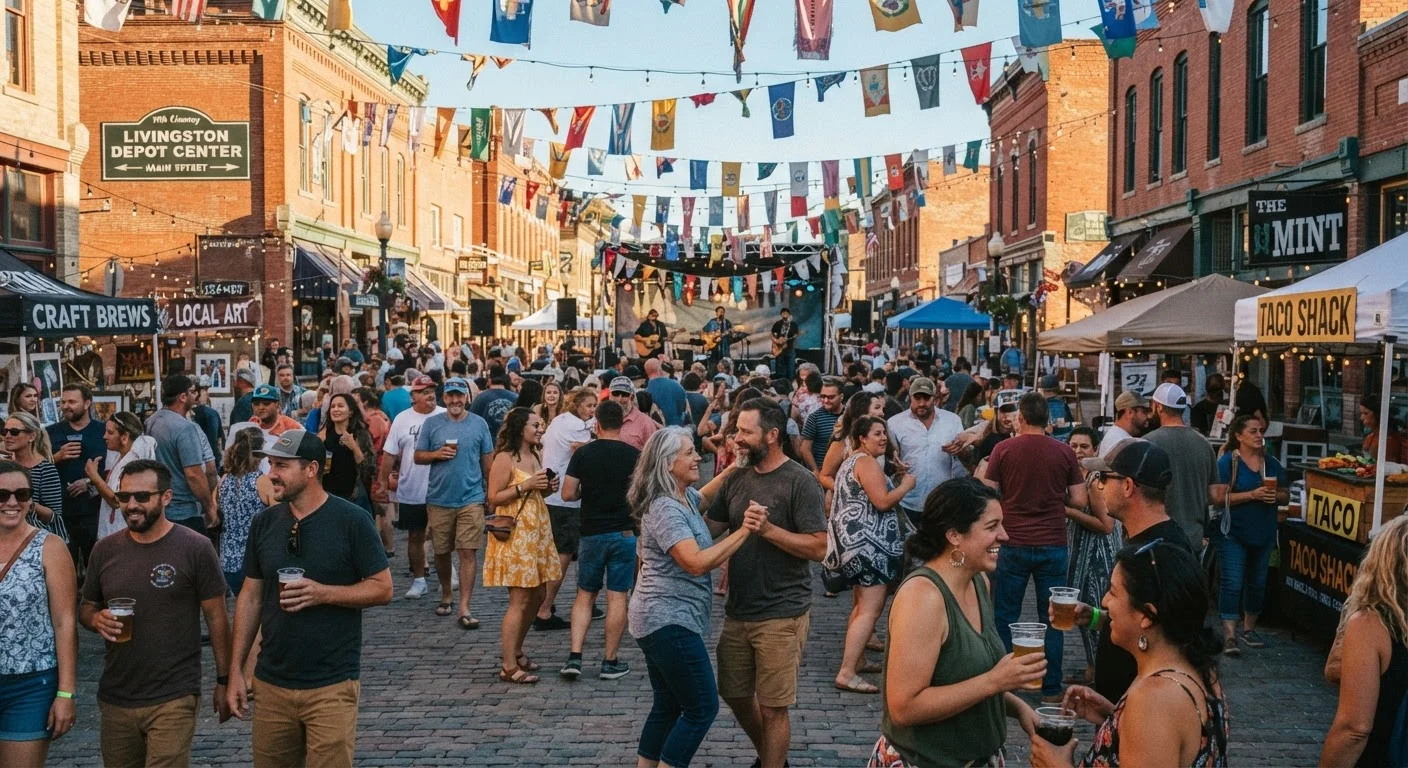
Why Local Traditions Matter More Than You Might Think
Walk into any American city, town, or rural county and you'll find something no national brand or algorithm can replicate: a set of rituals, celebrations, and habits that belong entirely to that place. Whether it's a small-town chili cook-off that's been running for forty years, a Mardi Gras krewe founded by a neighborhood family in the early twentieth century, or an Indigenous harvest gathering with roots stretching back centuries, these traditions carry a weight that goes far beyond fun.
Local culture is how communities tell themselves who they are. Shared rituals create a kind of social glue — a reason to show up, to know your neighbors, to feel rooted even in a mobile and fragmented world. Research consistently links community participation with higher reported well-being, stronger civic trust, and greater resilience during difficult times. Understanding what's celebrated in a place, and why, gives you a meaningful window into its values, its history, and the people who call it home.
For newcomers especially, tapping into local traditions is often the fastest path from stranger to neighbor. As we explore in our guide to building roots in a new community, showing up for local events — even as an outsider — sends a signal that you're paying attention and willing to belong.
Below, we highlight eight distinct types of American community traditions worth knowing, understanding, and — where appropriate — joining.
Mardi Gras Krewes and Gulf Coast Carnival Culture
In New Orleans and across coastal Louisiana and Alabama, Mardi Gras is not simply a party — it's a year-round civic institution. Krewes, the social organizations that plan and fund parade floats, have roots going back to the mid-1800s. Some are exclusive and invitation-only; others are open to anyone willing to pay dues and put in the volunteer hours.
What's striking is how the krewe system functions as a parallel civic structure — members form deep social bonds, raise money for local causes, and pass leadership from generation to generation. For many Gulf Coast families, krewe membership is a primary source of community identity, sometimes more meaningful than neighborhood or profession. Visiting during Mardi Gras season reveals this layered social world in vivid color.
Krewes function as a parallel civic structure, binding Gulf Coast communities across generations.
Midwest Harvest Festivals and Agricultural Fairs
Across the Great Plains and Midwest, county and state fairs draw millions of people each summer and fall — but the tradition runs deeper than midway rides and funnel cakes. For agricultural communities, the harvest festival marks a collective exhale: the acknowledgment that another season's work is done and the community has survived it together.
Livestock competitions, 4-H exhibits, and baking contests are not just entertainment; they're performance of competence and shared values. Skills that might seem old-fashioned — canning, quilting, livestock husbandry — are publicly honored here. For young people raised in these communities, the fair is often a formative rite of passage tied directly to the land's rhythms.
Harvest festivals are a collective exhale — a community honoring that another season's work is done.
Indigenous Powwows and Ceremonial Gatherings
Powwows are social and spiritual gatherings practiced by many Native nations across the United States. While practices vary by nation and region, these events commonly feature drum circles, traditional dance competitions, regalia, food, and intertribal exchange. Some powwows are open to the public; others are closed community ceremonies — and that distinction matters deeply.
For Indigenous communities, powwows serve as critical spaces for cultural transmission, language preservation, and intergenerational bonding. For non-Native visitors attending public events, respectful participation means following posted guidelines, asking before photographing, and approaching the experience as a learner rather than a spectator seeking entertainment. The culture being shared is living and contemporary, not historical artifact.
Powwows are living cultural transmissions — respectful participation means approaching as a learner.
Appalachian Homecoming and Decoration Day
In parts of Appalachia, particularly across Kentucky, Tennessee, and West Virginia, Decoration Day — traditionally held in late spring or early summer — is a deeply rooted annual ritual of visiting family cemeteries to clean graves and leave flowers. Homecoming services, often tied to local churches, draw families back from across the country.
This tradition emphasizes continuity with ancestors, the permanence of place, and a theology of memory. For outsiders, it can appear to be purely somber, but Decoration Day in many communities is also a reunion — a celebration of lineage and survival. Understanding it shifts your understanding of how Appalachian communities relate to time, land, and family obligation.
Decoration Day is a celebration of lineage and survival, not just a somber act of remembrance.
Ethnic Heritage Festivals and Immigrant Community Traditions
Across the country, communities celebrate the ethnic heritage of their founders and longtime residents — Scandinavian festivals in Minnesota and the Dakotas, Czech kolache festivals in Texas, Polish-American celebrations in Chicago, and Lunar New Year observances in cities from New York to San Francisco. These events serve dual purposes: honoring the past while asserting that heritage remains alive and relevant today.
What these celebrations reveal is that American identity has always been plural. Participating in or simply attending an ethnic heritage festival is one of the most accessible ways to understand how immigrant communities have shaped American regions — and how that shaping continues. Many of these festivals have adapted over generations, folding in new influences while preserving core elements.
Ethnic heritage festivals assert that immigrant culture is not just historical — it remains alive today.
Southern Funeral and Mourning Traditions
Across the South — particularly in African American and rural communities — funerals are social institutions of significant cultural weight. The tradition of the "homegoing" celebration in many Black churches frames death as a spiritual transition rather than purely a loss, filling services with music, testimony, and communal feasting. In New Orleans, the jazz funeral adds a second-line parade to the ritual, transforming grief into collective catharsis on public streets.
Understanding these mourning practices illuminates core community values: the importance of witnessing, of showing up, of holding each other through loss. If you move into a community with these traditions, attending a visitation or service — when invited — is often one of the most meaningful forms of neighborly participation you can offer.
Southern funeral traditions transform grief into communal witness — one of the most meaningful forms of belonging.
New England Town Meeting Culture
New England's tradition of the open town meeting — in which eligible residents gather to vote directly on local budgets, bylaws, and governance — dates to the seventeenth century and remains a functioning form of direct democracy in hundreds of communities across Massachusetts, Vermont, New Hampshire, and Connecticut. It is not ceremonial; real decisions with real financial consequences are made by show of hands or voice vote.
Attending a town meeting is a vivid lesson in how civic participation and community culture intersect. The tradition assumes that informed neighbors, not just elected representatives, should govern local life. It also reflects a particular New England value of public argumentation and accountability — visitors often describe their first town meeting as unexpectedly intense and refreshingly direct.
New England's town meeting is direct democracy in action — a tradition that assumes neighbors can govern together.
Block Parties, Neighborhood Cookouts, and Urban Ritual
In cities and suburbs across the country, the block party or neighborhood cookout operates as an informal but deeply functional community ritual. While less ceremonially elaborate than some traditions on this list, these gatherings carry real social infrastructure: they're the moments when faces get matched to names, when new residents are welcomed, and when disputes or tensions are often quietly defused over shared food.
Many urban neighborhoods have developed their own layered versions of these gatherings — borrowing from Caribbean block party traditions, Latino neighborhood celebrations, or African American cookout culture to create something hyperlocal and evolving. As we note in our piece on what thriving communities have in common, informal social infrastructure like this is often the invisible connective tissue that holds neighborhoods together during hard times.
A block party is informal social infrastructure — the moment when faces finally match names on your street.
Bringing It All Together: What Traditions Reveal
Every tradition on this list started somewhere small — a family kitchen, a church hall, a street corner. Over time, repetition gave it meaning, and meaning drew more people in. That cycle is how culture works, and it's why these rituals outlast the individuals who created them.
How to Engage Respectfully With Unfamiliar Traditions
When joining a celebration or ritual that isn't part of your own background, lead with curiosity and humility. Ask community members what the event means to them rather than assuming you already understand its significance. Follow any posted or communicated guidelines around photography, dress, or participation. Being a thoughtful guest — present and attentive rather than transactional — is how outsiders become genuine members of a community over time.
The richness of local culture also varies significantly depending on whether you're in a rural, suburban, or urban setting. Our piece on how community life differs across settings digs into how geography shapes connection — from front-porch culture in small towns to block associations in city neighborhoods. And the public spaces that anchor community life, like libraries and parks, often serve as the venues where many of these traditions unfold.
If you're curious about the deeper patterns that make communities thrive, explore what thriving communities have in common — from the habits of their residents to the structures that support them. Traditions, it turns out, are rarely accidental. They're built, tended, and chosen — one gathering at a time.