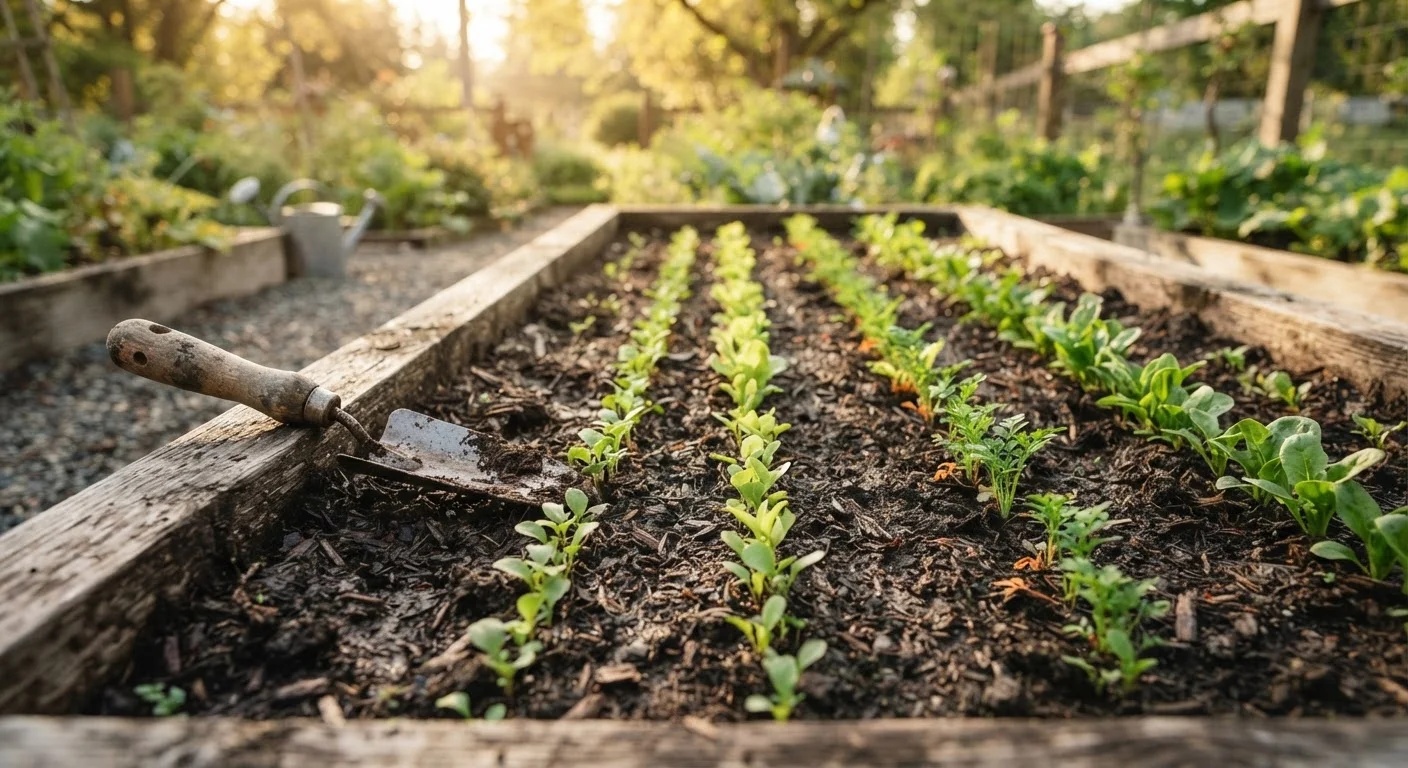
Choosing the Right Spot
Before you buy a single seed, walk your yard and observe it at different times of day. Sunlight is the non-negotiable foundation of a productive vegetable garden. Most vegetables — especially fruiting crops like tomatoes, cucumbers, and peppers — require six to eight hours of direct sun daily. Leafy greens are more tolerant of partial shade, but no vegetable thrives in deep shadow.
Beyond light, look for these site qualities:
- Level or gently sloped ground — steep slopes cause water to run off before roots can absorb it.
- Proximity to a water source — dragging hoses across the yard quickly becomes a reason people quit gardening.
- Distance from large trees — roots compete aggressively for water and nutrients, and canopies block light.
- Good air circulation — stagnant air encourages fungal disease on leaves.
If you're unsure how your outdoor space breaks down by sun and shade, our garden zoning guide walks through a practical method for mapping your yard before committing to a location.
Preparing Your Soil
Soil preparation is the work that pays off all season long. Vegetables grown in compacted, nutrient-poor soil struggle regardless of how carefully you water or feed them. The goal is loose, well-draining soil rich in organic matter.
Here's a straightforward preparation process for a new plot:
- Clear the area. Remove grass, weeds, and debris. For a small plot, a flat spade or sod cutter works well. Smother large areas with cardboard covered in several inches of compost — known as lasagna or no-dig gardening — if you prefer not to dig.
- Loosen the soil. Turn the top 8–12 inches with a garden fork or tiller. Breaking up compaction lets roots penetrate and water drain.
- Amend generously. Mix in 2–4 inches of compost, aged manure, or other organic matter. This improves both drainage in clay soils and moisture retention in sandy soils.
- Test if you can. A basic soil pH test (available at garden centers) reveals whether your soil is too acidic or alkaline. Most vegetables prefer a pH of 6.0–7.0. Lime raises pH; sulfur lowers it.
Before you start digging, use the Spring Garden Readiness checklist to make sure your tools and beds are fully prepared before the growing season begins.
Frost date
The average date of the last freezing temperature in spring (or first in fall) for a given location, used to time planting of cold-sensitive crops.
Organic matter
Decomposed plant or animal material — such as compost or aged manure — mixed into soil to improve its structure, nutrient content, and water retention.
Soil pH
A measure of how acidic or alkaline your soil is, on a scale of 1 to 14. Most vegetables grow best in slightly acidic to neutral soil, around pH 6.0–7.0.
Direct sowing
Planting seeds directly into garden soil outdoors, as opposed to starting them indoors and transplanting the seedlings later.
Transplant
A seedling started indoors or purchased from a nursery that is moved into the garden once it's mature enough and conditions are suitable.
Cover crop
A crop planted primarily to protect and enrich bare soil during the off-season rather than to harvest for food. Common examples include clover and winter rye.
Selecting Crops for Beginners
Choosing the right crops dramatically affects how enjoyable your first season is. Start with plants that germinate reliably, grow quickly, and tolerate minor mistakes in watering or spacing.
Reliable beginner crops:
- Lettuce and salad greens — ready in 30–45 days, can be cut repeatedly, tolerate cool weather.
- Radishes — harvest in as little as 25 days; great for filling gaps between slower plants.
- Bush beans — direct-sow after last frost, no staking needed, productive over several weeks.
- Zucchini — notoriously productive; one or two plants supply most families.
- Cherry tomatoes — more forgiving than large slicing varieties, produce heavily all season.
- Kale and chard — cold-hardy, pest-resistant, and harvest-ready in stages.
Avoid starting with crops that need long seasons, precise conditions, or complex support — corn, artichokes, and melons are better saved for year two. Keep your first garden small enough to manage comfortably. A 4 × 8-foot plot can realistically support four to six different crops when planned thoughtfully.
For companion planting strategies that can improve your crop yields and reduce pest pressure, see our guide on which plant pairings actually help.
Planting, Spacing, and Timing
Two of the most common first-year mistakes are planting too early (before soil is warm enough) and planting too close together (starving plants of light and airflow). Both are easily avoided with a little planning.
Timing your planting: Know your region's last expected frost date — your local cooperative extension service publishes these. Cool-season crops (lettuce, peas, kale) go in two to four weeks before the last frost. Warm-season crops (tomatoes, beans, squash) go in after it, once soil has warmed to at least 60°F.
Spacing matters more than most beginners expect. Crowded plants compete for light, water, and nutrients — and poor airflow invites disease. Always follow the spacing recommended on seed packets or transplant labels. As a general rule:
- Lettuce and spinach: 6–8 inches apart
- Bush beans: 4–6 inches apart in rows 18 inches wide
- Tomatoes: 18–24 inches apart
- Zucchini: 24–36 inches apart
Our planting depth and spacing reference card gives precise values for dozens of common vegetables — bookmark it before you start sowing.
Watering, Feeding, and Pest Control
Once your plants are in the ground, consistent care keeps them producing. Water is the most immediate need — and the most commonly mismanaged one.
Watering: Aim for about one inch of water per week, adjusted for heat and rain. Water at the base of plants rather than overhead to reduce fungal disease risk. A simple rain gauge helps you track what nature provides so you know when to supplement. Deep, infrequent watering encourages roots to grow downward, making plants more drought-tolerant.
Feeding: If you amended your soil with compost before planting, you may not need additional fertilizer early in the season. Once plants begin actively growing and setting fruit, a balanced general-purpose fertilizer applied according to package instructions gives them a boost. Avoid over-fertilizing with nitrogen — it promotes leafy growth at the expense of fruit.
Pests and problems: Check plants regularly, especially the undersides of leaves where aphids and caterpillars hide. Early detection makes hand-picking or rinsing with water effective. Floating row covers — lightweight fabric draped over plants — physically block many common insects without chemicals. Yellowing leaves, wilting despite adequate water, or unusual spots often signal disease or nutrient deficiency; remove affected material promptly and avoid overhead watering.
Mulch Is One of Your Best Tools
Spreading 2–3 inches of straw, wood chips, or shredded leaves around your plants does three things at once: it retains soil moisture, suppresses weeds, and moderates soil temperature. Apply mulch after planting but before summer heat peaks, and keep it a couple of inches away from plant stems to prevent rot.
Harvesting and What Comes Next
Harvesting at the right time — and harvesting often — is what keeps plants productive. Many vegetables signal readiness through size, color, and firmness. Zucchini left too long becomes watery and seedy; beans left too long turn tough. When in doubt, harvest a little early rather than late.
Picking frequently tells the plant to keep producing. Tomatoes, beans, cucumbers, and peppers all slow down or stop fruiting if mature fruits are left on the vine. Make a habit of walking through your garden every day or two once the first harvest begins.
As the season winds down, don't let the beds go idle. Pull spent plants, add compost, and consider a cool-season follow-up crop — kale, arugula, or spinach — if your climate allows. Covering bare soil with a few inches of compost or a cover crop over winter prevents erosion and feeds soil biology for next year.
Keeping notes — what worked, what struggled, what you'd plant more of — is one of the highest-value habits a new gardener can build. A simple notebook or phone app works fine. Your second season will be noticeably easier because of it. For a broader look at how your garden fits into a full year of outdoor care, see The Complete Guide to Lawn and Garden Care Through Every Season.