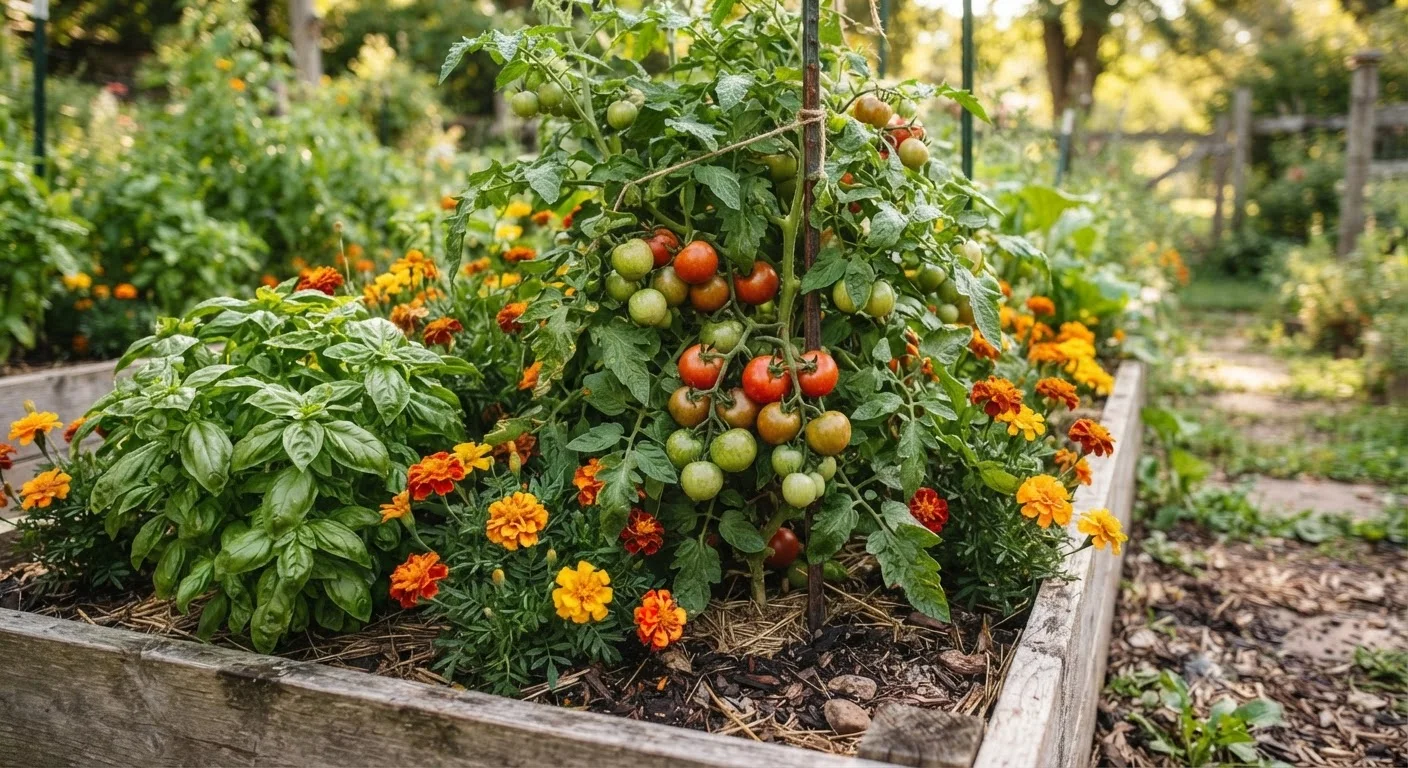
What Companion Planting Can — and Can't — Do
Companion planting is the practice of growing certain plants in deliberate proximity because one or both benefit from the arrangement. The idea has been part of gardening tradition for centuries, but not every pairing that gets passed around garden forums has practical backing. Some combinations genuinely work; others are wishful thinking dressed up as wisdom.
The mechanisms that actually hold up include: physical pest deterrence (strong scents that confuse or repel insects), habitat creation for beneficial predatory insects, nitrogen fixation by legumes that feeds neighboring plants, and ground cover that suppresses weeds or retains moisture. When a pairing delivers results, it's usually through one of these concrete pathways — not garden magic.
If you're just starting out with food gardening, your first vegetable garden guide covers the foundational steps before you layer in strategies like companion planting. Getting soil, site, and timing right matters more than any pairing. With those basics in place, the combinations below are worth trying.
Tomatoes and Basil
This is one of the most popular pairings in vegetable gardens, and while the claim that basil dramatically improves tomato flavor hasn't been definitively proven in controlled studies, there are practical reasons to plant them together. Basil's volatile oils are thought to deter aphids and whiteflies, both of which target tomatoes. Basil also attracts pollinators when it flowers, which benefits the whole garden bed.
Plant basil around the base of tomato plants rather than directly beneath them to avoid competition for root space. Keep basil well-watered, as moisture stress causes it to bolt quickly and reduces its aromatic oils.
Basil's aromatic oils may deter common tomato pests like aphids and whiteflies.
The Three Sisters: Corn, Beans, and Squash
This classic combination from Indigenous North American agricultural traditions is one of the most structurally sound examples of companion planting. Each plant fills a distinct role: corn provides vertical structure for beans to climb, beans fix atmospheric nitrogen into the soil (benefiting both corn and squash), and squash's large leaves shade the ground, reducing weed pressure and retaining soil moisture.
The system requires adequate spacing and benefits from being planted in stages — corn first, then beans a week or two later, then squash once the corn is established. It's a labor-efficient approach that reduces the need for added fertilizers and manual weeding.
Beans fix nitrogen into the soil, directly feeding the corn and squash growing alongside them.
Marigolds and Vegetable Crops
French marigolds (Tagetes patula) are among the most evidence-supported companion plants available to home gardeners. They release a compound from their roots that has been shown in research to suppress certain soil nematodes — microscopic pests that damage root systems of tomatoes, peppers, and other crops. This effect is most significant when marigolds are grown densely over a full season, not just a few weeks.
Above ground, marigolds attract hoverflies and parasitic wasps, which prey on aphids and caterpillars. Interplant them throughout vegetable beds rather than planting them only as a border.
Marigold roots release compounds that can suppress soil nematodes damaging to vegetable crops.
Carrots and Onions (or Chives)
The traditional claim is that carrots deter onion fly while onions deter carrot fly, creating mutual protection. The scent-masking theory has some logic behind it — strong-smelling alliums (onions, chives, garlic) can confuse insects that locate host plants by smell. Results in practice are inconsistent, partly because pest pressure varies greatly by location and year.
What's more reliably useful is that chives interplanted near carrots attract beneficial insects and make efficient use of space, since they have very different root depths and don't compete significantly. Even if the pest deterrence is modest, the pairing is low-risk and maximizes bed productivity.
Alliums' strong scent may help confuse carrot fly, even if the effect is inconsistent in practice.
Nasturtiums as Trap Crops
Nasturtiums are often cited as aphid deterrents, but the mechanism is actually the opposite: nasturtiums attract aphids, pulling them away from higher-value crops. This is called trap cropping — deliberately sacrificing one plant to protect others. When aphids colonize nasturtiums instead of your beans or kale, you can remove the infested nasturtium growth or introduce ladybugs to the concentrated population.
Plant nasturtiums at the edges of beds or near plants that are frequently aphid targets. Monitor them regularly rather than ignoring them — a trap crop only works if you manage it once it's doing its job.
Nasturtiums attract aphids deliberately, drawing them away from more valuable vegetable crops nearby.
Dill, Fennel, and What to Keep Separate
Not all companion planting advice is about what to grow together — knowing which plants inhibit each other is equally important. Fennel is notably antagonistic to most garden vegetables and herbs and is best grown in its own isolated spot or container. It releases compounds that can stunt neighboring plants.
Dill, by contrast, attracts beneficial insects including predatory wasps and is a good companion for brassicas (cabbage, broccoli, kale) when young. However, mature dill can cross-pollinate with fennel if both are flowering nearby, affecting seed quality. Keep them separated if seed-saving matters to you. Good garden zoning helps you keep antagonistic plants at a useful distance while maximizing helpful pairings.
Fennel inhibits most vegetable neighbors and is best grown in isolation, away from productive beds.
Putting Your Pairings Into Practice
Companion planting works best when it's integrated into thoughtful overall garden design rather than treated as a standalone fix. Spacing still matters — crowding plants too close together negates any benefit by creating competition for light, water, and nutrients. For reference on appropriate spacing for common vegetables and herbs, see our planting depth and spacing reference.
Healthy soil is the other major factor. Companion planting doesn't substitute for adequate organic matter or balanced nutrition. Understanding what compost, mulch, and fertiliser each do helps you support every plant in the bed, companion or not. Pair good soil management with strategic plant placement and you give yourself the strongest possible starting point.
Start With One or Two Pairings
Trying to implement companion planting across your entire garden at once makes it hard to tell what's actually working. Pick one or two combinations that address a specific problem you've experienced — aphids, nematodes, or bare soil between plants — and observe the results over a full growing season before expanding the approach.
Keep a simple garden journal noting which pairings you tried, what pest or weed pressure looked like, and how yields compared. A single season's observation won't prove much, but two or three seasons of notes will tell you what's genuinely working in your specific conditions.