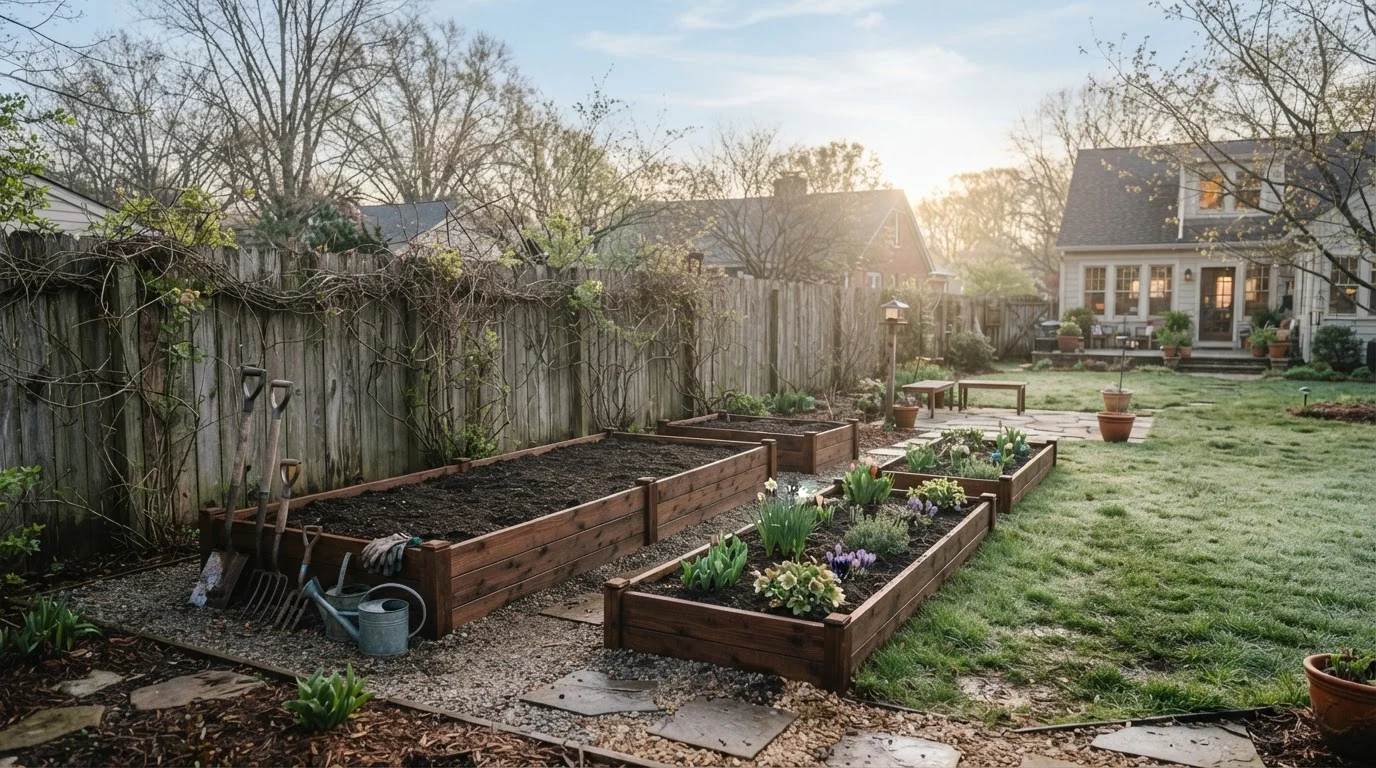
Why a Walk-Through Checklist Works Better Than a To-Do List
Most gardeners start spring by heading straight to the nursery — picking up transplants before they've looked at what last winter left behind. That enthusiasm is great, but it often means discovering compacted soil, broken irrigation lines, or a mower blade that hasn't been sharpened in two seasons only after plants are already in the ground.
A structured walk-through changes that sequence. Instead of reacting, you're assessing: moving from one zone of your yard to the next with a clear set of things to check. That approach lets you catch problems early, prioritize spending, and sequence tasks in an order that actually makes sense — soil work before planting, tool maintenance before mowing, irrigation checks before anything requires regular watering.
This checklist is organized by zone — lawn, beds, tools, and infrastructure — so you can move through your property efficiently. It works whether you have a small urban lot or a half-acre spread. For a broader look at how spring garden tasks fit into a full year of care, see the complete guide to lawn and garden care through every season.
Soil pH test kit
Measures the acidity or alkalinity of your soil so you know whether amendments are needed before planting.
Garden notebook or notes app
Records issues found during the walk-through and tracks what needs to be addressed before planting.
Flat-head spade or edging tool
Re-establishes clean edges on beds and borders that grass has invaded over winter.
Sharpening file or whetstone
Restores cutting edges on pruners, loppers, and mower blades for clean, healthy cuts.
Thatch rake
Removes accumulated dead grass material from the lawn surface to improve water and nutrient penetration.
Compost or organic matter
Improves soil structure and nutrient content when worked into beds before planting begins.
The Walk-Through Checklist
Work through each group below in sequence. Bring a notepad or use your phone to log anything that needs follow-up. Aim to complete this assessment before your area's last average frost date — that gives you the maximum runway to address any issues before planting begins.
Lawn Assessment
Planting Beds and Borders
Soil and Amendments
Tools and Equipment
Irrigation and Water Systems
Once your beds are ready and you're planning what to grow, pair this checklist with the planting depth, spacing, and timing reference card to make confident decisions about what goes where.
Don't Work Wet Soil — It Does More Harm Than Good
Digging, tilling, or even walking heavily on saturated spring soil compacts it significantly, destroying the pore structure that roots need to thrive. Before working any bed, squeeze a handful of soil: if it holds its shape without crumbling, it's still too wet. Wait a few dry days and recheck. Patience here protects the soil structure you're trying to improve.
Fertilize Lawns at the Right Time, Not Just the First Warm Day
Applying nitrogen fertilizer too early — before grass roots are actively growing — can push leafy top growth that the root system can't support, and excess nutrients may wash away before plants can use them. For cool-season grasses, wait until consistent soil temperatures reach around 55°F. For warm-season grasses, hold off until the lawn is actively greening up.
Getting the Most Out of Your Assessment
After your walk-through, you'll likely have a list of issues that range from quick fixes (tighten a leaky hose fitting, rake out dead thatch) to longer-term projects (re-edge a bed that's grown over, reseed a bare patch). Prioritize ruthlessly: tasks that affect soil structure and drainage should come first, because everything you plant depends on them.
If you're planning a vegetable garden this season for the first time, the timing of this assessment matters even more. The first vegetable garden guide walks through site selection and soil preparation in depth — both tasks that benefit from being done well before planting day arrives.
Spring garden prep also pairs naturally with broader seasonal home readiness. Many of the same principles — inspect before you act, fix small problems before they become large ones — apply indoors too. The seasonal home maintenance checklist is a useful companion if you're doing a full spring reset across your property.
Finally, remember that common mistakes during spring lawn care — scalping grass too low, over-fertilizing too early, or watering at the wrong time of day — can set a yard back for months. The lawn care mistakes to avoid covers the most frequent missteps and how to sidestep them.