Why Small Mistakes Become Season-Long Problems
A lawn looks resilient, but grass plants are more vulnerable than they appear. Unlike shrubs or perennials that store energy in woody stems, turfgrass keeps most of its reserves close to the soil surface. A single bad mowing session, an ill-timed fertilizer application, or two weeks of overwatering can deplete those reserves and push the lawn into a stress response that takes months to reverse.
The frustrating part is that many of these mistakes feel like good lawn care in the moment. Mowing short seems tidy. Watering every day seems thorough. Fertilizing in early spring seems proactive. Understanding why these instincts backfire is the first step to building habits that actually support a thick, healthy stand of grass. For a broader view of what your lawn needs throughout the year, see The Complete Guide to Lawn and Garden Care Through Every Season.
The Most Damaging Lawn Care Mistakes
The errors below are among the most common reasons lawns fail to thrive — and they're almost entirely avoidable once you know what to look for.
Scalping the lawn by mowing too short.
Why it happens: Homeowners often assume shorter grass means less frequent mowing and a neater appearance. It feels efficient, but it removes the photosynthetic surface the plant needs to generate energy.
Watering too frequently but not deeply enough.
Why it happens: Daily watering feels attentive, and dry surface soil makes it seem like the grass is always thirsty. The surface dries out fast, but that doesn't mean the root zone is dry.
Applying fertilizer at the wrong time of year.
Why it happens: Spring is when homeowners feel most motivated to care for the lawn, so fertilizing early feels productive. However, applying high-nitrogen fertilizer before grass is actively growing can push weak, disease-prone top growth and contribute to thatch buildup.
Ignoring soil compaction.
Why it happens: Compaction happens gradually through foot traffic, mowing, and rainfall, so it rarely triggers a visible alarm. Homeowners continue watering and fertilizing without realizing water and nutrients can't penetrate the hardened soil layer.
Leaving dull mower blades in use too long.
Why it happens: Mower blade sharpness isn't visible until you look closely at the grass after cutting. A dull blade tears rather than cuts, but the damage is subtle and easy to overlook.
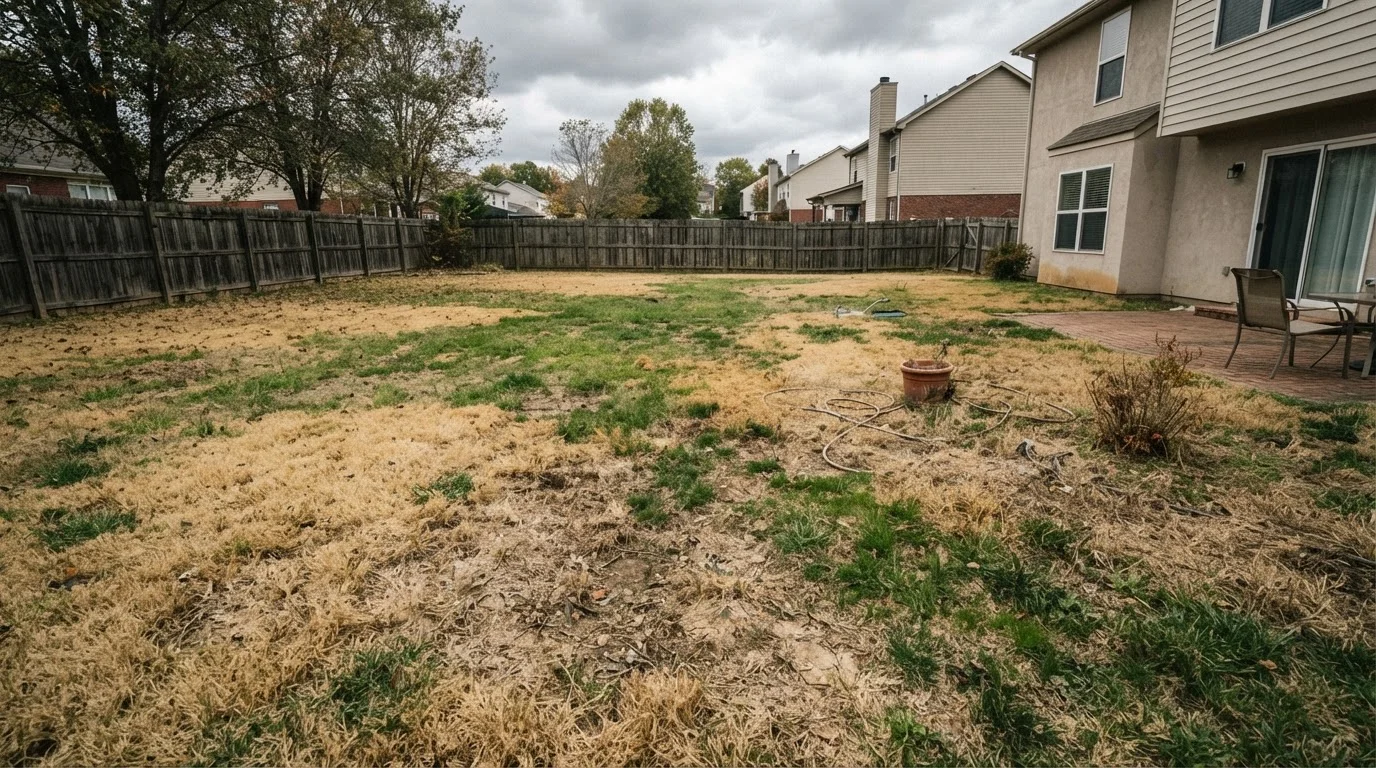
If your lawn has already developed thin or bare patches as a result of past mistakes, recovery is possible. Overseeding a Patchy Lawn: Timing, Technique, and Aftercare explains when and how to introduce new grass seed to fill damaged areas without starting over.
Rethinking Your Watering Habits
Water is the most frequently mismanaged lawn care input. Because surface soil dries quickly in warm weather, it's easy to assume the grass needs more water than it does. In reality, most established cool-season and warm-season grasses do better with infrequent, deep watering than with light daily applications.
Overwatering Invites Fungal Disease
Keeping lawn soil consistently wet — especially in warm, humid conditions — creates ideal conditions for fungal diseases like brown patch and dollar spot. These diseases can spread quickly and are difficult to reverse without targeted treatment. If you notice circular brown or tan patches with defined edges after periods of frequent watering, overwatering is a likely contributing factor. Scale back irrigation frequency before reaching for a fungicide.
Deep watering — applying roughly one inch per session — encourages grass roots to grow downward in search of moisture, which makes the lawn far more drought-tolerant over time. Shallow, frequent watering keeps roots near the surface, where they're vulnerable to heat, dryness, and foot traffic. For a detailed look at how much water your lawn actually needs, Why Healthy Lawns Don't Need as Much Water as You Think breaks down the science behind common watering myths.
Setting Your Lawn Up for a Better Season
Most lawn setbacks are preventable with a little planning before the growing season starts. Checking your mower blade height, testing soil before fertilizing, and auditing your watering schedule are all tasks that take less than an hour but can spare your lawn weeks of unnecessary stress.
Before you begin any spring lawn work, a structured assessment goes a long way. The Spring Garden Readiness checklist walks you through evaluating soil condition, tool readiness, and turf health so you're working with accurate information rather than assumptions.
Grass is surprisingly forgiving when given the right conditions. Correcting even one or two chronic mistakes — like raising the mower deck or shifting to a once-or-twice-weekly watering schedule — can produce visible improvement within a single growing season.