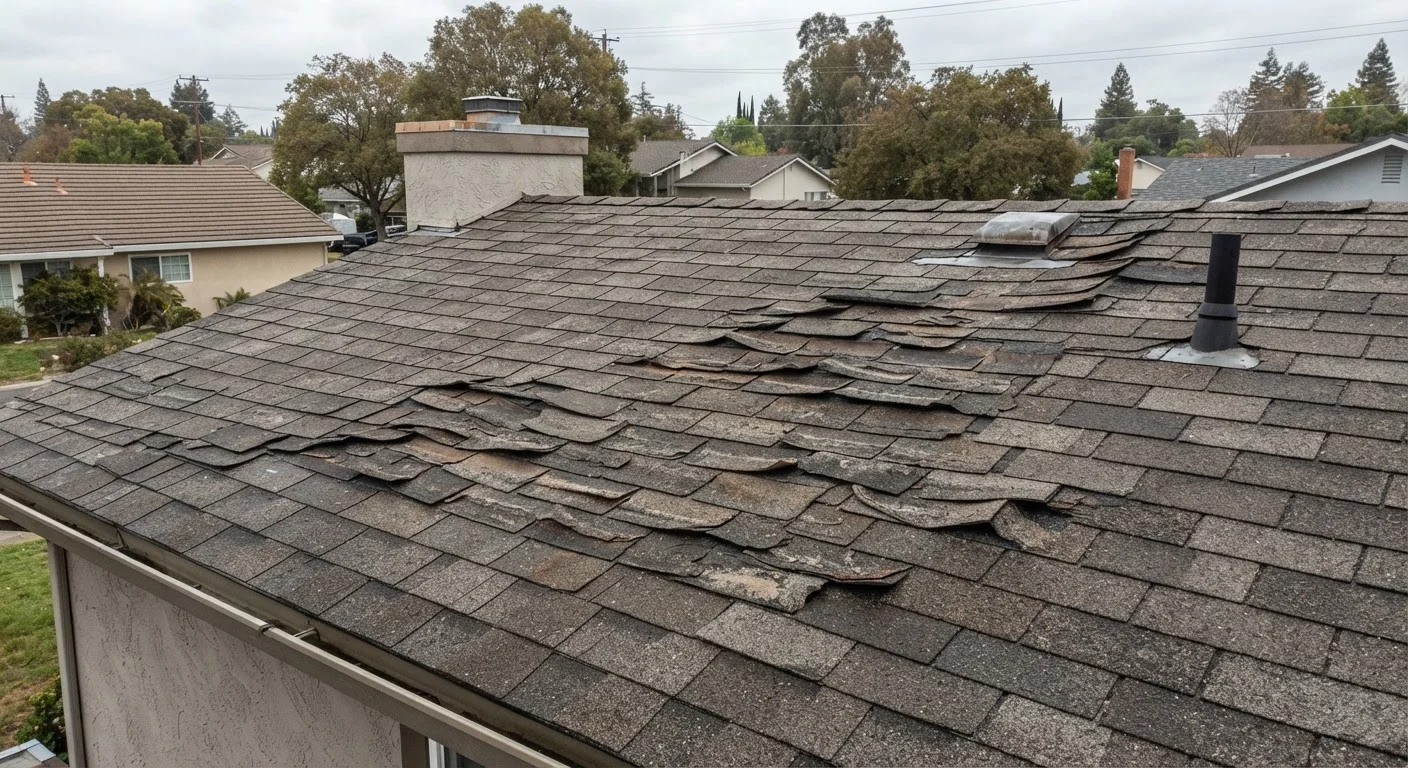
How to Assess the Damage Before Deciding
The first step isn't picking a solution — it's accurately sizing the problem. Begin with a ground-level visual inspection using binoculars, then arrange a closer look from a ladder at the eaves. If you're comfortable and the pitch is moderate (generally 4:12 or lower), a careful roof walk with rubber-soled shoes can reveal more. For steeper pitches or any doubt about structural integrity, contact a licensed roofing contractor for a professional assessment.
Look for these warning signs during your inspection:
- Missing or fully displaced shingles — gaps that expose the underlayment or deck beneath
- Curling or cupping edges — a sign of age-related deterioration, often affecting large areas rather than single shingles
- Granule loss — bare, shiny patches on asphalt shingles, or an accumulation of granules in gutters
- Cracking or splitting — often caused by thermal cycling or impact from hail or debris
- Soft spots — sponginess underfoot may indicate rot in the decking below, which changes the repair calculus entirely
Also inspect the attic after a rain. Water stains, daylight visible through the deck, or damp insulation all point to active infiltration. The number of shingles affected and whether damage is clustered or spread across the roof are the two most important factors in your patching-vs.-replacing decision. For a parallel example of how localized vs. widespread damage changes your repair approach, see our guide to assessing drywall damage — the diagnostic logic translates well to roofing.
The Case for Patching: Pros and Cons
Spot-patching individual or small clusters of damaged shingles is a legitimate repair strategy when the conditions support it. Here's a balanced look at what you gain — and what you give up.
Lower upfront cost for isolated damage
Replacing a handful of shingles costs a fraction of a full tear-off and re-roof. For storm damage affecting only a small section, patching preserves budget for other priorities.
Faster turnaround with less disruption
A small patch job can typically be completed in a few hours by a contractor, versus one to two days or more for a full replacement, with less debris and crew activity around the home.
Extends the life of a structurally sound roof
When underlying decking and underlayment are in good condition, replacing only the damaged surface shingles can add meaningful years of protection without the cost of a complete system overhaul.
Appropriate response to localized impact damage
A fallen branch or isolated hail strike often damages a tight cluster of shingles while the rest of the roof remains fully functional — a case where targeted repair genuinely matches the problem.
Shingle mismatch is common and noticeable
Manufacturers frequently update or discontinue shingle lines, making an exact color and texture match difficult. Patched sections can stand out visually, which may matter at resale.
Doesn't address underlying systemic wear
If age-related granule loss or widespread brittleness is driving the failures, patching isolated shingles doesn't slow deterioration in adjacent areas — new failures are likely to follow.
Repeated patches can cost more than one replacement
Homeowners who patch the same aging roof multiple times over several years often spend more in cumulative labor and materials than a single replacement would have cost.
May not satisfy insurance or warranty requirements
Some homeowner insurance policies and manufacturer warranties have specific requirements for repair methods. A patch done outside those parameters could affect a future claim.
Safety risks for inexperienced DIYers
Working on a sloped roof without proper equipment and technique is a leading cause of DIY injuries. Tasks that seem straightforward at ground level become significantly more hazardous at height.
The practical ceiling for patching is roughly 25–30% of total roof surface area. Beyond that threshold, the labor and material costs begin to approach replacement costs, and the underlying causes of widespread failure won't be addressed by surface repairs alone.
It's also worth noting that DIY shingle patching carries real physical risk. Working at height on a sloped surface accounts for a significant share of home-improvement injuries each year. If you're unfamiliar with ladder safety, roof walking, or the correct technique for nailing and sealing shingles, some repairs are better left to a licensed professional.
When Full Replacement Makes More Sense
A full roof replacement is a major expenditure, but delaying it past the point of no return can lead to far costlier outcomes — structural deck rot, mold in the attic, or interior water damage. Several conditions make replacement the more rational choice:
- Roof age: Most standard three-tab asphalt shingles have a service life of 20–25 years; architectural shingles typically last 25–30 years. A roof in the final quarter of its expected lifespan is generally better replaced than repeatedly patched.
- Widespread granule loss: When shingles across large sections have shed their protective granule coating, UV degradation accelerates quickly and patching buys only marginal time.
- Multiple or recurring leaks: If you've patched the same area more than once, or if leaks appear in different locations after each repair, the system is failing — not just individual shingles.
- Deck damage: Rotted or delaminated sheathing beneath the shingles requires deck repair before any new shingles can be applied, at which point a full replacement often pencils out better.
- Selling the home: Buyers and home inspectors scrutinize roofs carefully. A visibly patchy roof with mismatched shingles or documented repeated repairs can affect negotiations.
Check Your Homeowner's Insurance First
Storm damage — including hail, wind, and falling trees — is often covered under standard homeowner's insurance policies. Before paying out of pocket for either a patch or a full replacement, file a claim and have the adjuster inspect the roof. Documenting damage promptly after a storm is important; delayed reporting can complicate the claims process. Your insurer's assessment may also influence whether repair or replacement is the covered course of action.
Before committing to a full replacement, verify whether your local jurisdiction requires a permit. Many municipalities require a permit for full tear-offs, and some limit the number of shingle layers that can be stacked. A licensed contractor will typically pull permits on your behalf, but it's worth confirming this expectation upfront.
Making the Decision: A Practical Framework
Use these questions to guide your thinking:
- How old is the roof? Under 10 years: patch. Over 20 years with widespread wear: replace. In between: assess damage scope carefully.
- How many shingles are damaged? Fewer than a dozen isolated shingles favor patching. Dozens spread across multiple zones favor replacement.
- Is the decking sound? Soft, rotted, or delaminated decking makes patching a temporary fix at best.
- Can you match the shingles? Manufacturers discontinue shingle lines regularly. If a close match isn't available, the aesthetic and potentially functional mismatch may inform your choice.
- What are your plans for the home? If you're planning to sell within two to three years, a fresh roof may add negotiating strength; if you're staying 15+ years, a well-executed patch on an otherwise sound roof can make financial sense.
The repair-vs.-replace calculus appears in many areas of home maintenance — deciding between repairing or replacing a door follows a similar logic of cost, age, and scope of damage.
Finally, be skeptical of assumptions in either direction. Common DIY myths can lead homeowners to underestimate repair complexity, just as some contractors may oversell replacement when patching would genuinely suffice. Getting two or three written estimates from licensed roofers — along with their written assessment of the roof's overall condition — gives you the clearest picture.
This article provides general educational information about roofing decisions. Always verify local building codes, permit requirements, and safety considerations, and consult a licensed roofing contractor for an assessment specific to your home's condition.