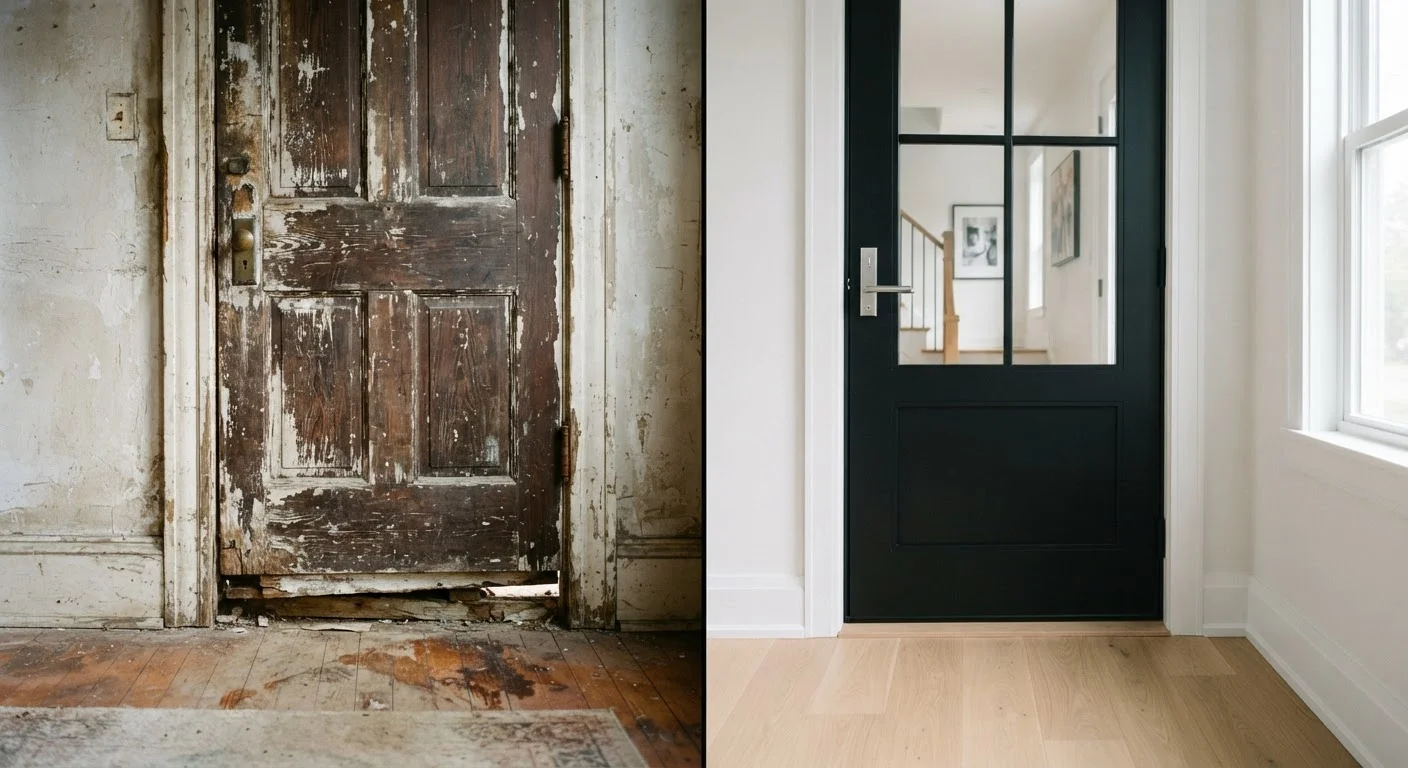
Start with a Diagnosis, Not a Decision
Before you price out a new door or load up a repair cart, spend ten minutes figuring out exactly what's wrong. Many door problems are symptoms of something unrelated to the door itself — a settling foundation, seasonal wood expansion, or a hinge that's pulled loose from the frame. Fixing the wrong thing wastes both money and time.
Run through this quick checklist:
- Does the door stick seasonally? Wood doors routinely expand in humid summer months and shrink in winter. If the problem comes and goes with the weather, the door itself is likely fine.
- Are the hinges tight? A loose top hinge is the most common cause of a dragging or misaligned door. Tighten the screws, or replace them with longer screws that bite into the stud behind the frame.
- Is the frame square? Hold a level to the door frame's sides and top. If the frame is out of plumb, no amount of door adjustment will produce a lasting fix.
- Is there visible rot? Press a screwdriver into any soft or discolored wood along the bottom rail or frame. If it sinks in, you're dealing with structural rot — a different conversation entirely.
This diagnosis step alone can prevent the most common homeowner mistake: replacing a perfectly good door because the real culprit was a $4 hinge screw or a swollen weatherstrip.
When Repair Makes Sense
The majority of door complaints fall into the repairable category. These are problems with clear, low-cost solutions that don't require demolition or professional installation.
Good candidates for DIY repair:
- Sticking or binding: Sand down the high spots on the door's edge, or plane the hinge side slightly. For persistent sticking, check that all hinges are flush and secure before removing any wood.
- Squeaking: Remove the hinge pins and coat them with petroleum jelly or a dry lubricant. Reinstall and test.
- Drafts around the perimeter: Replace worn weatherstripping along the sides and top of the door frame. Door sweeps at the bottom threshold are inexpensive and easy to install.
- Small surface damage: Dents, shallow gouges, and hairline cracks in a solid or solid-core door can be filled with wood filler, sanded, and repainted.
- Lock or latch problems: A latch that doesn't catch is often caused by strike plate misalignment. Loosen the strike plate screws, shift the plate slightly, and retighten.
These repairs are well within reach for most homeowners with basic hand tools. Just be sure the fix addresses the actual cause — not just the visible symptom. The DIY repair myths worth understanding before starting can help you avoid common missteps that turn a $20 fix into a $200 problem.
Test the Frame Before You Buy Anything
Before purchasing repair materials or a replacement door, use a square and level to check that the door frame itself is plumb and square. A frame that's out of square by more than ¼ inch will cause problems regardless of what door you hang in it. Correcting the frame first — or deciding whether to — is the most important step in the process.
When Replacement Is the Better Investment
There's a point where repairing a door stops making economic or practical sense. Replacement becomes the clearer answer when:
- Rot has reached the structural core. Surface rot can sometimes be treated with epoxy consolidants and filler, but when rot has traveled into the door's core or spread along the frame, those materials are compromised. A patch won't restore load-bearing integrity.
- The door is severely warped. A slight warp can sometimes be corrected by adjusting hinges or adding a third hinge for support. A door twisted significantly along its diagonal or bowed so badly it won't seal — that's a replacement job.
- The frame is damaged. If the frame itself is rotted, cracked, or out of square due to structural settling, replacing just the door slab solves nothing. A prehung door unit — door and frame together — is often the right approach here. Note that significant frame work near load-bearing walls may require a permit or professional assessment in many jurisdictions; always check local building requirements before proceeding.
- Energy efficiency is a persistent problem. Older exterior doors, particularly those with single-pane glass panels or minimal core insulation, can be a notable source of heat loss. If you've replaced the weatherstripping and threshold seal and drafts remain, the door's insulation value (measured as its R-value) may simply be too low to be remedied.
- Security is a concern. A door that has been forced, has a compromised strike plate area, or has a hollow-core construction in an exterior application should be replaced rather than patched.
This logic mirrors decisions you'd face with other home systems. Just as patching damaged shingles is sometimes the right call and sometimes a short-term fix over a deeper problem, the same cost-benefit thinking applies here.
| Repair | Replace | |
|---|---|---|
| Typical cost range | Low — materials often under $50 | Higher — $150 to $1,000+ depending on door type |
| Best for | Sticking, squeaking, minor gaps, hardware issues | Rot, severe warping, frame damage, poor insulation |
| DIY-friendly | Generally yes, with basic tools | Slab swap is feasible; full frame work may need a pro |
| Long-term outcome | Good, if root cause is addressed | More durable when underlying damage is structural |
| Energy efficiency improvement | Moderate — new weatherstripping helps | Significant — modern doors offer much higher R-values |
| Time required | 30 minutes to a few hours | Half day to full day, depending on scope |
Know When to Bring In a Professional
Most door repairs sit comfortably within DIY territory. But a few situations call for a licensed contractor or carpenter:
- The door opening requires structural modification (widening or raising the rough opening).
- Work involves the door frame on an exterior wall with insulation, moisture barrier, or flashing implications.
- The existing installation is clearly non-standard or load-bearing considerations are unclear.
Getting a professional assessment in these cases doesn't mean you've failed — it means you've correctly identified the boundary between a home improvement task and a construction job. The full list of repairs that warrant professional help is a useful reference before you commit to scope.
For straightforward replacements — swapping a damaged door slab for a new one in an intact frame — most reasonably experienced DIYers can handle it with the right tools and a patient approach. If in doubt about local permit requirements for exterior door replacement, contact your local building department before beginning work.