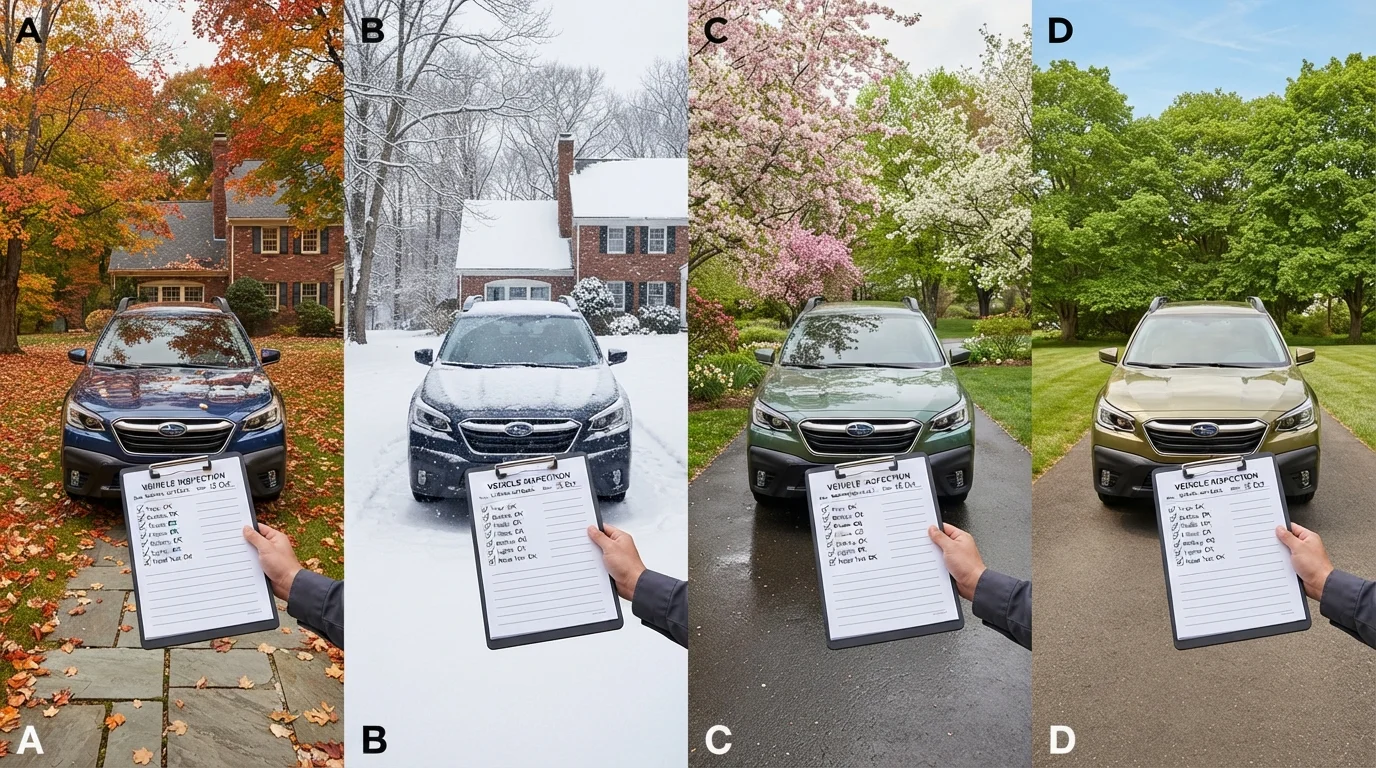
Why a Seasonal Rhythm Beats Reacting to Problems
Most vehicle repairs are not sudden failures — they are the result of gradual wear that went unnoticed for too long. A seasonal maintenance routine gives you four structured opportunities each year to catch small issues before they compound into expensive or dangerous ones. It also keeps you aligned with your manufacturer's service intervals and helps track the true cost of car ownership.
You don't need to be a mechanic to work through this checklist. The majority of items are visual inspections or simple level checks. Where a task requires professional attention, we say so clearly — knowing where the line sits is half the battle. For more on that boundary, see our guide on DIY tasks versus when to see a mechanic.
Use the checklist below before each season begins. Work through it with the car on a level surface, engine cold, and in good daylight. Keep your findings in a vehicle maintenance log — patterns across seasons are often the earliest warning of a developing fault.
Tyres and Wheels
Fluids
Brakes and Suspension
Visibility and Lighting
Battery and Electrical
Seasonal Specifics
Tools You'll Need to Work Through the Checklist
Most seasonal checks require nothing more than your eyes and a few minutes. The items below will let you complete every inspection on the list accurately and safely. None of them require mechanical training to use correctly.
Tyre Pressure Gauge
Measures tyre inflation accurately so you can adjust to the manufacturer's specification — eyeballing tyre pressure is unreliable.
Tread Depth Gauge
Gives a precise measurement of remaining tread depth across the tyre width; more accurate than the coin method for borderline tyres.
Coolant Tester (refractometer or test strips)
Checks the freeze-point and boil-over protection level of your coolant so you know it's adequate for the coming season.
Battery Load Tester
Simulates the electrical demand of engine cranking to reveal whether a battery is holding sufficient charge — voltage alone doesn't tell the full story.
Flashlight or Work Light
Allows you to see into wheel wells, under the hood, and around suspension components when inspecting in low-light conditions.
Torque Wrench
Ensures lug nuts are tightened to the correct specification after any tyre rotation or wheel removal — under- or over-torquing both carry risks.
Understanding What You're Checking and Why
Tyres are your only contact with the road surface, and their condition changes with temperature. Cold air causes tyre pressure to drop roughly 1 PSI for every 10°F fall in temperature, so a tyre that was properly inflated in September can be noticeably underinflated by December without a single slow puncture occurring. Check pressure when tyres are cold — before driving more than a mile. Tread depth should not fall below the legal minimum of 2/32 of an inch across the US, though many safety professionals recommend replacing tyres at 4/32 for adequate wet-weather grip.
Fluids degrade and deplete over time in ways that are invisible until something goes wrong. Engine oil breaks down under heat, coolant loses its ability to prevent freezing and overheating, and brake fluid absorbs moisture from the air — which lowers its boiling point and can compromise braking under heavy use. For a detailed explanation of every fluid under your hood and how to read it correctly, see our guide to your car's fluid system.
Brakes are not something to defer. Pad wear indicators produce a high-pitched squeal when pads reach minimum thickness — if you hear it, book a service promptly. A grinding sound suggests metal-on-metal contact, which means the pad material is already gone and rotor damage may be occurring.
Visibility deteriorates quietly. Wiper blades degrade with UV exposure and use, often long before drivers notice — until a heavy rain reveals streaking and smearing. Headlight lenses yellow and cloud over time, significantly reducing output even when the bulb is functioning. These are among the maintenance tasks most often missed at service time.
Don't Delay Brake and Steering Concerns
If you notice grinding brakes, a pulling sensation during braking, or any sponginess in the brake pedal, do not wait until the next seasonal check — have the vehicle inspected by a qualified mechanic as soon as possible. These symptoms can indicate a safety-critical failure in progress. Similarly, unusual vibrations through the steering wheel or a vehicle that drifts without input should be diagnosed promptly, not monitored.
Before any long drive — especially after a seasonal transition — run through the shorter pre-departure checks covered in our pre-journey safety check guide. Seasonal readiness and trip-specific checks complement each other and together cover most common breakdown causes.