The Gaps in Your Regular Service Appointment
Most drivers rely on oil changes and annual inspections to keep their vehicles running. But standard service appointments — even thorough ones — don't always cover every maintenance item your vehicle needs. Some tasks fall outside the typical service checklist. Others get deferred because they aren't yet urgent or because the driver assumes they were handled last time.
The result is a quiet accumulation of neglected items that individually seem minor but together can affect safety, comfort, fuel efficiency, and long-term repair costs. Understanding which tasks are most commonly missed — and roughly when they need attention — puts you in a better position to ask the right questions at your next appointment.
For a broader look at how deferred upkeep compounds over time, see why skipping routine servicing creates bigger problems. The list below covers the specific items that fall through the cracks most often.
Your Owner's Manual Is the Starting Point
Manufacturer-recommended maintenance intervals for every wear item on your vehicle are listed in the owner's manual — often in a dedicated maintenance schedule section. Before your next service appointment, spend a few minutes cross-referencing that schedule with what's actually been done. It's the fastest way to identify what may have been skipped.
Maintenance Items Most Drivers Miss
Cabin Air Filter
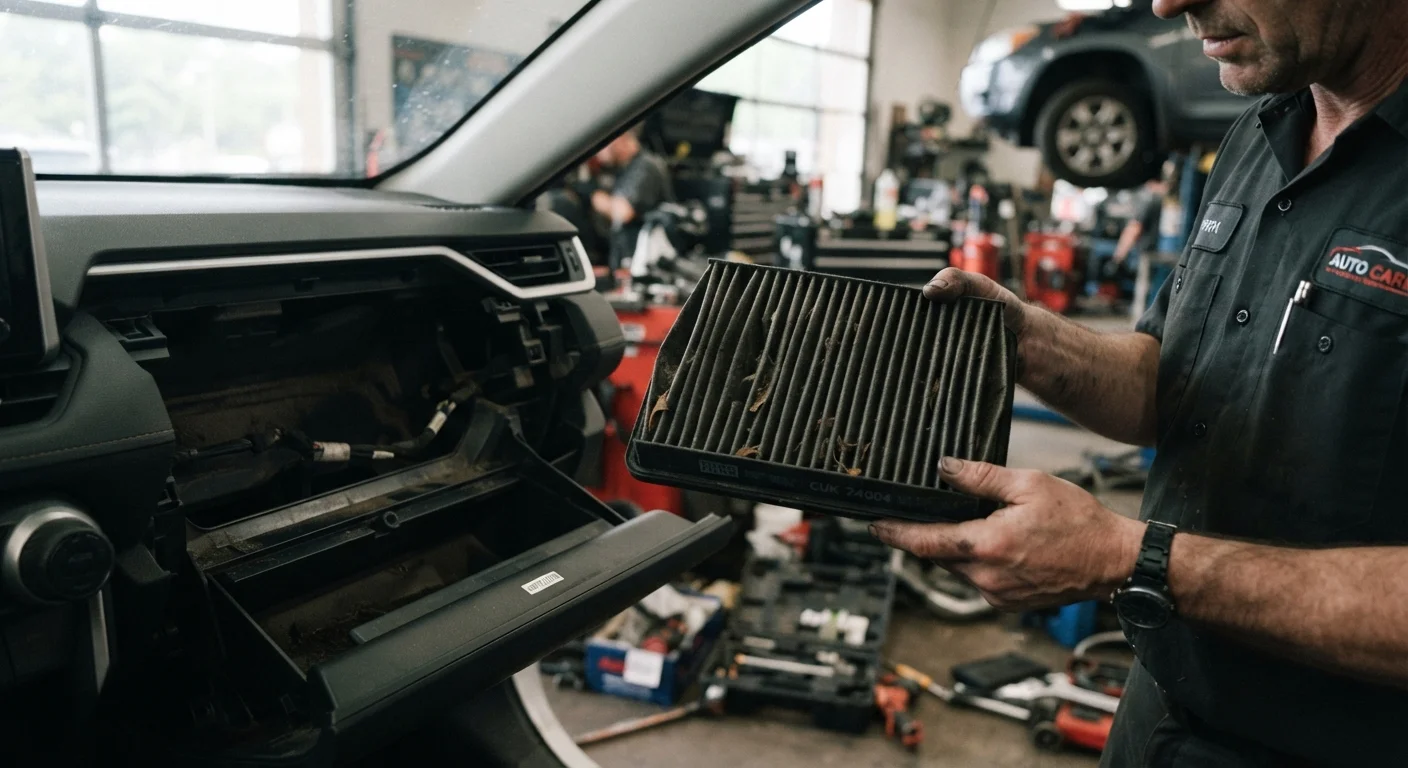
The cabin air filter cleans the air entering your vehicle through the heating and air conditioning system. A clogged filter reduces airflow, forces the blower motor to work harder, and can introduce dust, pollen, and debris into the passenger compartment. Most manufacturers recommend replacing it every 15,000–25,000 miles, though driving in dusty or heavily polluted environments may shorten that interval.
Despite its relatively low cost, this item is skipped at many standard oil-change appointments because it isn't always part of the default checklist. Many filters are accessible behind the glove compartment without tools, making it a practical item to inspect yourself.
A clogged cabin filter forces the blower motor harder and degrades air quality for every passenger.
Wiper Blade Replacement
Wiper blades degrade from UV exposure, temperature swings, and general use — often before the driver notices a problem. Streaking, skipping, or squealing are signs that replacement is overdue, but by that point visibility in rain has already been compromised. The general guidance is replacement every 6–12 months, though actual wear depends on your climate and how frequently the wipers are used.
Blades are inexpensive and straightforward to swap on most vehicles, yet they're frequently left until they fail noticeably. Checking them as part of a seasonal review — as outlined in a seasonal car maintenance checklist — is a reliable way to stay ahead of the problem.
Wiper blades are inexpensive to replace but critical for visibility — don't wait until they're already failing.
Tyre Rotation
Front and rear tyres wear at different rates depending on drivetrain configuration and driving habits. Regular rotation — typically every 5,000–7,500 miles, or at every oil change — evens out that wear and extends overall tyre life. Many drivers assume this is included in their service appointment when it isn't, or they decline it to save time without fully weighing the cost of premature tyre replacement.
Uneven wear also affects handling and braking consistency. If your vehicle pulls to one side or you notice scalloping or uneven tread depth across your tyres, rotation has likely been deferred too long. Tyre pressure should be checked at the same time — it directly affects wear patterns and fuel efficiency.
Skipping tyre rotation shortens tyre lifespan and can quietly degrade braking and handling consistency.
Battery Condition Check
Vehicle batteries typically last three to five years, but their decline isn't always obvious until a cold morning produces a slow crank or a no-start. Most service centers can test battery health in minutes using a load tester, providing a voltage reading under simulated demand rather than just a resting charge. This test is routinely available but not always offered proactively.
Drivers who live in climates with significant temperature extremes — both hot and cold — tend to see shorter battery lifespans. If your battery is approaching three years old and hasn't been tested recently, it's worth requesting a check at your next service visit rather than waiting for a roadside failure.
Battery failure is largely predictable — a simple load test can flag a weak battery before it leaves you stranded.
Brake Fluid Flush
Brake fluid is hygroscopic, meaning it absorbs moisture from the surrounding air over time. As water content rises, the fluid's boiling point drops — a concern during hard braking when heat builds quickly. Degraded brake fluid can also accelerate corrosion within the braking system's hydraulic components. Most manufacturers recommend a flush every two to three years, though recommendations vary by vehicle.
This item is less visible than an oil change and rarely comes up in standard service reminders, which is why many vehicles operate with brake fluid well past its useful life. If you're unsure when it was last changed, a technician can test moisture content with a basic test strip.
Brake fluid absorbs moisture over time, lowering its boiling point and increasing the risk of brake fade.
Air Filter (Engine)
The engine air filter prevents dust, debris, and contaminants from entering the engine's intake. A restricted filter reduces airflow to the engine, which can affect fuel efficiency and, in more severe cases, engine performance. Replacement intervals are commonly in the 15,000–30,000 mile range but vary widely by vehicle and operating environment — driving on unpaved roads or in dusty conditions accelerates contamination.
Unlike the cabin air filter, this one sits under the hood and is inspected during many standard services — but it's also commonly upsold when it still has useful life remaining, or left unchanged when it genuinely needs attention. Holding the filter up to light is a reasonable visual check: if light passes through clearly, it likely still has service life left.
A visual light-check of the engine air filter takes seconds and gives a reasonable indication of remaining service life.
Staying Ahead of What Gets Skipped
The owner's manual is the most underused tool most drivers already own. It lists manufacturer-recommended intervals for virtually every consumable and wear item on your vehicle — not just oil. Cross-referencing those intervals with your actual service history is the most reliable way to spot what's been overlooked.
A simple maintenance log makes that process considerably easier. Keeping a vehicle maintenance log doesn't require special tools — a notebook or a spreadsheet works fine — but it gives you a clear record of what was done, when, and by whom. That record also supports resale value and helps you identify recurring issues before they escalate.
Not every task on this list requires a professional. Some, like replacing wiper blades or checking tyre pressure, are straightforward. Others — battery testing, brake inspections, fluid flushes — are better left to someone with the right equipment and training. Our guide to DIY car maintenance versus when to see a mechanic can help you decide where to draw that line safely. The goal isn't to do everything yourself — it's to make sure nothing quietly gets forgotten.