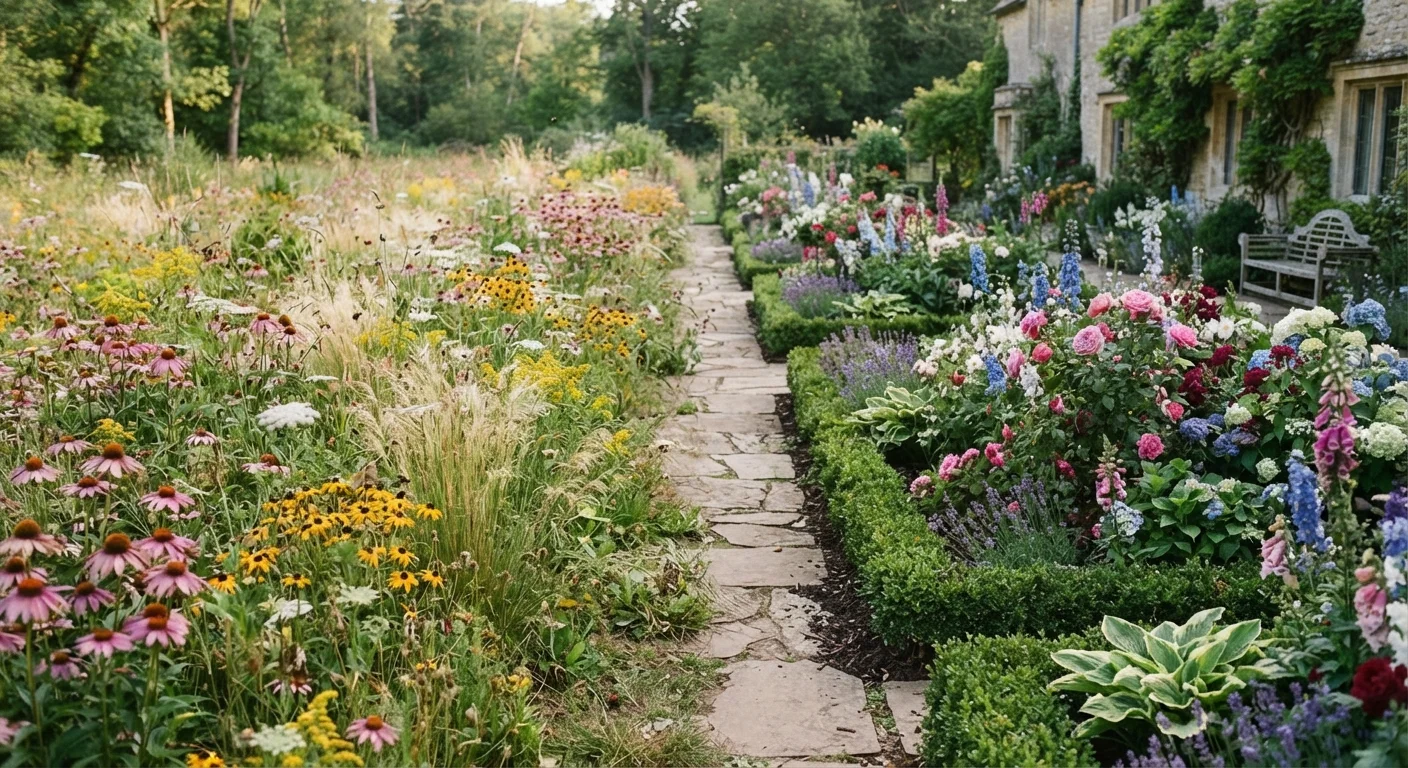
What 'Native' and 'Exotic Ornamental' Actually Mean
The term native plant refers to a species that evolved naturally in a specific region — before significant human settlement or horticultural introduction. These plants developed alongside the local insects, birds, soil microbes, and climate over thousands of years. What counts as native is always geographically specific: a plant native to the Pacific Northwest is not native to the Mid-Atlantic, even if it grows well there.
Ornamental exotics — sometimes called non-native or introduced ornamentals — are plants brought from other regions or countries for their aesthetic appeal. Many are widely sold and entirely non-invasive in garden settings. Others, however, have escaped cultivation and now threaten native ecosystems in parts of the U.S. The key distinction is that ornamental exotics weren't part of the original ecological web in your location.
Neither category is a monolith. Native plants range from groundcovers to towering trees. Exotics range from well-behaved annuals to aggressive spreaders. Knowing the species — not just the category — matters when making planting decisions.
Maintenance, Water, and Soil Demands
One of the most practical differences between these two groups shows up in the amount of work they require after planting.
Native plants, once established — which typically takes one to three growing seasons — tend to be well-matched to local rainfall patterns and soil conditions. Many don't need supplemental fertilization because they evolved in local nutrient cycles. This doesn't mean zero effort: natives still need weeding, appropriate siting, and occasional pruning. But ongoing input is generally lower than for exotics placed outside their natural climate range.
Ornamental exotics, depending on their origin, may need more frequent watering, amended soil, or winter protection in colder climates. A Mediterranean shrub planted in a humid Southeast garden, for example, may struggle with fungal issues. That said, some exotics are quite tough and adaptable — the category is broad. Understanding the origin climate of an exotic plant is a useful shortcut: the closer it matches yours, the less intervention it typically needs.
For guidance on improving soil to support either plant type, see our article on compost, mulch, and fertilizer and the roles each plays in the garden.
| Criterion | Native Plants | Ornamental Exotics |
|---|---|---|
| Establishment period | 1–3 seasons; slow start | Varies; some establish quickly |
| Ongoing water needs | Low once established | Moderate to high, depending on origin |
| Fertilizer requirements | Minimal for most species | Often moderate; soil amendments common |
| Native wildlife support | High — co-evolved with local fauna | Low to moderate for most species |
| Invasive risk | None by definition | Varies; some are highly invasive |
| Design flexibility | Good, but regionally constrained | High — wide palette available |
| Availability at nurseries | Growing, but still limited in some areas | Widely available |
Wildlife Value and Ecological Impact
This is where the difference between native plants and ornamental exotics becomes most significant for gardeners who care about more than aesthetics.
Research from entomologist Doug Tallamy and others has documented that native plants support dramatically more native insect species than exotic plants — and insects are foundational to food webs that support birds and other wildlife. Native oaks, for example, are known to host hundreds of caterpillar species, which are essential protein sources for nesting birds. Most exotic ornamentals support far fewer specialist insects because those insects didn't co-evolve with them.
This doesn't mean exotics have zero wildlife value. Some exotic flowering plants attract generalist pollinators like honeybees. But they rarely replicate the layered ecological role that natives provide. If supporting a local food web is a goal, natives deliver results that exotics generally can't match.
The flip side: some exotic ornamentals become invasive. Species like English ivy, Japanese barberry, and burning bush have escaped garden settings in many U.S. regions, crowding out native vegetation. Before planting any exotic, it's worth checking your state's invasive species list — extension offices and state natural resources agencies typically maintain these lists free of charge.
Pairing native plants thoughtfully also compounds their benefits. Our guide on companion planting explores which plant combinations offer genuine practical advantages in the garden.
Making the Right Choice for Your Garden
The native-versus-exotic decision doesn't have to be all-or-nothing. Most experienced gardeners land somewhere in the middle, and that's a reasonable approach — provided the exotics chosen are non-invasive and appropriate for the site.
A useful framework: start with native plants as the structural backbone of your garden — trees, shrubs, and groundcovers that anchor the space and serve wildlife — then layer in non-invasive exotics for specific aesthetic goals, like extending bloom time or filling a color gap natives don't address in your region.
When evaluating any plant, native or exotic, ask three questions before planting: Does it suit my actual soil and sun conditions? Is it known to be invasive in my state or region? Will it serve a purpose beyond looking nice — pollinator support, erosion control, or seasonal interest for wildlife?
If you're working with raised beds or containers, the calculus shifts somewhat — contained growing situations reduce (though don't eliminate) the risk of exotic plants spreading. For a broader look at those trade-offs, see our piece on raised beds before you commit to a layout.
The most resilient home gardens tend to mirror the diversity of nature — mixing species thoughtfully rather than defaulting entirely to one philosophy. Natives and well-chosen exotics can genuinely coexist when sited with care.
Check Your Local Native Plant Resources
What's considered native varies significantly by region and even county. Your local Cooperative Extension Service — run through land-grant universities in every U.S. state — offers free, region-specific plant lists and guidance. Many native plant societies also maintain searchable databases by zip code or ecoregion, making it straightforward to find appropriate species for your exact location.