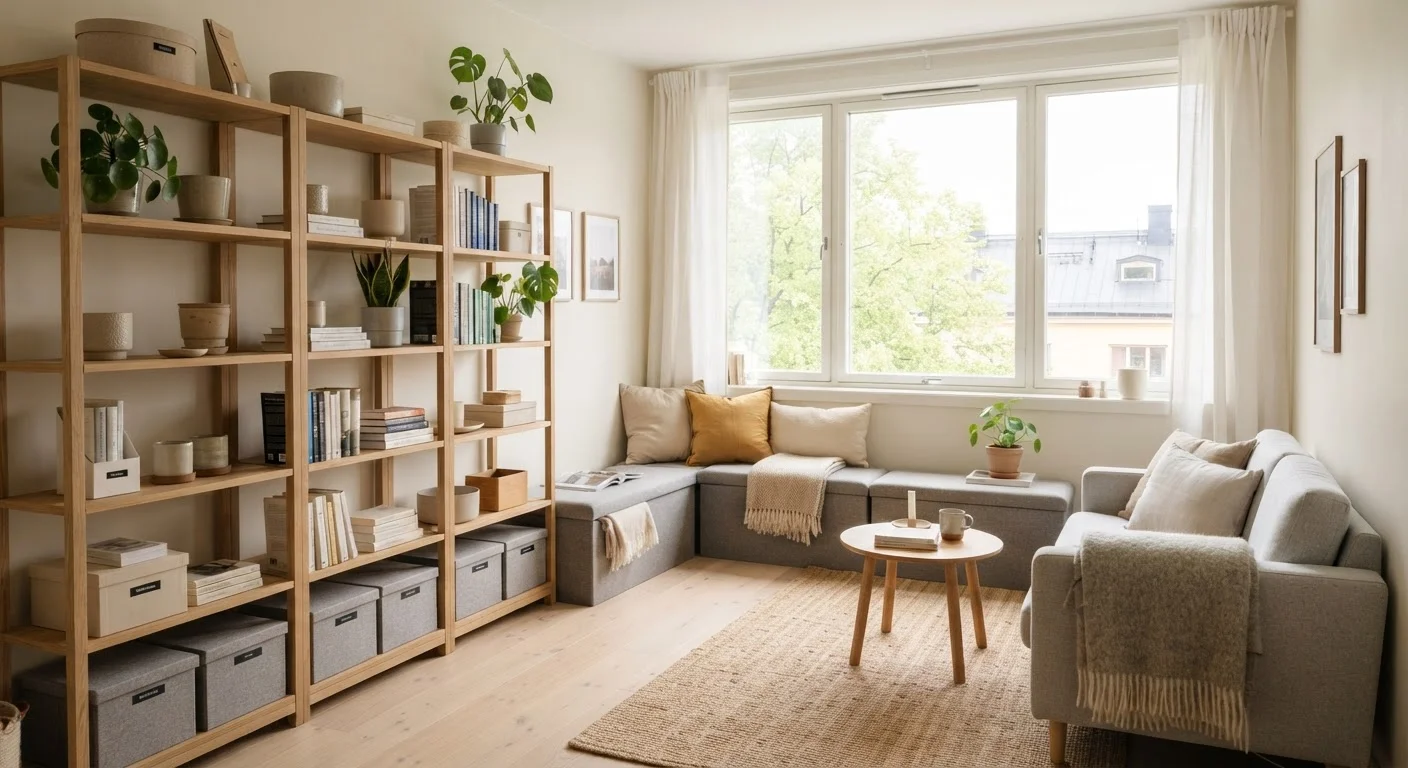
The Core Difference: Floor Space vs. Wall Height
When a room feels cramped, most people instinctively look for more storage. But the real question isn't how much storage — it's where that storage lives. Vertical and horizontal storage occupy fundamentally different parts of a room, and that distinction shapes everything from how easy a space is to navigate to how organized it stays over time.
Vertical storage grows upward — think tall bookshelves, wall-mounted pegboards, over-door organizers, and stacked cabinet units. It treats wall height as usable real estate. Horizontal storage spreads along the floor plane — think low dressers, storage ottomans, under-bed drawers, and wide credenzas. It prioritizes accessibility and often doubles as a surface for lamps, plants, or everyday objects.
Neither approach is inherently superior. The right choice depends on your ceiling height, the room's purpose, who uses the space, and how frequently the stored items need to be retrieved. Understanding those variables is what turns a storage decision into a genuinely functional system.
| Criterion | Vertical Storage | Horizontal Storage |
|---|---|---|
| Floor space used | Minimal | Moderate to significant |
| Accessibility | Lower for high shelves | Easy, within reach |
| Best for | Infrequent-use items | Daily-use essentials |
| Visual effect | Draws eye up, can feel open | Grounds the room, feels stable |
| Safety considerations | Must be wall-anchored | Generally stable freestanding |
| Dual-purpose potential | Can divide open-plan rooms | Often doubles as seating or surface |
| Ideal room type | Studios, offices, pantries | Bedrooms, living rooms, entryways |
Where Vertical Storage Wins
In rooms where every square foot of floor space counts — studios, narrow kitchens, small home offices — vertical storage is often the stronger default. By drawing the eye upward and keeping the lower half of the room clear, tall shelving units can make a space feel larger, not more cluttered.
Vertical storage also excels for items you don't access every day. Books, seasonal decorations, archive boxes, and infrequently used kitchen equipment are all strong candidates for upper shelves. The inconvenience of reaching high is a fair trade when those items are only needed a few times a year.
Wall-mounted systems — pegboards in workshops, rail systems in pantries, hooks along entryway walls — add storage without consuming any floor area at all. For a room-by-room look at maximizing small spaces, this wall-first thinking is a recurring theme across kitchens, bathrooms, and bedrooms alike.
One important safety note: Any tall freestanding unit — particularly shelving taller than four feet — should be anchored to wall studs. Tip-over accidents from unsecured furniture are a genuine hazard, especially in homes with children. Always follow manufacturer anchoring instructions and consult a professional if you're unsure about your wall type.
Where Horizontal Storage Wins
Horizontal storage has a usability advantage that vertical arrangements can't match: everything is within comfortable reach. A wide, low dresser, a storage bench at the foot of a bed, or an under-bed organizer system puts items exactly where you need them without a step stool or awkward reaching.
This accessibility matters more than it might seem. Storage that's genuinely easy to use is storage that actually stays organized. If retrieving an item requires effort, it tends to get left out — which defeats the purpose entirely. This is one reason why common organization beliefs often backfire: systems that look good but resist daily use quickly collapse.
Horizontal pieces also serve double duty. An ottoman with interior storage provides seating. A low sideboard offers display space on top. Under-bed drawers store off-season clothing without adding any visual bulk to the room. In shared spaces, horizontal storage can be easier to maintain across different habits and comfort levels — worth considering if you're working through organizing a home when everyone has different standards.
How to Combine Both for Maximum Effect
In practice, the most functional small spaces don't choose one approach — they use both deliberately. The key is matching the storage type to the item's use frequency and the room's constraints.
A practical framework: use vertical storage for low-frequency items stored above eye level, horizontal storage for daily-use items at waist height or below, and the space in between — roughly eye level — for items used weekly. This layered approach keeps the most-needed things accessible while pushing seldom-used items to less convenient but space-efficient zones.
In a bedroom, this might mean a tall wardrobe for clothes, under-bed drawers for extra linens, and a nightstand drawer for everyday essentials. In a kitchen, wall-mounted shelves hold serving dishes while deep lower drawers store pots. The choice between open and closed storage adds another layer to this thinking, particularly in kitchens and living rooms where visibility and dust management both factor in.
Finally, recognize that storage needs evolve. A system that works well now may need adjustment as household size or life stage changes — something worth revisiting periodically, as explored in this look at how organization needs shift across life stages.