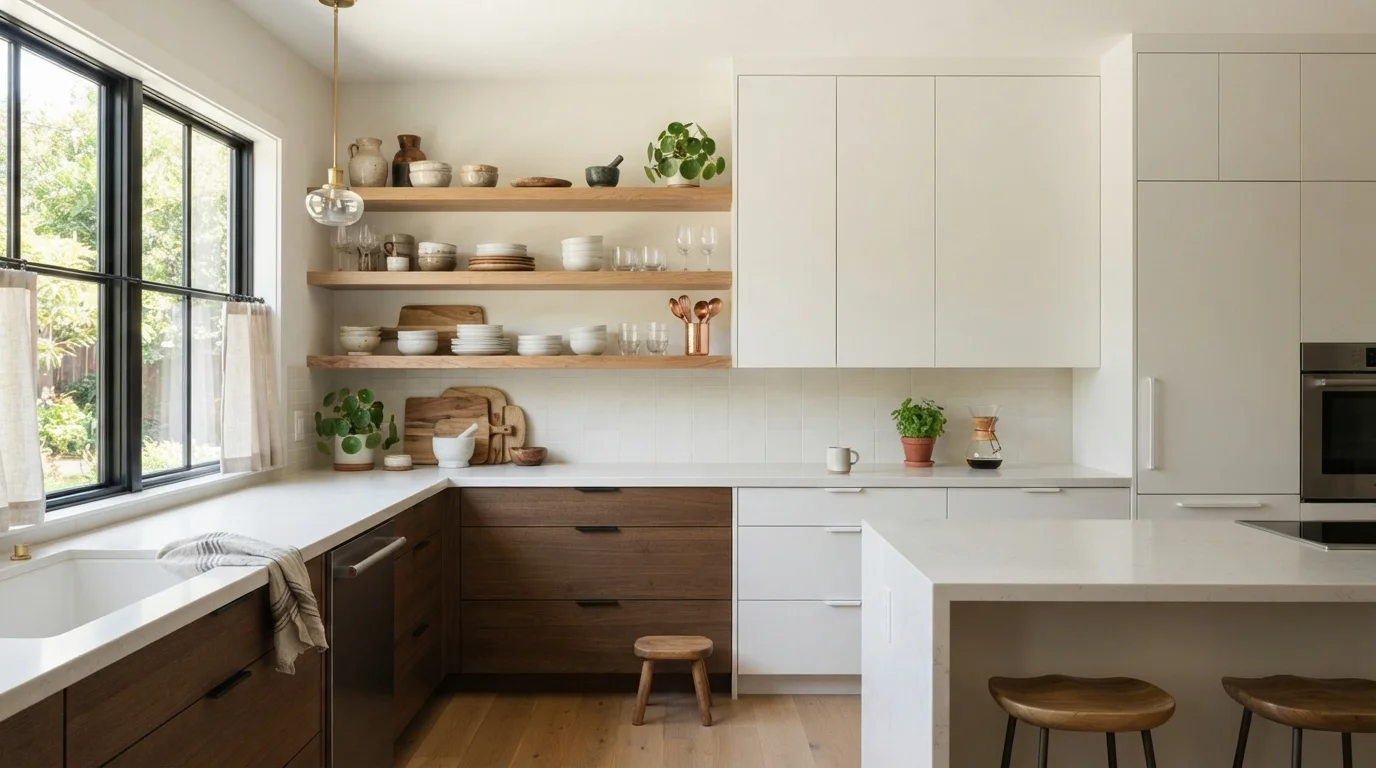
The Real Difference Between These Two Storage Styles
Open shelving and closed cabinets represent two fundamentally different relationships with your belongings. Open shelves put everything on display — which creates both visual interest and a constant organizational obligation. Closed cabinets absorb whatever you put inside them, hiding disorder behind a door until you choose to deal with it.
Neither approach is inherently better at organizing. What matters is whether the system matches your actual habits and household. A beautifully styled open shelf that looks chaotic within a week is less functional than plain closed cabinets that are consistently maintained. Understanding what each style demands — not just what it looks like — is the starting point for a decision that actually holds up in everyday life.
| Criterion | Open Shelving | Closed Cabinets |
|---|---|---|
| Visual tidiness | Requires constant upkeep to look neat | Conceals disorder behind doors |
| Accessibility | Grab-and-go, everything visible | Requires opening doors; back items less accessible |
| Dust accumulation | High — items need frequent wiping | Low — contents are protected |
| Suitable for busy households | Challenging with multiple users | More forgiving for varied tidiness habits |
| Storage volume flexibility | Limited — overflow is immediately visible | Higher — can absorb more items discreetly |
| Room feel | Airy and open if well-maintained | Contained; can feel heavier in small rooms |
| Maintenance demand | High — visual exposure is unforgiving | Lower day-to-day, but needs periodic internal review |
Open Shelving: Where It Excels and Where It Falls Short
The strongest argument for open shelving is accessibility. Items in plain view are faster to grab, and the visual feedback helps you notice when something is out of place or running low. This works particularly well for everyday-use items: a set of dinner plates you reach for nightly, a row of cookbooks you actually consult, or a small collection of mugs. The shelf becomes part of your workflow rather than a barrier to it.
Open shelving also suits spaces where storage volume is limited. In a small kitchen or apartment bathroom, eliminating cabinet doors can free up several inches of usable space and prevent the room from feeling boxed-in. For more strategies on maximizing compact rooms, see small-space organization strategies.
However, open shelving carries a real maintenance burden. Dust settles on exposed items consistently — dishes, glassware, and decorative objects all require more frequent cleaning than their cabinet-stored counterparts. More critically, visual clutter is amplified rather than contained. Research in environmental psychology consistently links visually disordered spaces to increased mental stress — a reality worth considering before committing to open display. For a deeper look at why clutter affects how we feel, the article on why clutter feels overwhelming is worth reading.
Open shelving is a good fit if you own fewer, more curated items and genuinely enjoy maintaining an orderly display. It becomes a liability when storage needs grow or when multiple people are using the same space with varying tidiness standards.
Closed Cabinets: The Case for Concealment
Closed cabinets are forgiving by design. A door closed over a moderately disorganized interior still presents a tidy face to the room — which matters enormously on rushed mornings or when guests arrive unexpectedly. This makes cabinets the more realistic choice for most households, particularly those with children, multiple occupants, or simply a high volume of stored items.
Cabinets also protect contents from dust, grease, and light — extending the life of stored goods, especially in kitchens where cooking residue settles quickly on surfaces. Pantry items, linens, and cleaning supplies stored behind doors stay cleaner longer with minimal effort.
The downside is a real one: out of sight often means out of mind. Cabinets can become dumping grounds where organization quietly collapses. Items get pushed to the back, expire unnoticed, or duplicate because you forget what you already own. The fix isn't switching to open shelves — it's building a clear internal system. Grouping items by category, using shelf risers or pull-out organizers, and doing periodic reviews are all habits that keep cabinets functional. Our guide on kitchen organization habits that hold up covers practical approaches that work inside any cabinet layout.
How to Choose — or Combine — Both Approaches
Most well-functioning homes use both storage types strategically rather than committing entirely to one. A useful framework: open shelves for high-rotation, low-accumulation items; closed cabinets for everything else.
In a kitchen, this might mean open shelving for a daily-use mug collection and a few cooking oils, while cabinets handle dry goods, small appliances, and overflow dishware. In a living room, a media console with closed lower doors and open upper shelves can display a few intentional objects while concealing cables and remote controls.
Your household composition matters too. If you're organizing a space used by multiple people with different habits, defaulting to more closed storage tends to reduce friction. For advice on building systems everyone in a household can realistically maintain, organizing shared spaces effectively offers practical strategies.
Life stage is another factor worth weighing. A household with young children or frequent entertaining has different storage demands than a single-person apartment — and those demands shift over time. See how organization needs change across life stages for a broader perspective on building storage systems that adapt.
Ultimately, the storage style that organizes better in everyday life is the one you'll actually maintain. Choose based on your real habits — not the habits you aspire to have — and build your system from there.