Why Your Toolkit Is the Foundation of Home Ownership
Owning a home means repairs will happen — a loose hinge, a leaky faucet, a cracked tile. Having the right tools on hand is the difference between a 20-minute fix and a weekend waiting for a contractor. A thoughtfully assembled toolkit doesn't require a large upfront investment, and it pays for itself the first time you avoid a service call for a straightforward job.
That said, not every repair is a DIY task. Electrical panel work, gas lines, and structural changes carry real safety and code-compliance risks. Before starting any major project, check out our guide on repairs that should always go to a licensed professional to know where the line is.
For everything within DIY scope, the list below covers the tools that handle the widest range of common household jobs.
| Minimum starter tools recommended | 7–10 hand tools |
| Most versatile power tool | Cordless drill/driver |
| Tape measure length for general home use | 25 feet |
| Safety items always required | Safety glasses, work gloves |
| Common sealing consumable | PTFE (plumber's) tape |
| Permit check required for | Electrical, structural, gas, plumbing-into-mains work (Verify requirements with your local building authority) |
The Essential Hand Tool Category
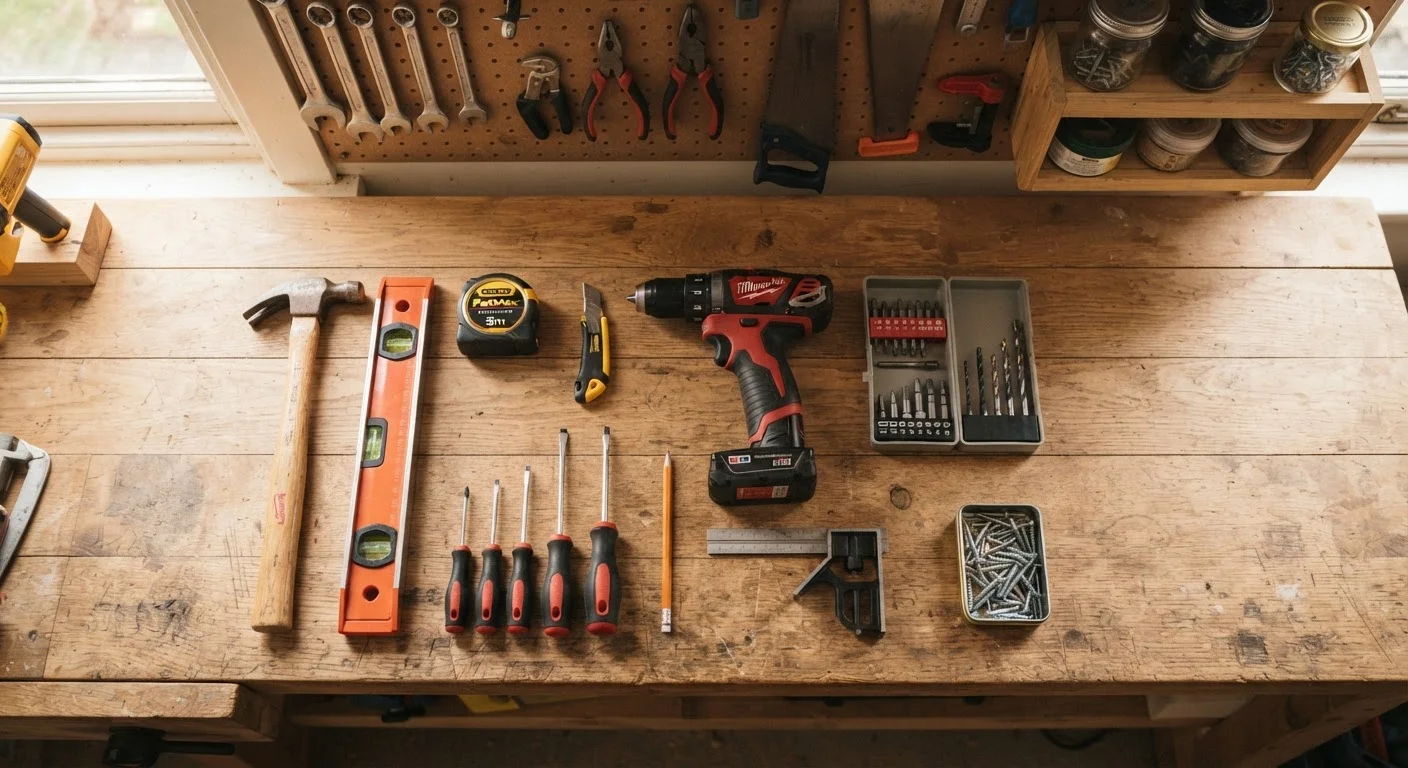
Hand tools are the backbone of any home toolkit. These are the items you'll reach for on nearly every job:
- Claw hammer (16 oz): Drives and pulls nails, taps components into place. The 16-ounce weight balances control and power for general use.
- Screwdriver set: Include both flathead and Phillips head in multiple sizes. Magnetic tips help when working in tight spaces.
- Adjustable wrench: One medium and one large covers most nut and bolt sizes without needing a full socket set.
- Needle-nose pliers and slip-joint pliers: Needle-nose handles small, confined work; slip-joint grips pipes and larger fasteners.
- Utility knife: Scores drywall, cuts caulk, opens packaging, and trims weather stripping.
- Tape measure (25 ft): A 25-foot tape with a wide blade holds its shape over distance — essential for furniture placement, window measurements, and material cuts.
- 4-foot level: Ensures shelves, frames, and fixtures hang straight. A shorter torpedo level is a useful complement for confined spaces.
Store hand tools in a structured toolbox or roll bag so nothing gets lost between jobs. Good organizational habits reduce the time you spend hunting for the right tool mid-project.
Power Tools Worth Adding Early
A small set of power tools dramatically expands what you can accomplish. You don't need a full workshop — focus on versatility:
- Cordless drill/driver: The single most useful power tool in any home. Use it to drive screws, bore holes, assemble furniture, and install hardware. A variable-speed model with a clutch protects surfaces from over-driving fasteners.
- Oscillating multi-tool: Cuts, sands, scrapes, and flushes into tight spaces that no other tool reaches. Particularly useful for flooring repairs and grout removal.
- Circular saw or jigsaw: For cutting lumber, sheet goods, or trim. A jigsaw handles curves; a circular saw is faster for straight cuts. Start with whichever suits the repairs you anticipate most.
Always read the tool manual before first use, use appropriate safety glasses and hearing protection, and ensure blades are properly secured before powering on. When in doubt about a repair that requires power tools near wiring or pipes, consult a qualified professional first.
Repair Supplies and Specialty Items
Beyond tools, a stocked repair kit includes consumables and specialty items that make individual jobs possible:
- Drywall patching compound and mesh tape: Handles nail pops, small holes, and dings without professional help.
- Caulk gun with paintable silicone caulk: Seals gaps around tubs, windows, and trim. Fresh caulk prevents water infiltration and improves energy efficiency.
- Stud finder: Locates wall framing so you can hang heavy items securely without guessing.
- Safety glasses and work gloves: Non-negotiable. Keep dedicated pairs in the toolkit, not borrowed from elsewhere in the house.
- Flashlight or headlamp: Crawl spaces, attics, and cabinet interiors are routinely under-lit. A headlamp frees both hands.
- Plumber's tape (PTFE tape): Wraps pipe threads to seal minor leaks at connections — a simple fix that prevents water damage over time.
Pair your toolkit with a seasonal home maintenance checklist so you're using your tools proactively, catching issues before they become expensive repairs. And if a job turns out to be more complex than expected, don't push past your comfort level — some DIY assumptions cost more than hiring out.
Cordless drill/driver
A battery-powered tool that rotates a bit to drive screws or bore holes. The clutch setting controls torque, preventing screws from being driven too deep into the material.
PTFE tape
Polytetrafluoroethylene tape, commonly called plumber's tape or thread-seal tape. Wrapped around pipe threads before assembly, it fills microscopic gaps to create a watertight seal.
Stud finder
A handheld device that detects framing studs hidden behind drywall. Studs provide the solid anchor points needed to safely hang heavy mirrors, shelving, or fixtures.
Oscillating multi-tool
A power tool that moves its blade in rapid back-and-forth arcs rather than rotating. This motion allows it to cut, sand, or scrape in tight spaces where circular blades cannot reach.
Slip-joint pliers
Pliers with an adjustable pivot point that lets the jaws open to different widths. Commonly used for gripping pipes, large nuts, and irregularly shaped objects.
Caulk
A flexible, waterproof sealant applied with a caulk gun to fill gaps around fixtures, windows, and trim. Paintable silicone or latex caulk works for most interior and exterior household applications.