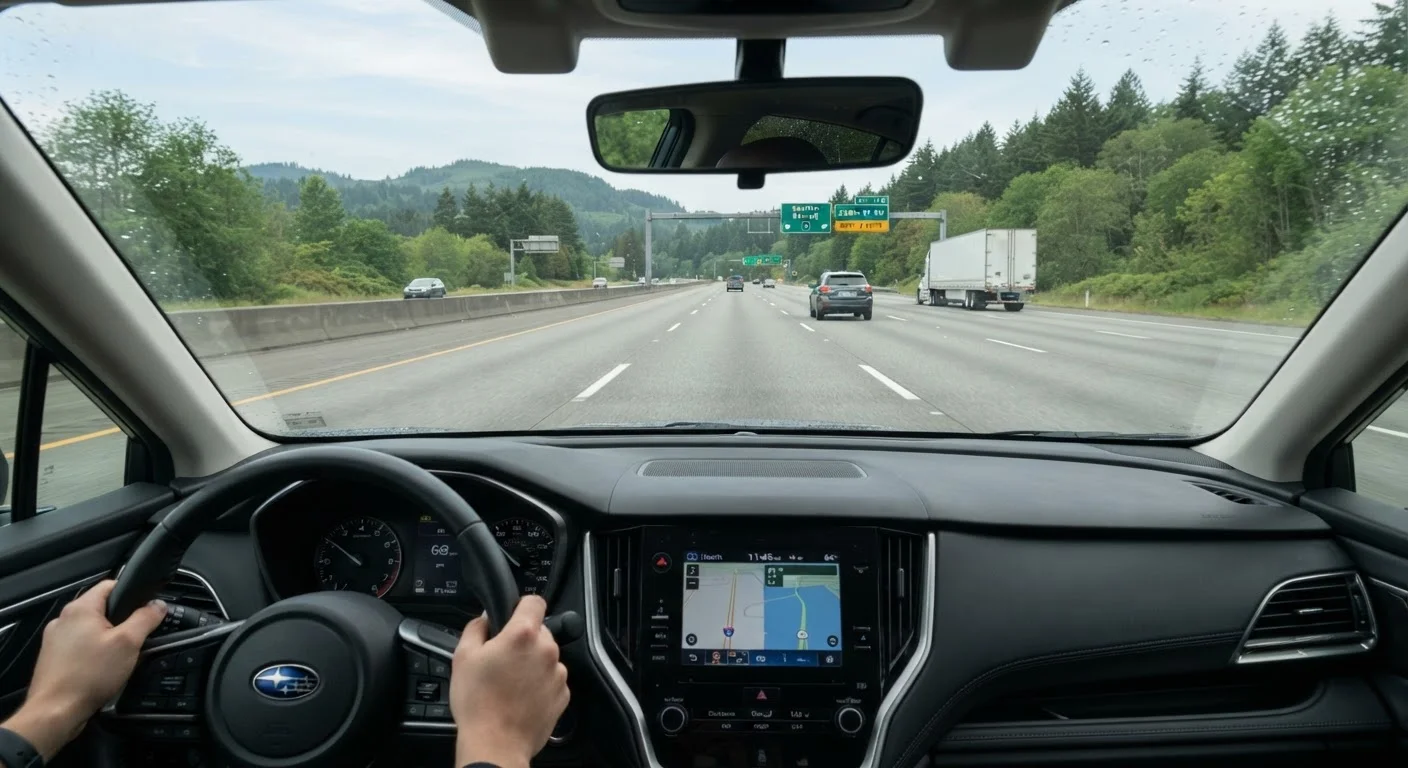
Why Motorways Feel Different
For most new licence holders, the first motorway trip is a step change in driving experience. Everything moves faster, the lanes are wider, and there is far less margin for hesitation. Understanding what makes motorways distinct is the foundation for driving them safely.
Motorways are designed for high-speed, continuous flow — no traffic lights, no pedestrians, no cyclists (with narrow exceptions), and no right turns. That controlled environment is actually what makes them statistically safer per mile than many A-roads. According to Department for Transport data, motorways consistently record lower killed-or-seriously-injured rates per billion vehicle miles than other road types. The risk, when it does occur, tends to come from high-speed consequences of driver error rather than the road itself.
The key psychological adjustment is speed perception. After extended motorway driving, 70 mph begins to feel slow, which distorts judgement when you exit. Be conscious of this effect — glance at your speedometer regularly, especially when transitioning to lower-speed roads.
This article is part of a broader series on driver development; for a full overview of skills from learner to experienced driver, see Safe Driving From Learner to Experienced.
Slip road
The short acceleration or deceleration lane connecting a local road to or from the motorway. Used to build speed when joining and to slow down when exiting.
Lane discipline
The practice of driving in the correct lane for your speed and purpose — keeping left unless overtaking — to maintain safe, predictable traffic flow.
Stopping distance
The total distance a vehicle travels from when the driver perceives a hazard to when the vehicle fully stops, combining thinking distance and braking distance.
Smart motorway
A motorway that uses technology — variable speed signs and sometimes an open hard shoulder — to manage traffic flow. Overhead gantry signs are legally binding.
Undertaking
Passing a vehicle on its left side on a multi-lane road. This is generally illegal in the UK except in slow, queuing traffic where lanes are moving at different speeds.
Two-second rule
A method for maintaining a safe following gap: allow at least two seconds to pass between the vehicle ahead crossing a fixed point and your vehicle reaching that same point.
Joining the Motorway: Using the Slip Road Correctly
The slip road (on-ramp) is where most new-driver anxiety concentrates — and where errors can create serious hazards. The purpose of the slip road is to allow you to match the speed of motorway traffic before you merge, not to pause and wait for a gap.
Follow this sequence:
- Accelerate along the slip road to approximately match the speed of vehicles in the left lane — typically 60–70 mph.
- Check your mirrors and blind spot (right shoulder) while still on the slip road.
- Signal right to indicate your intention to merge.
- Merge smoothly into a gap in the left lane when one exists; do not force other drivers to brake.
- Cancel your signal and settle into the left lane.
A common mistake is reaching the end of the slip road without having merged, then stopping. This removes your acceleration advantage entirely and forces a dangerous slow-speed merge into fast-moving traffic. Only stop if the motorway is at a complete standstill.
Vehicles already on the motorway have priority, but consideration is expected from both sides — established drivers should avoid unnecessary lane changes that close gaps on the slip road. Confusion at junctions is a recurring theme in crash data; you can learn more about priority and merging logic in our guide to roundabout priority rules and where confusion leads to crashes.
Lane Discipline and Overtaking
UK law and the Highway Code are unambiguous: the left lane is the default driving lane. The right-hand lanes exist solely for overtaking. This is one of the most frequently misunderstood rules among new drivers, and middle-lane hogging is a specific offence under careless driving provisions.
Practical overtaking sequence:
- Check your mirrors (centre, then right) and identify a safe gap in the lane to your right.
- Signal right, move smoothly into the overtaking lane.
- Pass the vehicle at a steady speed — do not linger alongside it.
- Check your left mirror to confirm the overtaken vehicle is fully visible.
- Signal left and return to the left lane.
Avoid the following common errors:
- Undertaking (passing on the left) — illegal except in slow, queuing traffic.
- Tailgating in the overtaking lane — pressure-driving behind a slow vehicle to force them over is careless and illegal.
- Weaving between lanes — each unnecessary lane change is a merge event that multiplies collision risk.
Aggressive behaviour on motorways is a documented cause of crashes. If another driver behaves threateningly, the evidence-based response is to create space and not engage. Our article on road rage and aggressive driving explains the psychology and de-escalation strategies in detail.
Use your mirrors every 8–10 seconds
On a motorway, conditions can change rapidly. Develop a habit of scanning all three mirrors in sequence every 8–10 seconds so you always have an up-to-date picture of surrounding traffic. This is particularly important before any lane change and when vehicles behind are closing quickly.
Speed Awareness and Stopping Distances
The national speed limit on UK motorways is 70 mph for cars and most vans. This is a legal maximum, not a target — adverse conditions, traffic density, or reduced visibility all call for lower speeds. Variable speed limits on smart motorways (displayed on overhead gantries) are legally enforceable and override the national limit.
Stopping distances increase with the square of speed, meaning small speed increases produce large increases in stopping distance. At 70 mph, the Highway Code's overall stopping distance is 96 metres — roughly 21 car lengths. This assumes good tyres, dry tarmac, and an alert driver. Rain, cold temperatures, and tyre wear extend this considerably.
The two-second rule is the standard gap-keeping method: pick a fixed point ahead, and ensure at least two full seconds pass between the vehicle in front crossing it and your own vehicle reaching it. In wet or low-visibility conditions, double this gap. For a deeper understanding of adapting your driving when conditions deteriorate, see our guide on driving in rain, fog, and ice.
Speed cameras are common on motorways, including average-speed camera systems that measure your pace across long sections rather than at a single point. Maintaining a legal, consistent speed protects both your licence and the safety of everyone around you.
Exiting Safely and Managing Fatigue
Leaving the motorway requires early preparation. Junction numbers and distances are posted on countdown markers — blue signs with three, two, and one diagonal bar appear at 300, 200, and 100 yards before the slip road. Begin moving to the left lane well before the first countdown marker rather than cutting across at the last moment.
Exit sequence:
- Move to the left lane at least one mile before your junction when traffic allows.
- Signal left as you approach the slip road.
- Decelerate on the slip road itself — not on the main carriageway.
- Check your speedometer; speed perception distortion after sustained motorway driving is real and well-documented. Many exits lead directly into 30–40 mph zones.
Driver fatigue is a major motorway hazard. Monotonous, high-speed driving suppresses alertness more quickly than varied urban driving. The UK's THINK! road safety campaign and research from organisations such as the Royal Society for the Prevention of Accidents (RoSPA) consistently identify fatigue as a contributing factor in a disproportionate share of motorway crashes.
Practical fatigue management:
- Plan a break every two hours or 100 miles, whichever comes first.
- Use motorway service areas — never stop on the hard shoulder to rest except in a genuine emergency.
- If you feel drowsy, wind down the window for short-term alertness, then exit at the next opportunity; caffeine takes 20–30 minutes to take effect.
- Avoid long motorway trips in the early hours (2–6 am), when circadian alertness is naturally lowest.
Keeping your vehicle in good condition also reduces unexpected motorway incidents — ensure tyres are correctly inflated and your fuel or charge level is adequate before long journeys. For broader vehicle maintenance guidance, visit our complete reference for car ownership and maintenance.