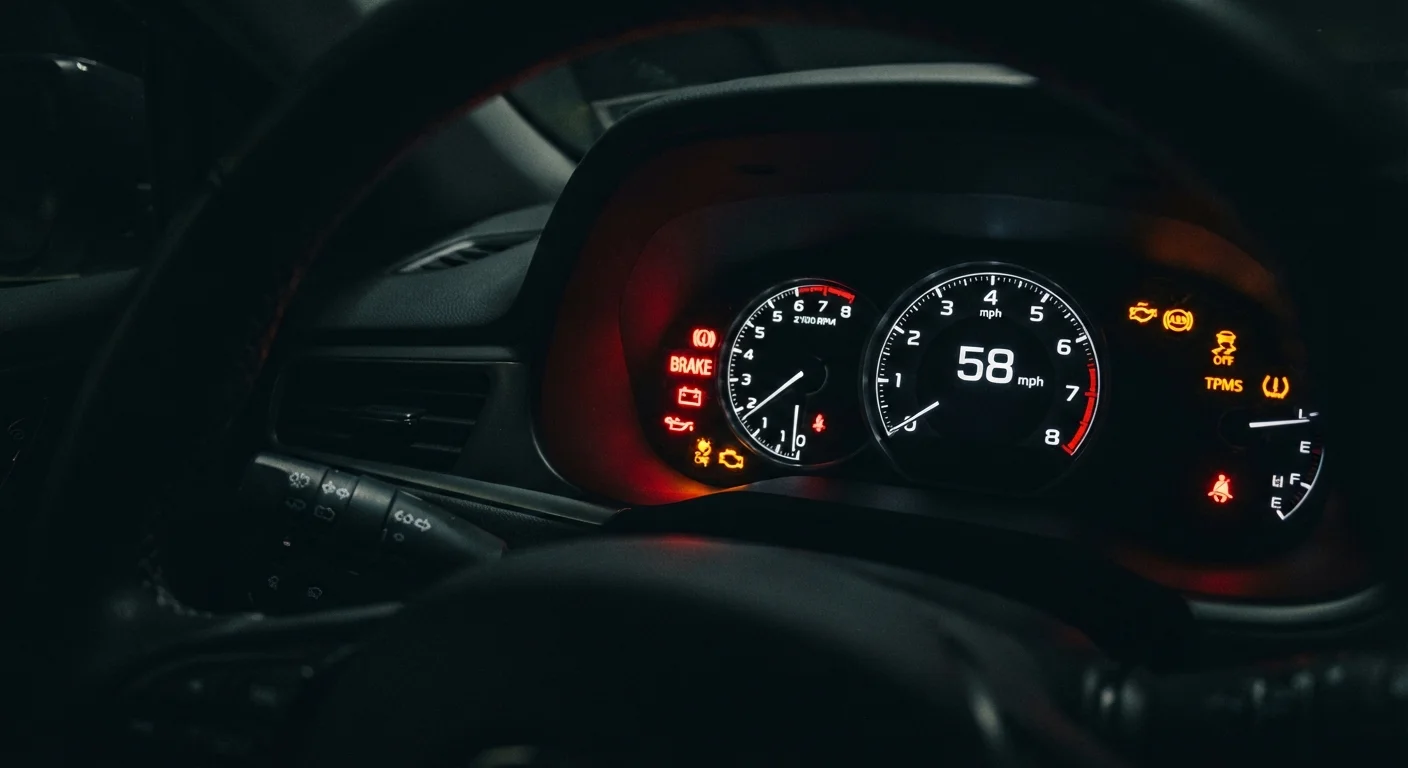
The Color Code: How to Read Urgency at a Glance
Before diving into individual symbols, understanding the color system saves critical seconds when a light comes on. Most modern vehicles follow a consistent logic: red lights demand immediate attention, often requiring you to stop driving; yellow or amber lights signal a condition to investigate soon; and green or blue indicators confirm that a system — like high beams or cruise control — is simply active.
This color hierarchy isn't accidental. It mirrors the logic of traffic signals so drivers instinctively calibrate their response. A red oil-pressure light is not in the same category as a yellow tire-pressure alert, even though both technically indicate something wrong. Treating them the same way is one of the most common and costly mistakes drivers make.
| Warning light colors | Red = urgent, Yellow/Orange = caution, Green/Blue = system active (SAE International / NHTSA general guidance) |
| Check engine light triggers | Over 1,400 possible OBD-II fault codes (Society of Automotive Engineers) |
| TPMS mandate | Required on all new US passenger vehicles since 2008 (NHTSA TPMS final rule) |
| Oil pressure light response | Pull over and switch off engine as soon as safely possible (Industry consensus from automotive engineers) |
| Temperature warning threshold | Most engines overheat above approximately 240–250°F (116–121°C) (General engineering reference range) |
| Battery warning cause | Usually a failing alternator, not just a dead battery (ASE-certified mechanic guidance) |
Your owner's manual remains the definitive reference for your specific vehicle — symbols can vary between manufacturers, and a few automakers use their own proprietary icons not covered in general guides.
The Six Most Common Warning Lights Explained
Check Engine (Malfunction Indicator Lamp)
This is the light drivers dread most — and often misunderstand. A steady amber check engine light means the vehicle's computer has logged a fault code worth investigating, but you can usually continue driving carefully to a shop. A flashing check engine light is more serious: it typically indicates an engine misfire severe enough to damage the catalytic converter, and you should reduce speed and get the car diagnosed promptly. The only way to know the underlying cause is a diagnostic scan — no amount of visual inspection will tell you which of the 1,400+ possible codes is stored. See our guide to common car maintenance myths for why ignoring this light is rarely a good gamble.
Oil Pressure Warning
A red oil-can symbol means the engine's lubrication system has lost pressure — not necessarily that you're low on oil, though that can be the cause. Running an engine without adequate oil pressure causes rapid, severe metal-on-metal wear. Pull over safely and turn off the engine as soon as traffic allows. Check the oil level with the dipstick once the engine has cooled; if the level is fine, the issue may be a failing oil pump or sensor. Do not restart and drive — get the car towed and diagnosed. For a deeper look at how engine fluids interact, see our fluid system guide.
Engine Temperature Warning
The thermometer-in-water symbol signals the engine is overheating. Turn off the air conditioning immediately (it adds load), and if the temperature gauge doesn't drop within a minute or two, pull over safely and shut the engine off. Never open the radiator cap on a hot engine. Continuing to drive an overheating vehicle can warp cylinder heads — a repair that can cost thousands of dollars. Learn what actually happens inside an engine when coolant runs low to understand why quick action matters here.
Battery / Charging System
A battery symbol while driving usually means the alternator isn't generating enough electricity to sustain the car's systems. The battery is discharging in real time. You may have 20–40 minutes of driving remaining before the car loses power entirely. Minimize electrical loads (turn off AC, heated seats, stereo) and drive directly to a shop or safe stopping point. Don't switch the engine off until you arrive — restarting may not be possible.
Tire Pressure (TPMS)
The horseshoe-with-exclamation symbol means at least one tire has dropped to 25% or more below its recommended pressure. Underinflated tires affect braking distance, handling, and fuel economy. Pull over when safe and check all four tires with a gauge; the TPMS light doesn't always identify which tire is affected. Proper tire pressure and tread depth are the two numbers that most directly affect road safety.
Brake System Warning
A circled exclamation or the word BRAKE can mean the parking brake is engaged (check first), brake fluid is low, or there's a fault in the ABS or brake system. If the parking brake is definitely off and the light remains on, treat it seriously — brake failure is among the most dangerous outcomes of ignored warnings. Have it inspected before driving further where possible.
When to Pull Over Immediately vs. When to Schedule a Checkup
Not every warning light justifies pulling over on the highway shoulder — but a few genuinely do. Use this framework:
- Stop immediately (safely): Oil pressure light (red), engine temperature at maximum, brake warning with no parking brake engaged, any light accompanied by unusual sounds, smells, or handling changes.
- Drive directly to a shop today: Flashing check engine light, battery warning, transmission temperature warning.
- Schedule within a few days: Steady amber check engine light, TPMS alert, service due reminders.
Warning lights appearing alongside each other — for example, battery and temperature simultaneously — can indicate an electrical fault affecting multiple sensors. In those cases, err on the side of caution and have the vehicle inspected sooner rather than later.
For a clear breakdown of which follow-up tasks you can handle yourself and which require a professional, see DIY car maintenance vs. when to see a mechanic. Safe driving decisions always begin with knowing what your car is trying to tell you — and taking that communication seriously.