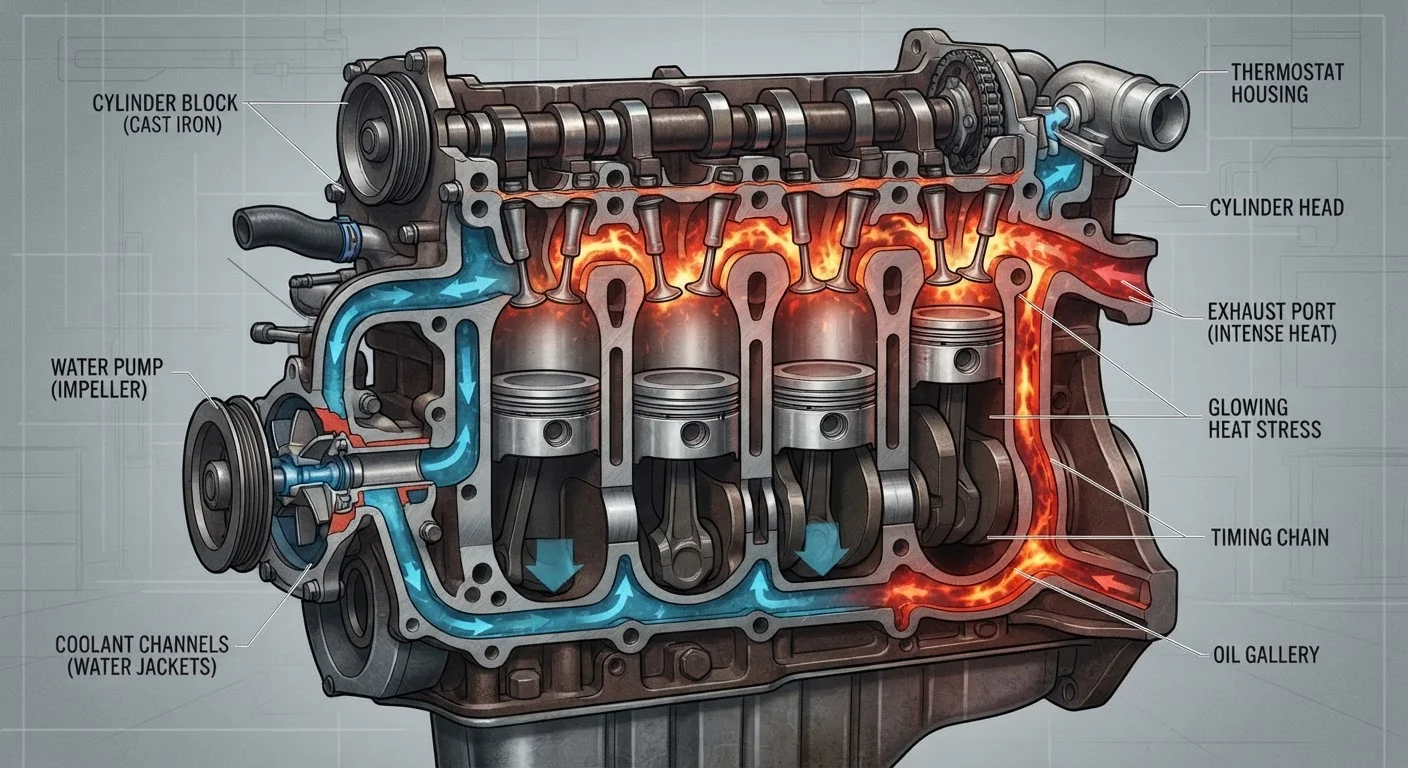
How the Cooling System Keeps Temperatures in Check
A running engine produces enormous amounts of heat — combustion temperatures inside cylinders can exceed 2,000°F. The cooling system's job is to keep metal surfaces in the engine operating within a safe range, typically between 195°F and 220°F. Coolant does this by absorbing heat as it flows through passages cast into the engine block and cylinder head, then releasing that heat through the radiator before cycling back.
The water pump drives this circulation. A thermostat regulates how much coolant flows based on operating temperature, and the radiator cap maintains system pressure to raise the coolant's effective boiling point. When all components work together and coolant is at the correct level, heat is managed continuously and automatically.
When coolant level drops — even by a moderate amount — that balance breaks down. Air pockets form in the system, reducing the fluid's ability to transfer heat away from metal surfaces efficiently.
The Chain of Events When Coolant Runs Low
The consequences of low coolant are not gradual — they escalate quickly once heat starts accumulating faster than it can be released.
$1,500–$3,000+
Typical cost to replace a blown head gasket
Repair costs vary widely by vehicle make, model, and labour rates, but head gasket replacement is consistently among the more expensive engine repairs at independent shops and dealerships.
~2 min
Time needed to check coolant reservoir level
A visual check of the coolant reservoir requires no tools and takes under two minutes — making it one of the quickest preventive checks a driver can perform.
195–220°F
Normal engine operating temperature range
Most passenger vehicle engines are designed to operate within this temperature band; sustained operation above this range accelerates component wear and risks gasket failure.
Stage 1: Hot Spots Form in the Engine Block
Air pockets trapped in the cooling passages act as insulators rather than conductors. Metal surfaces in those zones begin absorbing heat with no way to release it. Aluminum components — common in modern cylinder heads — are particularly vulnerable because aluminum expands significantly under heat.
Stage 2: The Temperature Gauge Climbs
The dashboard temperature gauge will begin moving toward the red zone. Many drivers interpret this as the first warning, but by this point heat stress has already been building for some time. See our guide to dashboard warning lights for what specific indicators mean and how urgently each should be treated.
Stage 3: Head Gasket and Cylinder Head Stress
The cylinder head gasket seals the joint between the engine block and cylinder head — two metal surfaces that expand at different rates. Sustained overheating causes warping, which breaks that seal. A blown head gasket allows coolant and engine oil to mix, and combustion gases to enter the cooling system — both are serious failures. Repair typically requires significant disassembly and is among the more costly engine repairs a driver can face.
Stage 4: Catastrophic Engine Failure
If overheating continues unchecked, pistons can seize inside cylinders, bearings can fail, and — in extreme cases — connecting rods can fracture. At this stage, the engine may be beyond economical repair.
Where Coolant Goes: Understanding the Loss
Coolant doesn't simply disappear, though a small drop in the reservoir over many months can reflect normal evaporation of the water component. Significant or recurring loss almost always indicates a problem worth diagnosing.
- External leaks: Deteriorated hoses, a corroded radiator, or a weeping water pump seal are common culprits. Puddles under the car — often sweet-smelling and tinted green, orange, or pink — are a telltale sign.
- Internal leaks: A failing head gasket can allow coolant to burn inside the combustion chamber. White smoke from the exhaust that persists after warm-up is a classic indicator.
- Overflow loss: A faulty radiator cap that can't hold pressure will cause coolant to vent. Caps are inexpensive and often overlooked during diagnosis.
It's worth noting that some common beliefs about cooling system maintenance don't hold up under scrutiny. Car maintenance myths around coolant — such as topping off with water indefinitely being fine — can quietly accelerate the corrosion that leads to leaks.
Check Coolant Level When the Engine Is Cold
Always inspect the coolant reservoir when the engine has been off for several hours. The reservoir has min and max markings — coolant should sit between them. If you need to add coolant, use the type specified in your owner's manual, as mixing incompatible coolant types can cause chemical reactions that damage seals and passages.
What to Do If Your Temperature Gauge Spikes While Driving
If you notice the temperature gauge moving into the red while driving, acting quickly limits damage. Turn off the air conditioning immediately — it adds load to the engine. If safe to do so, turn the heater to maximum heat and high fan; this draws heat away from the engine through the heater core. Pull over safely as soon as possible and turn the engine off.
Do not open the radiator cap while the engine is hot. Pressurised coolant can cause serious scalding burns. Wait at least 30 minutes after the engine is off before inspecting the coolant reservoir. If levels are low and you have coolant or water available, add it slowly with the engine cool.
If the gauge returns to normal after a brief stop and the coolant level appears adequate, the vehicle may be drivable — but have the cooling system inspected by a qualified mechanic as soon as possible. Recurring overheating is not something to postpone.
This article is for general informational purposes. For vehicle-specific maintenance guidance, always consult a qualified mechanic or your vehicle's owner's manual.