How Each Method Works
Understanding what distinguishes these two frameworks starts with their core mechanics — specifically, how each one tells you where your money should go.
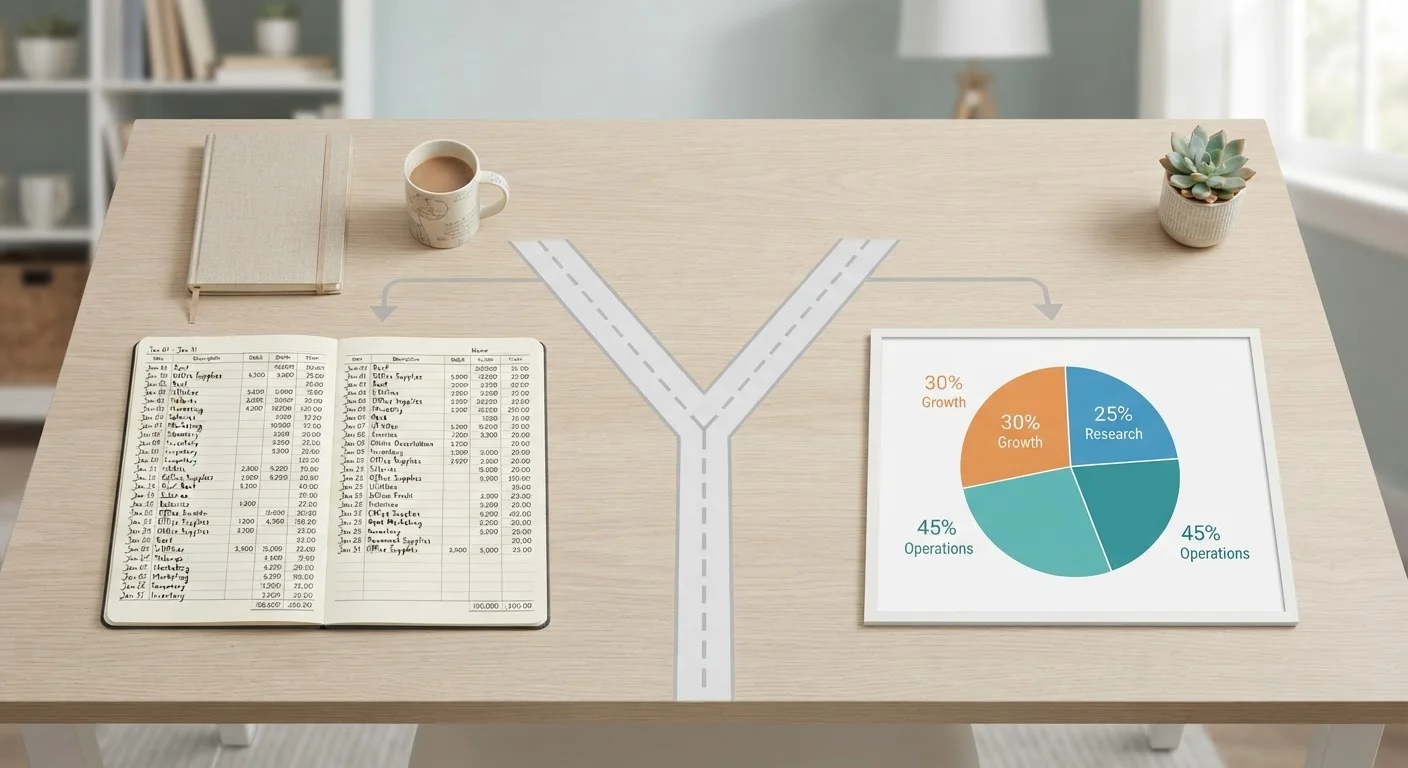
Zero-based budgeting (ZBB) starts from scratch every month. You list your expected income, then assign every dollar to a category — rent, groceries, insurance, savings, entertainment — until your income minus your planned expenses equals exactly zero. That doesn't mean spending everything; it means every dollar has a named job, including dollars earmarked for savings or investments. For a deeper look at the methodology, see our guide to what zero-based budgeting actually is.
The 50/30/20 rule takes a different approach. Popularized by Senator Elizabeth Warren and Amelia Warren Tyagi in their 2005 book All Your Worth, it divides your after-tax income into three broad buckets: 50% toward needs (housing, utilities, food, transportation), 30% toward wants (dining out, subscriptions, travel), and 20% toward savings and debt repayment. There's no line-by-line accounting — just a high-level percentage check. Our full 50/30/20 explainer covers how to apply each category in practice.
| Criterion | Zero-Based Budgeting | 50/30/20 Rule |
|---|---|---|
| Core mechanic | Assign every dollar a category; income minus expenses = $0 | Split income: 50% needs, 30% wants, 20% savings/debt |
| Setup time per month | 30–60 minutes or more | 5–15 minutes |
| Level of detail | Line-by-line categories | Three broad buckets |
| Best income type | Variable or tight income | Steady, predictable income |
| Flexibility | Low — every category is planned | High — wide categories allow discretion |
| Debt payoff focus | Strong — dollars can be redirected precisely | Moderate — 20% bucket covers savings and debt |
| Ease of automation | Moderate — requires ongoing category tracking | High — automate savings and check percentages monthly |
| Learning curve | Steeper — requires monthly planning discipline | Gentle — easy to understand and start immediately |
Time Investment and Ongoing Effort
The practical demands of each method differ significantly, and that gap tends to determine which one people actually stick with.
Zero-based budgeting requires meaningful setup time at the start of each month — typically 30 to 60 minutes to list income, assign categories, and adjust for one-off expenses like annual insurance premiums or seasonal costs. Mid-month check-ins are also necessary to make sure spending stays within each category. Apps built for ZBB (such as those following the envelope method) can reduce friction, but the discipline remains hands-on.
The 50/30/20 rule, by contrast, can be reviewed in minutes. Once you know your after-tax income, you calculate three target numbers and compare them loosely to your actual spending at month's end — or automate savings contributions and let the rest follow. This low-touch nature makes it easier to sustain over time, though it can mask overspending within the 50% or 30% categories if you're not occasionally reviewing line items. You can also explore how a spending tracker compares to a full budget if you're not ready for either formal system.
Where Each Method Tends to Fall Short
Both frameworks have genuine limitations worth understanding before you commit.
Zero-based budgeting can feel exhausting, especially for people with variable incomes or irregular expenses. Rebuilding the entire budget from zero each month is motivating for some and unsustainable for others. It also assumes a relatively predictable income, making it harder — though not impossible — to apply when paychecks fluctuate. And if you miss tracking a transaction, the entire plan can drift off course without you realizing.
The 50/30/20 rule faces its own challenges. Its fixed percentages don't account for high cost-of-living areas where 50% of a median income may not cover basic needs, or for households carrying heavy debt loads that arguably deserve more than 20% of income dedicated to payoff. Our article on how the 50/30/20 rule holds up under scrutiny examines these structural limitations in detail. The broad categories can also allow wants-spending to balloon unnoticed if you're not occasionally reviewing the detail.
Adapting Either Method to Your Reality
Neither the zero-based approach nor the 50/30/20 percentages are one-size-fits-all. In high cost-of-living cities, needs may consume well over 50% of take-home pay, which doesn't mean the framework has failed — it means the percentages need adjusting. Similarly, ZBB categories can be as broad or granular as fits your lifestyle. Treating these frameworks as flexible starting points, rather than rigid mandates, tends to produce better long-term results.
Neither method is universally right. The best budget is one you'll actually use consistently month after month. Consider treating the frameworks as starting points you adapt to your own income, expenses, and goals — rather than rigid rules you must follow exactly.
Choosing the Right Fit — or Combining Both
These two methods aren't mutually exclusive. Many people use the 50/30/20 rule as a high-level sanity check while applying zero-based budgeting logic within specific categories — for instance, loosely tracking the three buckets but planning each expense under the needs category in detail.
A reasonable starting point: if you're new to budgeting, unsure where your money goes each month, or working to pay off debt aggressively, zero-based budgeting's structure tends to surface answers faster. If you've already built healthy financial habits and want a low-maintenance system to maintain them, the 50/30/20 rule's simplicity can sustain progress without demanding constant attention.
Both frameworks share the same underlying goal — ensuring your spending reflects your priorities rather than happening by accident. For a broader look at how percentage-based approaches compare more generally, see our article on zero-based vs. percentage-based budgeting. And for foundational budgeting strategies that complement either approach, the Budgeting Basics hub is a useful next stop.
This article is for general informational and educational purposes only and does not constitute personalized financial advice. For guidance tailored to your specific situation, consider consulting a licensed financial professional.