Breaking Down the Three Categories
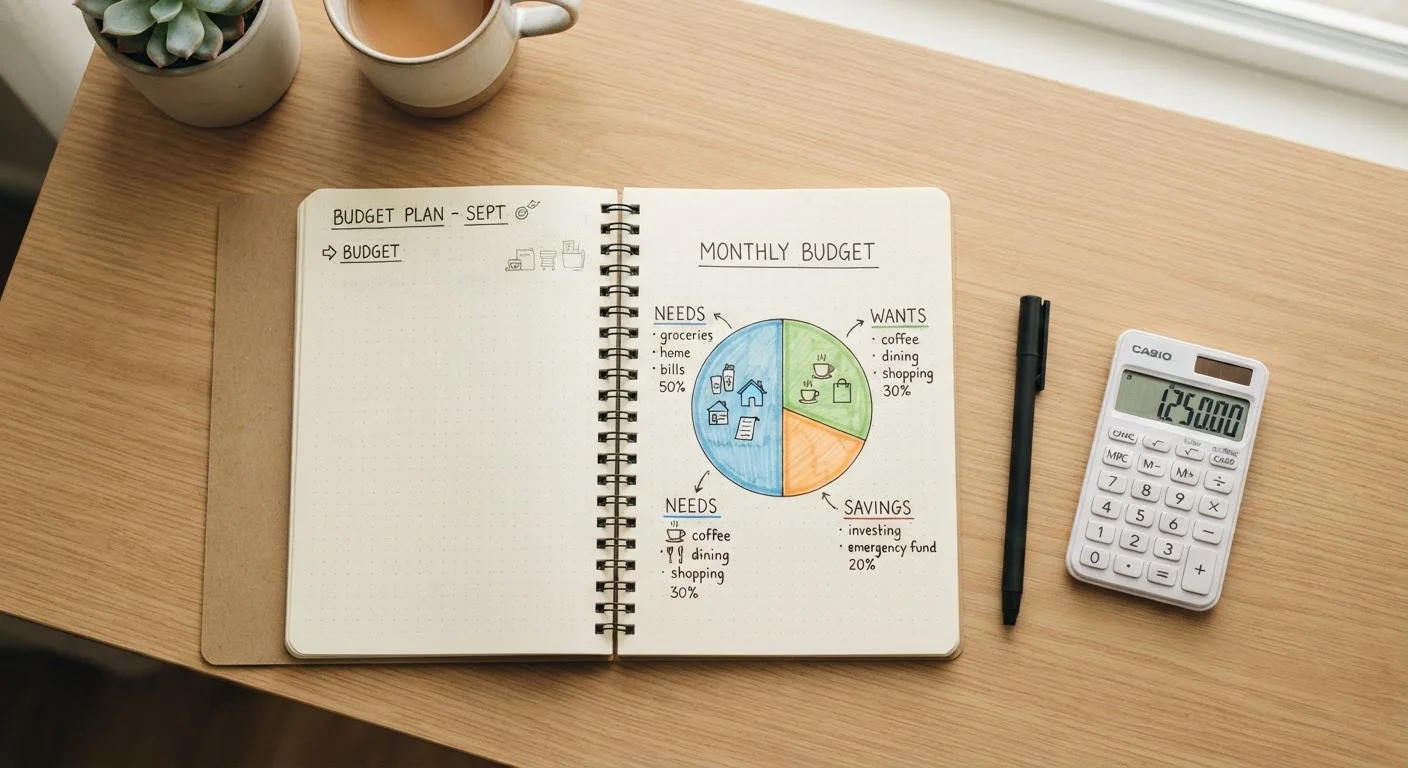
The 50/30/20 rule works by dividing your monthly after-tax income into three clearly defined buckets. Understanding what belongs in each one is the foundation of applying the framework correctly.
50% — Needs
Needs are non-negotiable expenses: the bills and costs you must pay to maintain your basic standard of living and meet financial obligations. Common examples include:
- Rent or mortgage payments
- Groceries and household supplies
- Utilities (electricity, gas, water, internet)
- Health insurance premiums and required medical costs
- Transportation costs for work (gas, transit pass, car insurance)
- Minimum required payments on loans or credit cards
A key distinction: the need is housing, not a particular apartment at a premium price. If a choice upgrades a necessity into something more comfortable or luxurious, that upgrade portion shifts toward the wants category. If you're unsure about the vocabulary, our glossary of budgeting terms defines concepts like discretionary spending and fixed versus variable expenses.
30% — Wants
Wants are the spending choices that improve your quality of life but aren't required for survival or financial compliance. These include dining out, streaming subscriptions, gym memberships, travel, hobbies, and clothing beyond basic necessity. This category gives your budget breathing room — the 50/30/20 rule deliberately preserves space for enjoyment, which helps make it sustainable long-term.
20% — Savings and Debt Repayment
This bucket funds your financial future. It covers contributions to an emergency fund, retirement accounts (such as a 401(k) or IRA), other savings goals, and any above-minimum debt payments aimed at reducing your principal faster. A common sequencing approach: build a starter emergency fund first, then direct money toward high-interest debt, then retirement savings. Our saving and debt hub provides deeper guidance on prioritizing these goals.
77%
Americans living paycheck to paycheck at some point
According to a survey conducted by LendingClub and PYMNTS, a significant share of U.S. adults report experiencing cash-flow tightness, underscoring the need for structured budgeting frameworks.
20%
Recommended minimum savings rate
The 50/30/20 rule's savings target aligns with broadly cited personal finance benchmarks suggesting households aim to save at least 20% of net income for long-term financial resilience.
3–6 months
Emergency fund benchmark (expenses covered)
The Consumer Financial Protection Bureau and many financial educators recommend maintaining three to six months of essential expenses in an accessible savings account as a financial safety net.
How to Apply the Rule in Practice
Applying the 50/30/20 framework is a four-step process that takes most people under an hour to set up initially.
- Calculate your monthly net income. Add up all take-home pay after taxes. If your income varies month to month, use a conservative estimate — an average of the past three to six months works well.
- Determine your targets. Multiply your net income by 0.50, 0.30, and 0.20 to find the dollar amount for each category.
- Categorize your current spending. Review the past two to three months of bank and credit card statements. Sort each expense into needs, wants, or savings. Be honest — it's tempting to reclassify wants as needs.
- Identify gaps and adjust. Compare your actual spending against your targets. If needs are consuming 60% and savings are at 5%, you've identified where attention is needed.
A monthly budget checklist can help you stay consistent once the framework is set up. Revisit your numbers whenever your income, living situation, or financial goals change significantly.
When the Standard Percentages Need Adjusting
The 50/30/20 rule was designed as a general framework, not a universal prescription. Several common circumstances call for modified allocations.
High Cost-of-Living Areas
In cities where housing costs are elevated, needs can consume 60% or more of take-home pay for median-income earners. In this scenario, the practical adjustment is to reduce the wants percentage — not to cut the savings category entirely. Even directing 10–15% toward savings maintains momentum on long-term financial goals.
Carrying High-Interest Debt
If you're managing significant credit card balances or personal loans with high interest rates, a financially sound approach is to temporarily weight the 20% bucket more heavily — or redirect some of the wants percentage toward debt elimination. The debt avalanche method (paying highest-interest debt first) or the debt snowball method (paying smallest balance first for psychological momentum) can both work within this framework. Consult a qualified financial professional to determine which approach fits your specific situation.
Early Career vs. Near Retirement
Younger earners with lower salaries may find 20% savings unrealistic at first — a smaller consistent contribution is still valuable. Conversely, adults in their 40s and 50s who have delayed retirement saving may benefit from pushing savings well above 20%. Our decade-by-decade retirement planning overview explores how savings priorities shift across life stages.
For a detailed examination of where this rule works well and where it falls short, see our analysis of the 50/30/20 rule's strengths and limitations. Those interested in an alternative approach can also explore how percentage-based budgeting compares to zero-based budgeting.
This article is for general informational and educational purposes only and does not constitute personalized financial, tax, or investment advice. Consult a licensed financial professional before making decisions specific to your financial situation.