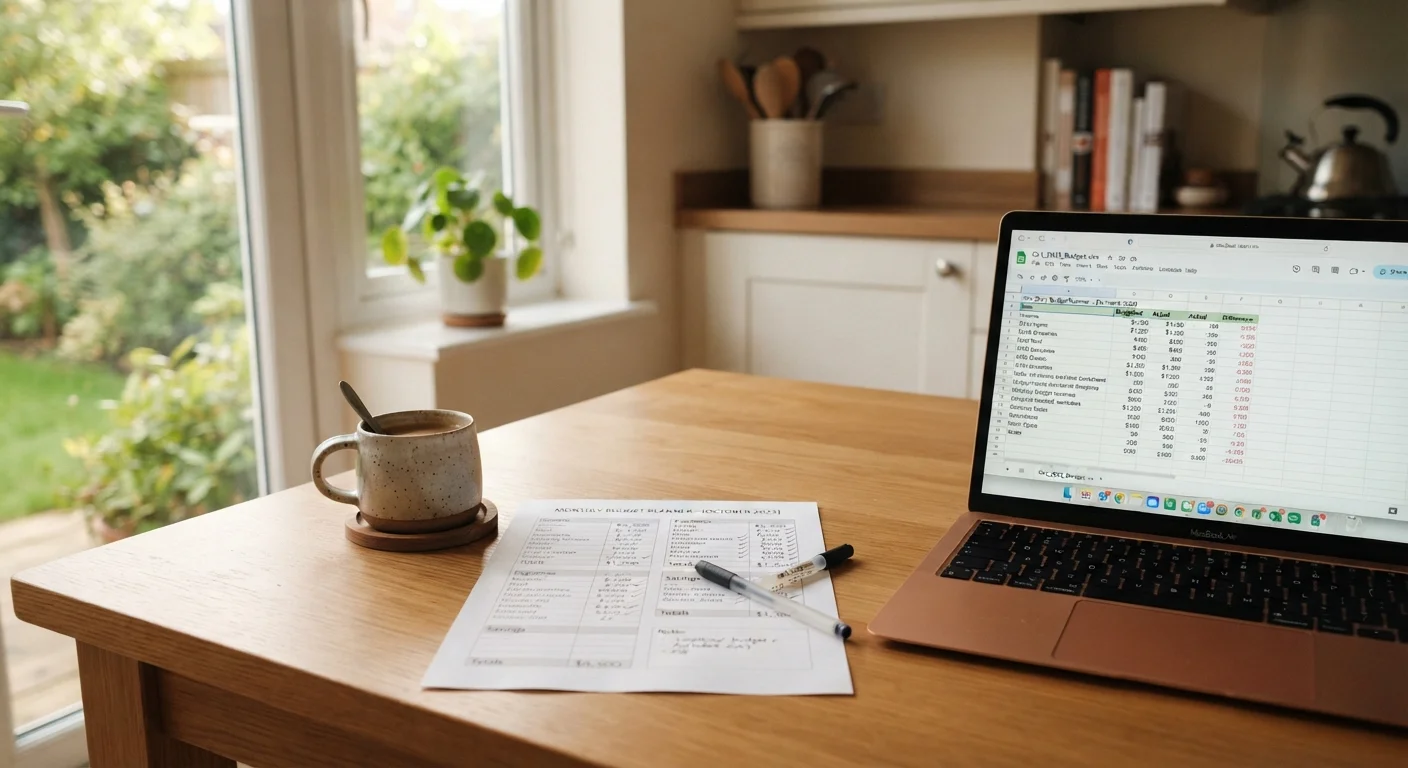
Why a Monthly Budget Checklist Works
Most household budgets don't fail because of math — they fail because there's no consistent process for revisiting the plan. Life changes every month: an unexpected car repair, a birthday dinner, a higher utility bill. A checklist gives you a repeatable structure that adapts to those changes rather than assuming each month will look like the last.
The goal here isn't perfection. It's a monthly reset that takes 30 to 60 minutes and keeps your income, expenses, savings, and goals aligned. If you're new to building a household spending plan from scratch, your first household budget is a good starting point before working through this checklist. For households that want a simple percentage-based structure to guide category allocations, the 50/30/20 rule offers a useful framework dividing take-home income into needs (50%), wants (30%), and savings and debt payoff (20%).
Use this checklist at the start of each calendar month — ideally within the first two or three days, before regular spending patterns take hold.
Spreadsheet (Excel or Google Sheets)
Build and maintain a monthly budget template with category rows and formula-based totals.
Bank and credit card statements
Pull actual spending figures from the previous month to compare against your budget plan.
Personal budgeting app
Automate transaction categorization and get real-time visibility into spending against your budget limits.
Calendar or reminder app
Schedule bill due dates, savings transfers, and your mid-month check-in so nothing slips through.
Debt payoff tracker
Log current balances and minimum payments for each debt account to monitor payoff progress month over month.
Working Through the Checklist
The six groups below move in a deliberate order: look back before you plan forward, confirm real income before committing expenses, and protect savings before allocating discretionary dollars. Skipping steps or reordering them is where most monthly budgets develop gaps.
Pay Yourself First — Before Discretionary Spending
Moving savings to a separate account before you budget for dining, entertainment, or shopping is one of the most effective behavioral finance principles available to everyday households. When savings are automated and happen immediately after income arrives, the temptation to spend first and save what's left is removed. If your savings sit in the same account as your spending money, they are far more likely to be spent.
When reviewing debt targets (Group 4), choosing between the debt avalanche (paying extra toward the highest-interest balance first to minimize total interest paid) and the debt snowball (targeting the smallest balance first for motivational momentum) depends on your personal situation. Neither is universally superior — what matters is picking one method and applying it consistently. For a broader view of savings and debt strategies, explore the Saving & Debt hub.
Review Last Month's Performance
Confirm Your Income for This Month
Lock In Fixed and Essential Expenses
Set Savings and Debt Targets
Plan Discretionary and Variable Spending
Set Up Systems and Accountability
Note that this checklist covers personal household budgeting. If you also run a small business, that review process involves additional considerations — see what every small business owner should review monthly for a parallel framework. Similarly, don't forget to account for annual vehicle costs in your broader household budget; an annual car ownership cost checklist can surface expenses that are easy to overlook month to month.
Don't Budget Based on Gross Income
A common early mistake is building a budget around gross (pre-tax) salary rather than your actual take-home pay. Always use the amount that lands in your bank account after taxes, health insurance premiums, and retirement deductions. Budgeting from gross income almost always results in overspending because the money doesn't actually exist to spend.
Irregular Income Needs a Different Approach
If your pay varies month to month — as a freelancer, contractor, or commission-based worker — applying a standard fixed-expense budget to a variable income baseline can create shortfalls. Use your lowest recent month's income as your planning floor. For a more detailed strategy, see budgeting on an irregular income.
Turning One Checklist Session Into a Lasting Habit
Completing this checklist once is useful. Completing it every month for six months is transformative. Household budgets improve gradually as you accumulate data: you start to know your real average grocery spend, you spot seasonal cost patterns, and you stop being surprised by irregular bills.
A few practices accelerate this progress:
- Keep it short. A monthly budget review that takes three hours will be abandoned. Aim for the 30-to-60-minute window this checklist is designed for.
- Use the same template each month. Consistency in categories makes month-over-month comparisons meaningful.
- Involve your household. If you share finances with a partner or co-habitant, the checklist session is more effective as a shared exercise than a solo one.
- Treat overages as data, not failures. A month where you overspent on groceries tells you something useful about your estimate — adjust the category, don't abandon the budget.
For a deeper monthly financial review that extends beyond the budget to savings rates, debt balances, and credit, a monthly financial health check or the personal audit framework can serve as a natural companion to this checklist.
This article is intended for general informational and educational purposes only and does not constitute personalized financial advice. Consult a qualified financial professional for guidance tailored to your specific situation.