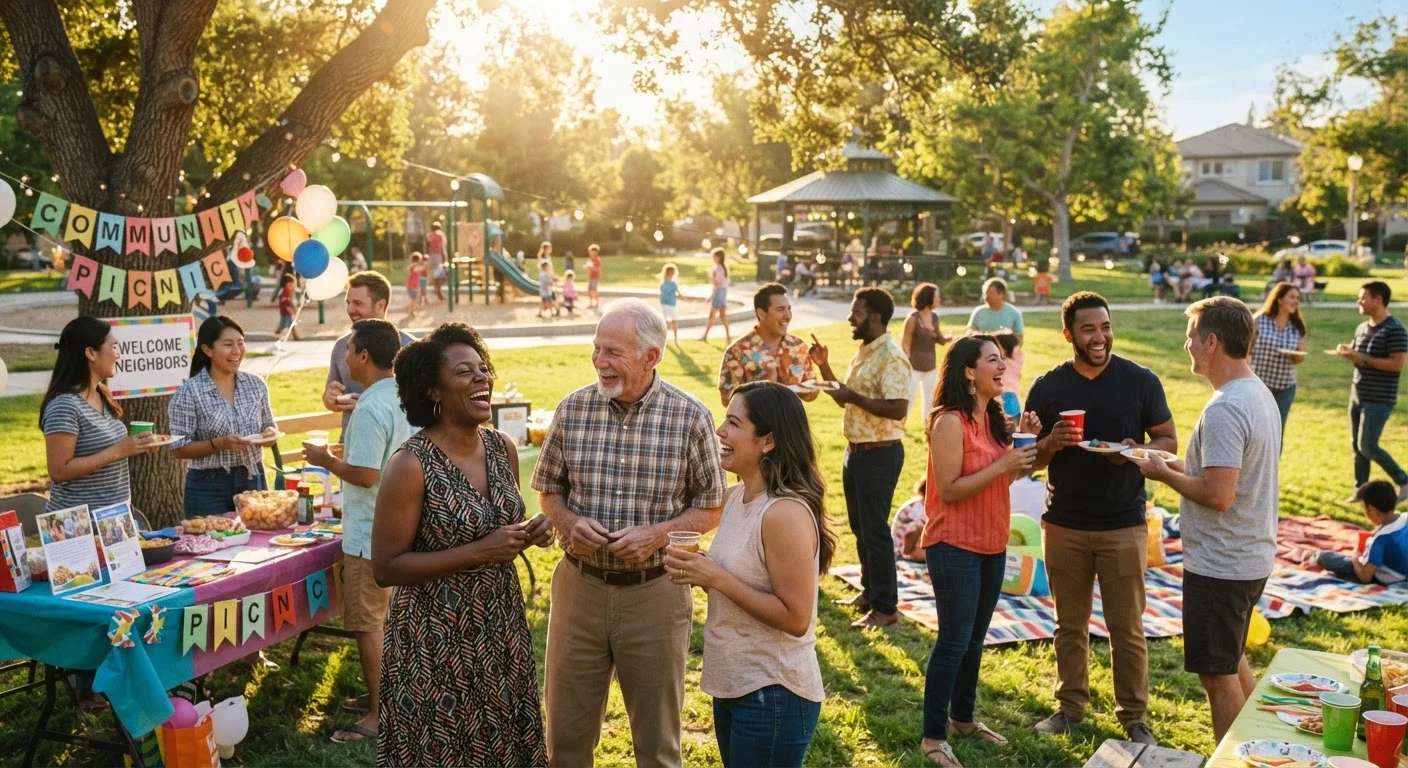
Why Most Community Events Struggle With Turnout
You hang the flyers. You post in the neighborhood Facebook group. You send the evite. And then you wait — sometimes in an almost-empty room. Poor turnout isn't a sign that people don't care about their community; it usually means the event wasn't designed with attendance in mind from the start.
Local organizing is its own skill set, distinct from simply having a good idea. Understanding why people skip events — competing schedules, vague value propositions, lack of social permission — is the first step toward solving the problem. The practices below address these friction points directly, drawing on what consistently works in community organizing across the country.
If you're also thinking about broader community involvement, our complete framework for new residents offers helpful context for the bigger picture.
Proven Practices for Events That Fill Up
These aren't abstract principles — they're the habits that separate a well-attended block party from a lonely folding-table situation.
Lead with personal invitations before any mass outreach.
Research on social behavior consistently shows that people are far more likely to attend when someone they know personally asks them. A flyer is easy to ignore; a conversation is much harder to dismiss. Personal outreach also signals that the event is real and that the organizer genuinely wants that person there.
Choose a date, time, and location that removes barriers rather than creating them.
Even motivated people skip events that conflict with work schedules, childcare logistics, or transportation challenges. Aligning the event with existing community rhythms — like a weekend morning at an already-familiar location — reduces the mental load of deciding to go.
Recruit a small visible volunteer team before you open registration.
Social proof is a powerful attendance driver. When people see that others are already involved and excited, they feel comfortable joining. An event with a visible team of three to five committed helpers looks legitimate and cared-for, which invites others in.
Give the event a clear, specific purpose that people can repeat to others.
Vague events ('a community get-together') don't travel well by word of mouth. A specific hook — a neighborhood beautification day, a potluck with a cooking theme, a free outdoor movie — gives attendees something concrete to share when inviting their own neighbors.
Send at least three touchpoints of communication before the event.
A single announcement, even a good one, is frequently forgotten. Life is busy, and people need reminders timed thoughtfully — an initial save-the-date, a mid-point reminder with new details or reasons to attend, and a final nudge 24 to 48 hours before.
Quick Actions You Can Take Right Now
Turnout is built incrementally. Even small moves made weeks before the event compound into meaningful attendance. Start here.
Community events don't stand alone. They connect to the broader ecosystem of local involvement — including matching your skills to volunteer opportunities or even organizing a neighborhood watch. Each touchpoint reinforces the next.
Turning One Event Into Lasting Community Momentum
A well-attended event is valuable. But what matters most is what happens afterward. Capture names and contact information (with permission) so you can reach out before the next gathering. Send a brief thank-you message within 48 hours — it signals that attendance was noticed and appreciated.
Ask attendees directly what they'd like to see next time. This one question accomplishes two things: it gives you genuine feedback, and it psychologically enrolls people in the next event before it even exists. People who feel consulted become invested.
Over time, community events build the kind of social fabric that makes a neighborhood feel like home. That's worth the effort it takes to plan them well.