What a Neighborhood Watch Can and Cannot Do
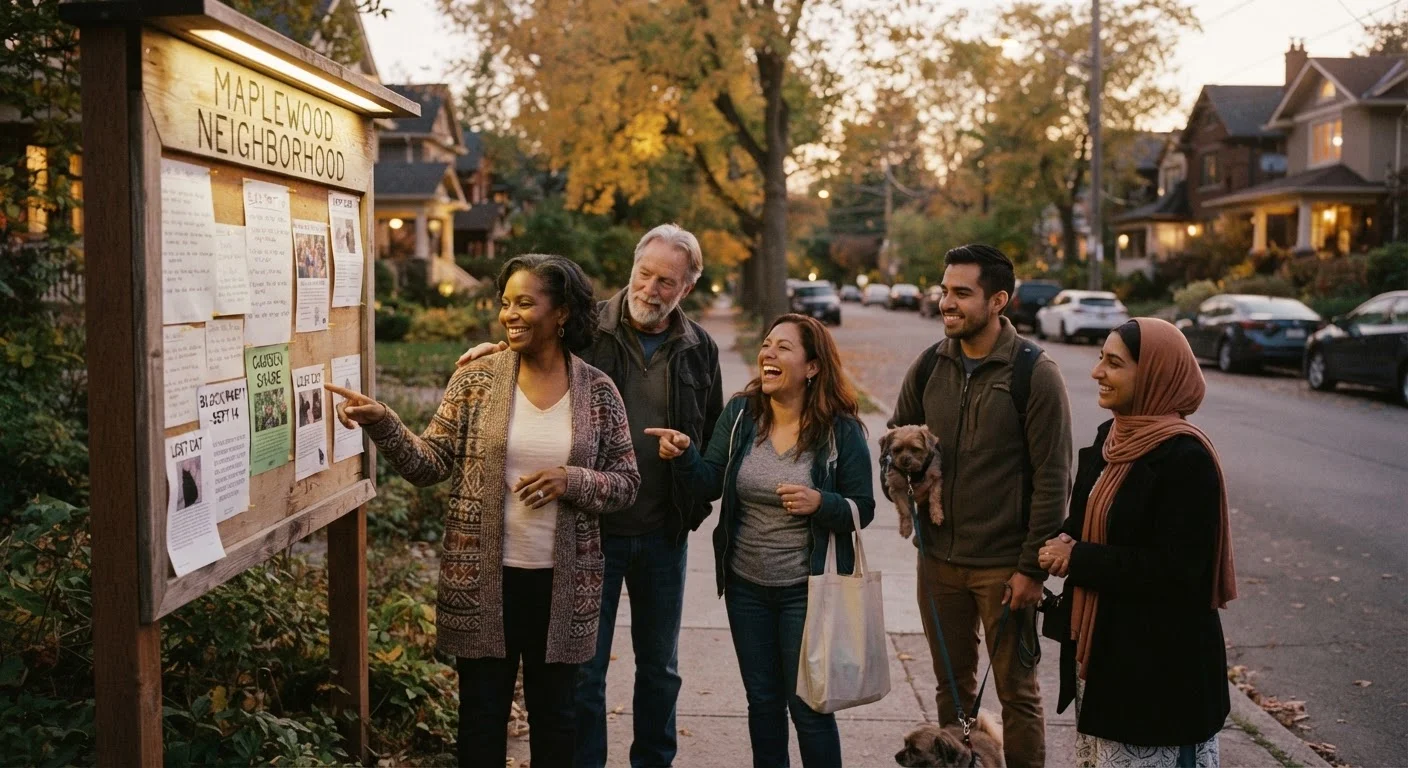
Neighborhood watch programs are one of the longest-standing community safety traditions in the United States. At their best, they create a web of aware, connected neighbors who communicate openly and make their streets feel less anonymous. Research on community crime prevention consistently points to social cohesion — neighbors who actually know each other — as a meaningful protective factor.
But it's important to name what a neighborhood watch cannot do: it cannot replace professional law enforcement, it cannot guarantee reduced crime, and it must not become a mechanism for surveillance, racial profiling, or vigilantism. Programs that drift in those directions do real harm — to individuals, to trust, and to the communities they set out to protect.
The honest framing is this: a well-run neighborhood watch is a community-building tool that happens to have safety benefits, not a security force with community-building benefits. Understanding that distinction is foundational before you take a single organizational step.
Neighborhood Watch Is Not Vigilantism
Participants in a neighborhood watch program should observe and report — nothing more. Confronting, following, or physically intervening with any individual is dangerous, potentially illegal, and outside the scope of any legitimate program. If you witness something concerning, call your local non-emergency police line or 911 if there is immediate danger. Leave response to trained law enforcement.
Before You Start: Lay the Groundwork
Effective programs don't begin with a sign or a group chat — they begin with conversations. Talk informally with a handful of neighbors to gauge interest and surface concerns. What do people feel is missing? What do they worry about? Are there existing tensions in the neighborhood that need to be acknowledged before you invite everyone into a shared effort?
It also helps to understand what resources already exist. Many local police departments have a community liaison officer who supports neighborhood watch formation and can provide guidance on reporting protocols. Connecting with them early signals that your group intends to work within appropriate boundaries — not around them.
For practical ideas on how to get neighbors engaged from the start, organizing a community event that people actually show up to offers proven approaches to building early momentum.
What you will need
Setting Up the Program: Step by Step
Once you've done the groundwork, organizing formally is a matter of structure and clear expectations. Follow the steps below to move from idea to active program.
Hold an initial interest meeting
Invite neighbors to an informal gathering — a front porch, community room, or park works fine. Keep the agenda simple: share why you're interested, listen to what others care about, and gauge who wants to be involved. Aim for representation from different parts of your block or building, not just the most vocal residents.
Contact your local police department
Reach out to your local precinct or community policing unit before your program goes live. Many departments have dedicated neighborhood watch coordinators who can help you understand the proper reporting chain, what constitutes a suspicious situation worth calling in, and how to avoid crossing into vigilantism. This partnership also adds credibility with skeptical neighbors.
Define roles and boundaries clearly
Elect or appoint a program coordinator and at least one alternate. Divide the neighborhood into zones with a designated block captain for each. Put in writing what members are expected to do — and equally important, what they are not to do. Confronting strangers, following individuals, or acting on suspicion alone are all explicitly outside the program's scope.
Set up a communication system
Choose a primary communication channel that works for most participants — a group messaging app, an email list, or a dedicated app built for neighborhood communication. Establish a protocol: routine updates go through the group channel; actual emergencies go directly to 911. Clarity here prevents panic-posting and information overload.
Train participants on observation and reporting
Host a brief orientation session — many police community liaisons will co-facilitate at no cost. Cover what to look for, how to document it (time, description, location), and the exact process for reporting to non-emergency police lines versus calling 911. Reinforce that the goal is accurate, calm observation — not suspicion of unfamiliar faces.
Schedule regular check-ins and reviews
Meet as a group every two to three months to share observations, refresh training, and address any concerns about how the program is functioning. Annual reviews give you a natural moment to assess whether the program is still serving all residents well and to make structural adjustments if needed.
After your program is running, keep it connected to broader community values. A neighborhood watch works best alongside other forms of civic participation — from local volunteering to open neighborhood dialogue. See our guide on matching your skills to community needs for ways participants can extend their contributions beyond safety.
Keeping It Healthy and Equitable Over Time
The most common way neighborhood watch programs go wrong is through drift — toward exclusion, over-policing of certain residents, or simple burnout. Building in regular check-ins, rotating leadership responsibilities, and an open feedback process helps prevent all three.
Be especially deliberate about equity. Any program where some neighbors feel watched rather than included has already failed its core mission. Explicitly welcome all residents, conduct outreach in multiple languages if needed, and address complaints about bias seriously and promptly.
It's also worth remembering that many of the habits that make neighborhoods safer are simply the habits of good neighbors — introducing yourself, looking out for an elderly resident, knowing who belongs on the block. Many of those norms are covered in our guide on neighborhood etiquette most people learn too late. A neighborhood watch formalizes some of those instincts — but it shouldn't replace the everyday warmth that makes a block feel like a community.