What Actually Happens at a City Council Meeting
A city council meeting is a scheduled, public session where elected local officials deliberate and vote on matters that directly affect your neighborhood — zoning changes, budget allocations, local ordinances, infrastructure projects, and more. They are open to any resident who wants to attend, and that openness is protected by state open-meetings laws across the country.
Consent agenda
A grouped list of routine, non-controversial items that the council votes on all at once without individual discussion, to save time.
Public comment period
A designated time during a council meeting when any member of the public may speak directly to the council about agenda items or general community concerns.
Open-meetings law
State laws — sometimes called sunshine laws — that require government bodies to conduct their official business in public sessions accessible to residents.
Meeting minutes
The official written record of a council meeting, documenting attendance, motions made, votes taken, and key statements. These are public documents.
Dais
The raised platform or long table at the front of the council chamber where elected council members and the mayor sit during meetings.
Most meetings follow a standard order of business. You'll typically see a call to order, approval of the previous meeting's minutes, a consent agenda (a bundle of routine items voted on together), and then individual agenda items with discussion and votes. Somewhere in the agenda — usually near the beginning or end — is the public comment period, which is your window to speak.
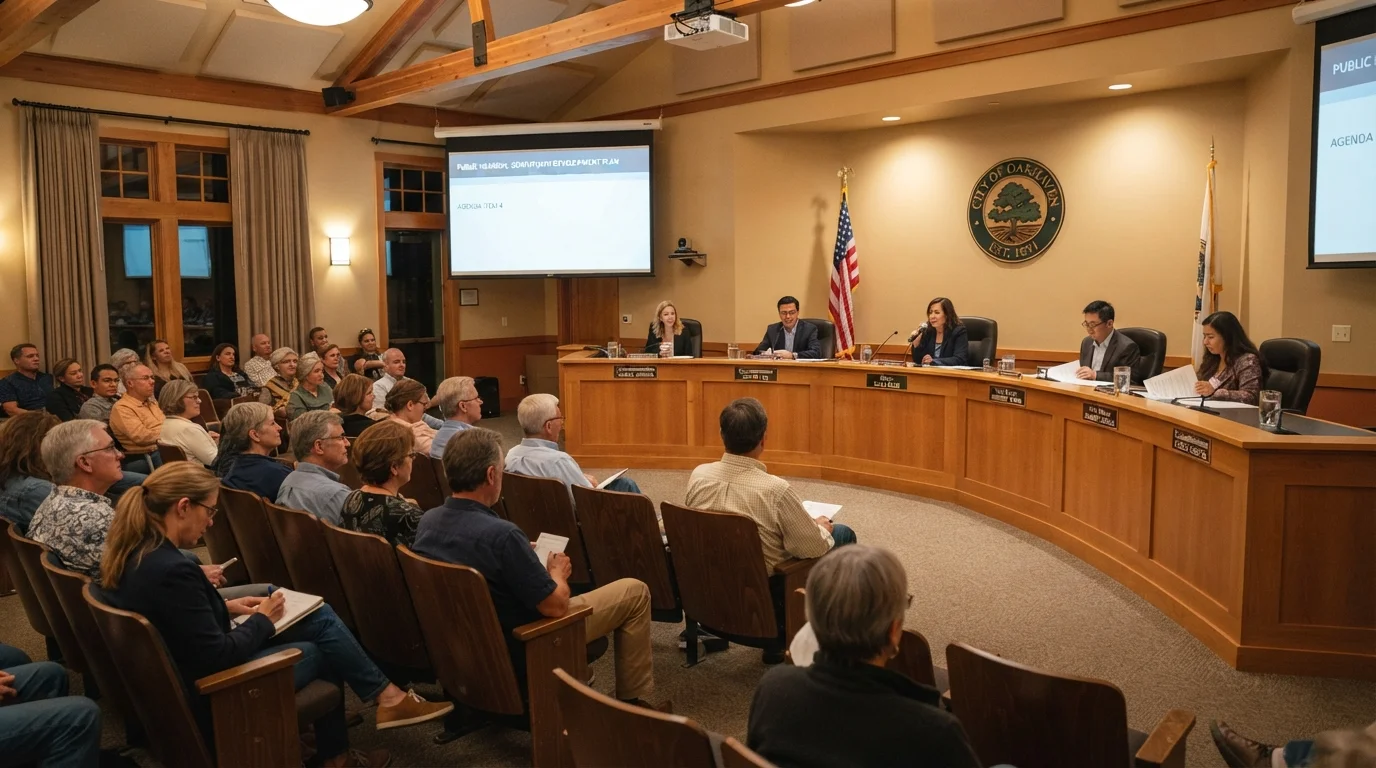
The atmosphere is more formal than a town hall but less intimidating than a courtroom. Council members sit at a raised dais at the front of the room. City staff may sit at a separate table. The public sits in rows of seats facing the council. When agenda items come up, staff present information, council members ask questions, and votes are called. It is procedural, methodical, and often surprisingly quiet.
How to Find Your Council Meeting and Prepare
Your city's official website is the best starting point. Look for a "City Council," "Government," or "City Clerk" section — meeting dates, times, locations, and agendas are typically posted there. Many cities now also send email or text alerts when agendas are published. Sign up if that option exists; it's one of the simplest ways to stay informed.
Read the agenda before you go. Even a quick scan tells you what's being discussed that day and whether any items are directly relevant to your neighborhood or concerns. Agendas often link to supporting documents — staff reports, proposed ordinance text, maps for zoning items — that give you real context.
If you're new to civic participation more broadly, the Community Engagement From Scratch guide offers a useful framework for understanding how local involvement fits into building roots in a new place.
A few practical things to bring: a notepad or your phone for notes, a photo ID if your city requires it for speaker sign-up, and a printed or downloaded copy of any document you want to reference. Arrive 10–15 minutes early — public seating can fill up when a hot-button issue is on the agenda.
Speaking During Public Comment
Public comment is the formal moment when residents address the council directly. It can feel nerve-wracking the first time, but the format is predictable: you sign up, wait for your name to be called, walk to the microphone, state your name and address for the record, and speak for the allotted time — typically two to three minutes per person.
Write Your Points Down Beforehand
Even if you're comfortable speaking, having your key points written on an index card or your phone prevents you from losing your place under pressure. Aim for one main point and one supporting detail — that's usually enough to fill two minutes effectively and leave a clear impression.
The key to effective public comment is focus. Council members hear many speakers; a clear, specific statement lands better than a broad complaint. Name the agenda item you're speaking to, state your position plainly, and if possible, offer a concrete suggestion or ask a direct question. Close by thanking the council for their time.
You are not required to speak to attend. Many first-timers choose to observe silently for one or two meetings before speaking, which is entirely reasonable — watching how the process works is valuable preparation in itself. If you do want to speak on a specific item and want to feel fully ready, the public hearing preparation checklist can help you organize your thoughts and anticipate the process.
Keep in mind that public comment is not a debate. Council members may not respond to you directly in the moment — they may nod, take notes, or simply listen. That doesn't mean your words had no effect. Your comments become part of the official record.
What to Do After the Meeting
The meeting ending doesn't mean the conversation is over. If an issue you care about was discussed but not resolved, mark the next meeting on your calendar — most ongoing items return to the council repeatedly before a final vote. Staying engaged across multiple sessions is often where residents have the most influence.
Meeting minutes are published on the city's website after each session. Reading them lets you verify how votes were recorded and track what was promised versus what actually happens in follow-up meetings. If a council member made a commitment during discussion, the minutes are your reference point.
Consider contacting your council member directly after the meeting — many hold office hours or respond to constituent emails. A brief, respectful message that references a specific agenda item you attended is far more effective than a generic complaint. You've now established yourself as someone who shows up, which carries weight.
Over time, consistent attendance — even occasional attendance — builds your understanding of how local decisions are actually made and who the key players are. That knowledge is the foundation of meaningful civic participation.
This article is for general informational purposes only and does not constitute legal or civic advice. Procedures vary by city and state; always verify requirements with your local government.