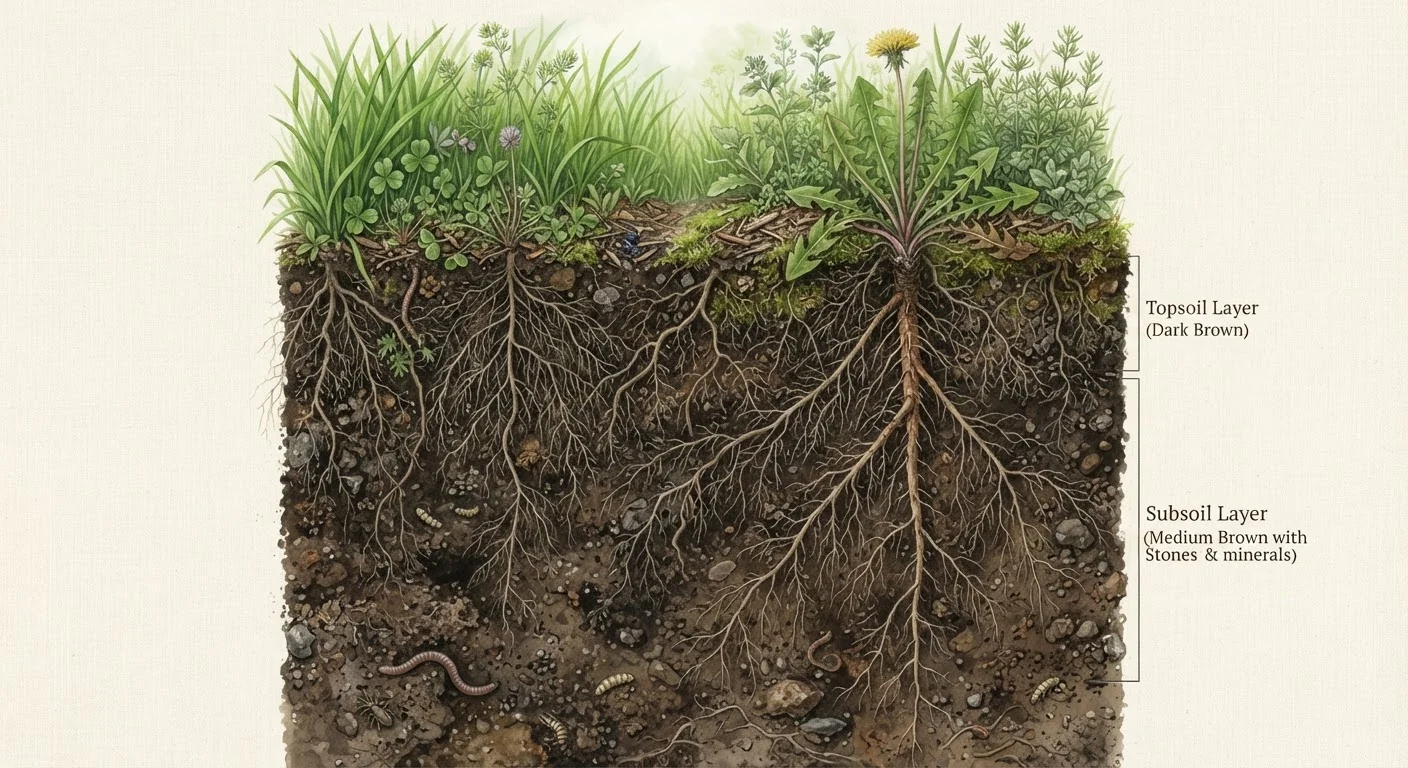
Why Frequent Shallow Watering Works Against You
If you water your lawn or garden beds a little every day, you might feel like you're being attentive — but the opposite is happening underground. When water only penetrates the top inch or two of soil, plant roots have no reason to grow deeper. They cluster near the surface where moisture is reliably available, and that makes them fragile.
Surface-dwelling roots dry out quickly when temperatures rise or you skip a day. The plant becomes dependent on you showing up with the hose — a cycle that doesn't build resilience, it removes it. Shallow roots also leave plants poorly anchored and less able to access the deeper soil nutrients that support long-term growth.
This is why many gardeners end up with lawns that look acceptable when they're watering every day but brown out almost immediately during a hot stretch or a vacation week. The lawn hasn't been trained to take care of itself. Understanding this dynamic is the starting point for everything that follows. For a broader look at common watering misconceptions, see why healthy lawns don't need as much water as you think.
What Deep Watering Actually Accomplishes
Deep watering means applying enough water in a single session that moisture penetrates six to eight inches into the soil — deep enough to reach and encourage the root zone. When the upper layer eventually dries out between sessions, roots follow the moisture downward. Over several weeks, this gradually builds a root system that's both deeper and more extensive.
Deeper roots tap into soil that stays moist for longer, which means the plant can go several days between waterings without stress. This is especially valuable during dry summer periods or watering restrictions. A deeply rooted lawn can often go five to seven days between waterings and still remain green and healthy, while a shallowly watered lawn may show stress within 24 to 48 hours.
6–8 in.
Target watering depth for healthy root growth
Cooperative extension guidelines from multiple US land-grant universities consistently cite this range as the effective root zone depth for established lawn grasses and most garden plants.
~50%
Water savings possible by switching to deep, infrequent watering
The US Environmental Protection Agency's WaterSense program notes that the average US household significantly overestimates how much outdoor water their landscape actually needs, with proper scheduling reducing use substantially.
The same principle applies to garden beds. Perennials, shrubs, and vegetable plants that receive deep, infrequent watering tend to establish faster and outperform those that are watered lightly every day. They're also better positioned to handle the kind of summer heat that shallow-rooted plants simply can't endure.
Best Practices for Deep, Infrequent Watering
Implementing this principle is straightforward once you understand what to look for and what to adjust. The following practices cover how to water, when to water, and how to verify you're getting the depth you need.
Water until moisture reaches six to eight inches below the soil surface.
This depth covers the primary root zone for most lawn grasses and garden plants, ensuring roots receive moisture where they need to grow. Watering only the top inch or two fails to reach existing roots or encourage downward growth.
Water established lawns and beds one to three times per week, not daily.
Allowing a day or two between sessions lets the upper soil dry slightly, which is the cue that prompts roots to extend downward in search of moisture. Daily watering removes that cue entirely.
Schedule watering sessions for early morning, between 6 and 10 a.m.
Morning watering gives foliage time to dry before evening, significantly reducing conditions that favor fungal disease. It also minimizes evaporation losses compared to afternoon watering when temperatures and wind are highest.
Check soil moisture manually before watering, rather than following a fixed calendar.
Weather varies — a cooler week or recent rainfall may mean the soil is still moist even if your schedule says it's time to water. Watering wet soil promotes shallow root growth and can cause root rot in some plants.
Apply a two- to three-inch layer of mulch around garden beds to retain soil moisture.
Mulch slows evaporation from the soil surface dramatically, extending the time between necessary watering sessions. It also moderates soil temperature and suppresses weeds that compete for water.
Putting It All Together for a Healthier Yard
Shifting from daily light watering to deep, spaced-out sessions is one of the most impactful changes a home gardener can make — and it often reduces total water use at the same time. The change doesn't happen overnight: roots need several weeks to extend downward in response to the new pattern. During the transition, watch your plants for stress signals like wilting in the early morning (not just midday, when some wilting is normal), and adjust accordingly.
Good watering habits also pair well with other fundamentals. Soil health plays a large role in how effectively water moves through your garden — for a deeper look at this, soil pH and nutrient availability is worth understanding. Similarly, if you're working on a patchy lawn alongside improving your watering routine, timing matters: overseeding a patchy lawn requires a slightly different watering approach while new seed establishes.
The core idea is simple: give your plants a reason to grow deep, and they'll reward you with resilience you don't have to work as hard to maintain. Step back from the daily hose routine, water thoroughly when you do water, and let the soil dry slightly in between. That interval isn't neglect — it's the signal that drives root development.