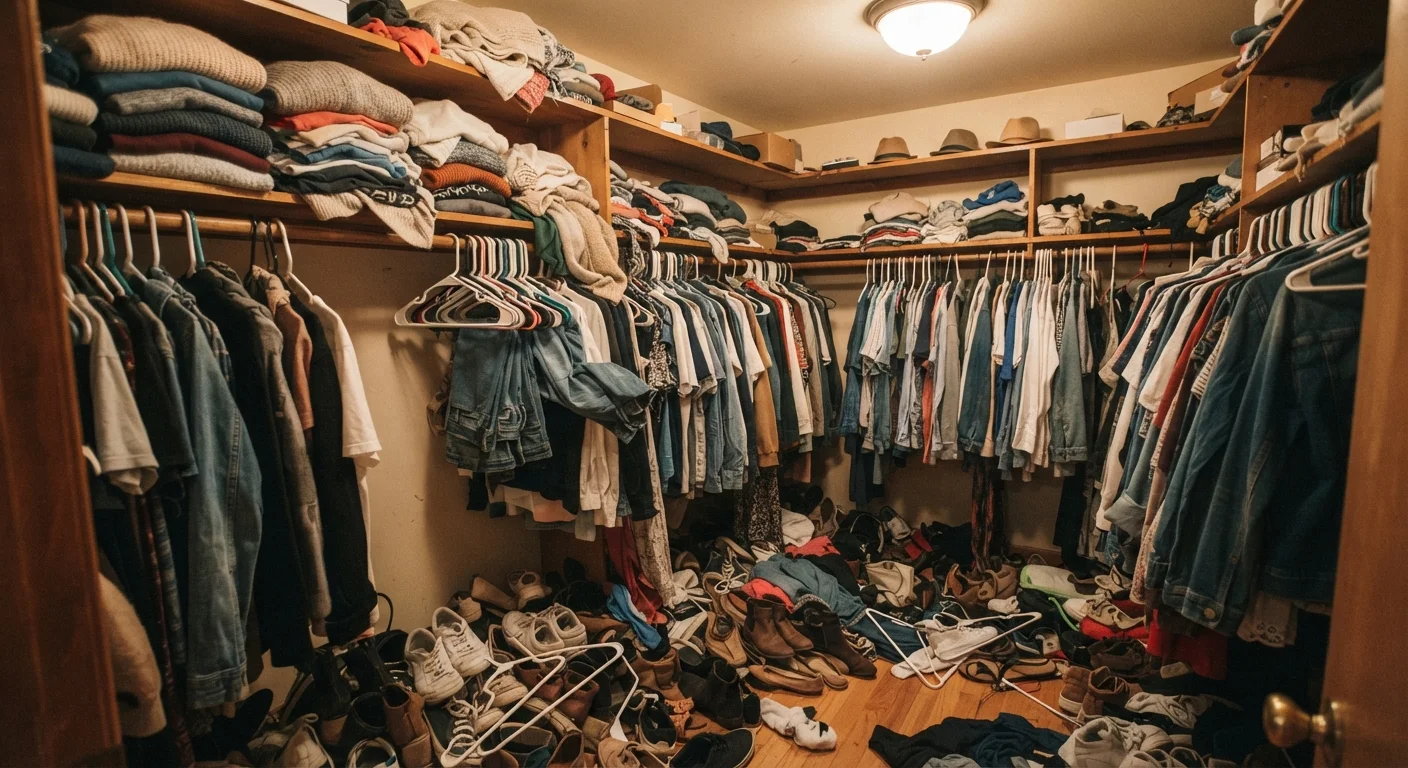
The Problem Is Usually the System, Not the Person
If you've organized your closet multiple times and it looks great for a few days before sliding back into disorder, you're in good company. The tendency is to blame personal habits or lack of discipline — but the more honest culprit is usually a system that's too complicated, too rigid, or fundamentally misaligned with how you actually use the space.
Good closet organization isn't about achieving a magazine-worthy display. It's about creating a setup that holds up when you're running late on a Tuesday morning or unloading laundry at 10 p.m. If your system only works when you're fully motivated and unhurried, it will fail consistently. The mistakes below are the most common reasons that happens — and each one is fixable without a major renovation.
For a parallel look at how these principles apply elsewhere in your home, see kitchen organization habits that actually hold up.
Common Closet Mistakes — and How to Fix Them
The following errors show up repeatedly in closets of all sizes. Recognizing them in your own setup is the first step toward a system that actually sticks.
Organizing everything at once without first reducing volume, so the closet is still overfull after the effort.
Why it happens: The impulse during a big tidy-up is to find a home for every item rather than to question whether each item belongs at all.
Creating a system with too many categories or rules that's easy to set up but impossible to maintain daily.
Why it happens: Detailed organization feels satisfying to build and looks impressive initially, but it demands consistent attention that everyday life rarely allows.
Keeping items you don't use in prime, accessible space while things you wear daily are hard to reach.
Why it happens: Closets often fill up in layers over time, with older or less-used items occupying the best spots simply because they were there first.
Relying entirely on folded piles without enough vertical dividers or shelf risers to keep stacks stable.
Why it happens: Flat shelves look adequate when first organized, but folded stacks inevitably topple when items are pulled from the middle.
Not accounting for the 'in-between' clothes — items that have been worn once and aren't dirty enough to wash yet.
Why it happens: Most closet systems are binary: clean clothes go in, dirty clothes go to the hamper. There's no designed spot for the middle category, so those items pile on chairs or the floor.
Skipping seasonal rotation, so off-season items take up active space year-round.
Why it happens: Rotating seasonal clothing feels time-consuming and easy to defer, so it often doesn't happen until the closet is already overwhelmed.
If you share a closet with a partner or family member, different habits can compound these issues significantly. Organizing a home when everyone has different standards offers strategies worth reading alongside this one.
Building a Closet That Maintains Itself
Once you've identified the specific mistakes undermining your setup, the goal is to rebuild around a few durable principles. First, reduce volume before you organize — no shelving system can compensate for owning more than the space can reasonably hold. A useful rule of thumb: if you can't comfortably flip through hanging items to find what you need, the rod is overstuffed.
Second, design for your laziest moment. Where do clothes land when you come home and you're exhausted? Build a real spot for that behavior — a hook, a small basket, a designated chair — rather than pretending it won't happen. Fighting natural behavior patterns is a losing strategy in closet design.
Third, use editing as a maintenance habit rather than a one-time event. A quick seasonal pass — moving off-season items to secondary storage and removing anything you didn't wear in the past year — prevents the slow volume creep that eventually overwhelms even well-designed systems. It doesn't have to take more than 30 minutes twice a year.
80%
Clothes worn from an average wardrobe
Wardrobe researchers and professional organizers frequently cite the observation that most people regularly wear roughly 20% of their clothing, leaving the majority rarely touched and consuming valuable closet space.
2×/year
Recommended seasonal closet edits
Home organization professionals generally recommend a spring and fall clothing review as the minimum maintenance habit to prevent volume creep and keep a closet system functional.
It's also worth examining some broader beliefs about organization that may be quietly working against you. Common organization myths explores several well-intentioned ideas — like buying more bins or going fully minimalist — that often backfire. And if you're weighing whether open shelving might work better in your closet than concealed storage, open shelving vs. closed cabinets breaks down the real-world tradeoffs of each approach.