Why Room-by-Room Organization Works
Whole-home organization feels daunting when you try to tackle it all at once. The room-by-room approach breaks an overwhelming project into manageable pieces, letting you complete one space before moving to the next. Each finished room gives you a working model — and genuine motivation — to carry into the next.
This method also lets you tailor solutions to each room's specific function. A bedroom has different organizational demands than a kitchen, and treating them the same way leads to systems that don't serve either well. For a solid grounding in the vocabulary used throughout home organization planning, this practical reference on key terms is a useful companion to this guide.
Before You Begin: The Foundational Mindset
Effective organization starts with two decisions made before you move a single item: what you're keeping, and where things will actually live. Skipping these steps means reorganizing clutter rather than solving it.
Zone of use
A storage area positioned close to where an item is actually used, making it easier to put things away in the right place consistently.
Decluttering
The process of removing items from a space that are no longer needed, used, or wanted — always the first step before organizing what remains.
Dead zone
A storage area that is inconvenient to access, such as a high shelf or deep cabinet, best reserved for rarely used items.
Landing zone
A designated spot — such as a tray, hook, or basket — where items are placed temporarily when first brought into a room, preventing random clutter from spreading.
Edit
In home organization, editing means reviewing everything in a category and removing items that don't belong, don't fit, or haven't been used — distinct from sorting or storing.
Work through each room in three passes. First, sort — pull everything out and group similar items together. Second, edit — remove anything broken, duplicated, or unused in the past year. Third, assign — give every remaining item a specific home based on zones of use. This sequence prevents the common trap of buying storage containers before you know what you actually need to store.
If you share your home, involve others in the sorting and editing phases. Systems work best when everyone understands the logic behind them. Our article on organizing homes with different tidiness standards explores this in more depth.
Kitchen and Dining Areas
The kitchen is usually the highest-traffic room in any home, making it the place where disorganization causes the most daily friction. The guiding principle here is frequency of use: items you reach for every day belong at eye level and arm's reach; seasonal or rarely used items go in high cabinets or lower drawers.
- Countertops: Clear everything off, then return only what you use daily. A clutter-free counter makes cooking faster and cleaning easier.
- Pantry and cabinets: Group by category — baking supplies together, canned goods together, snacks together. Face labels outward so contents are visible without digging.
- Junk drawer: Every kitchen has one. Rather than eliminating it, curate it — keep only batteries, a few tools, and frequently needed small items. Purge it every few months.
- Dining area: If your dining table doubles as a workspace, create a designated landing zone nearby — a tray or small basket — so the table can be cleared quickly before meals.
Living Room and Shared Spaces
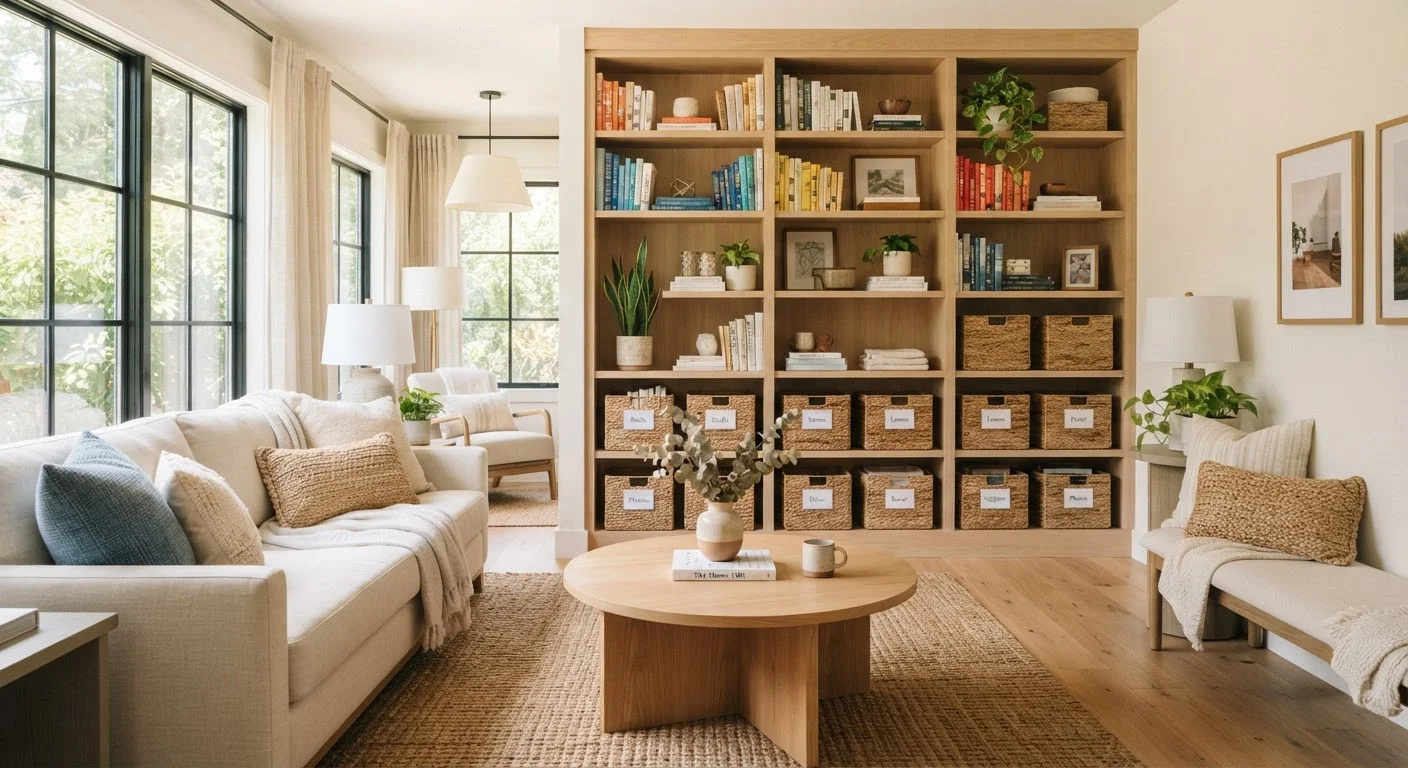
Living rooms tend to collect items from every household member, making them the most politically complex space to organize. The goal isn't sterility — it's ensuring that everything in the room has a clear home it reliably returns to.
Use the 'One In, One Out' Rule
For shared living areas especially, agreeing on a simple rule — when something new comes in, something old goes out — prevents gradual accumulation. It's easiest to apply to categories like books, toys, and decorative items. This doesn't need to be rigid, but making it a household norm reduces the need for major declutter sessions later.
Identify the room's core functions: relaxation, entertainment, conversation, maybe a homework corner. Then build storage around those functions rather than around the furniture you already have. A basket near the sofa for blankets, a tray on the coffee table to corral remotes, and a shelf unit sized to your actual book and media collection are all examples of function-driven storage.
For homes where space is genuinely limited, small-space organization strategies offer room-specific approaches that apply even when square footage isn't the constraint.
Bedrooms and Closets
A bedroom serves one primary function — rest — and organization should support that. Surfaces near the bed (nightstands, dressers) should hold only items used in the sleep routine. Everything else is a distraction from the room's purpose.
Closets are where most bedroom organization either succeeds or fails. A workable closet system doesn't require a professional installation — it requires an honest edit of what's inside it.
- Remove everything and sort by category: tops, bottoms, shoes, outerwear.
- Edit ruthlessly — items that don't fit, haven't been worn in a year, or require repair rarely make their way back into rotation.
- Rehang remaining clothes grouped by category, then by color within each category. This makes outfit selection faster and missing items obvious.
- Use the floor and high shelves for items you access least often — luggage, seasonal items, spare linens.
Organization needs also shift depending on who occupies a bedroom. A child's room, a teenager's room, and an adult's room all have different functional demands — something worth thinking through if your household spans multiple life stages. Our article on organizing across different life stages addresses this directly.
Bathrooms, Entryways, and Storage Zones
Bathrooms are small rooms with large organizational stakes. Expired medications, half-empty bottles, and duplicate products pile up quickly. A simple rule: if the product is empty, expired, or hasn't been used in six months, it leaves the bathroom. Under-sink storage works well for refill stock; the medicine cabinet and counter should hold only daily-use items.
Entryways set the behavioral tone for your whole home. A functioning entryway needs a place for shoes, coats, bags, and keys — ideally within arm's reach of the door. Even in tight spaces, a small wall hook, a shoe tray, and a bowl for keys can prevent the chaos that accumulates when there's no designated system.
Utility and storage zones — basements, garages, laundry rooms — are easiest to organize last. By then, you'll have a clear picture of what overflow items from the rest of the home actually need long-term storage, and what can simply be let go.
Keeping the System Going
Organization is not a one-time event. The systems you build only stay functional if they're maintained — and maintenance is far easier than starting over. Two habits make the biggest difference:
- Daily reset: Spend five to ten minutes each evening returning items to their designated spots. This prevents accumulation from becoming avalanche.
- Seasonal audit: Every few months, walk through each room and check whether the systems still match how you're actually living. Households change — what you own, how you use spaces, and who occupies your home all shift over time.
For a structured approach to seasonal check-ins, our seasonal home reset checklist walks through each room with specific questions to guide your audit. Building that rhythm into your calendar is one of the most effective long-term organization habits you can develop.