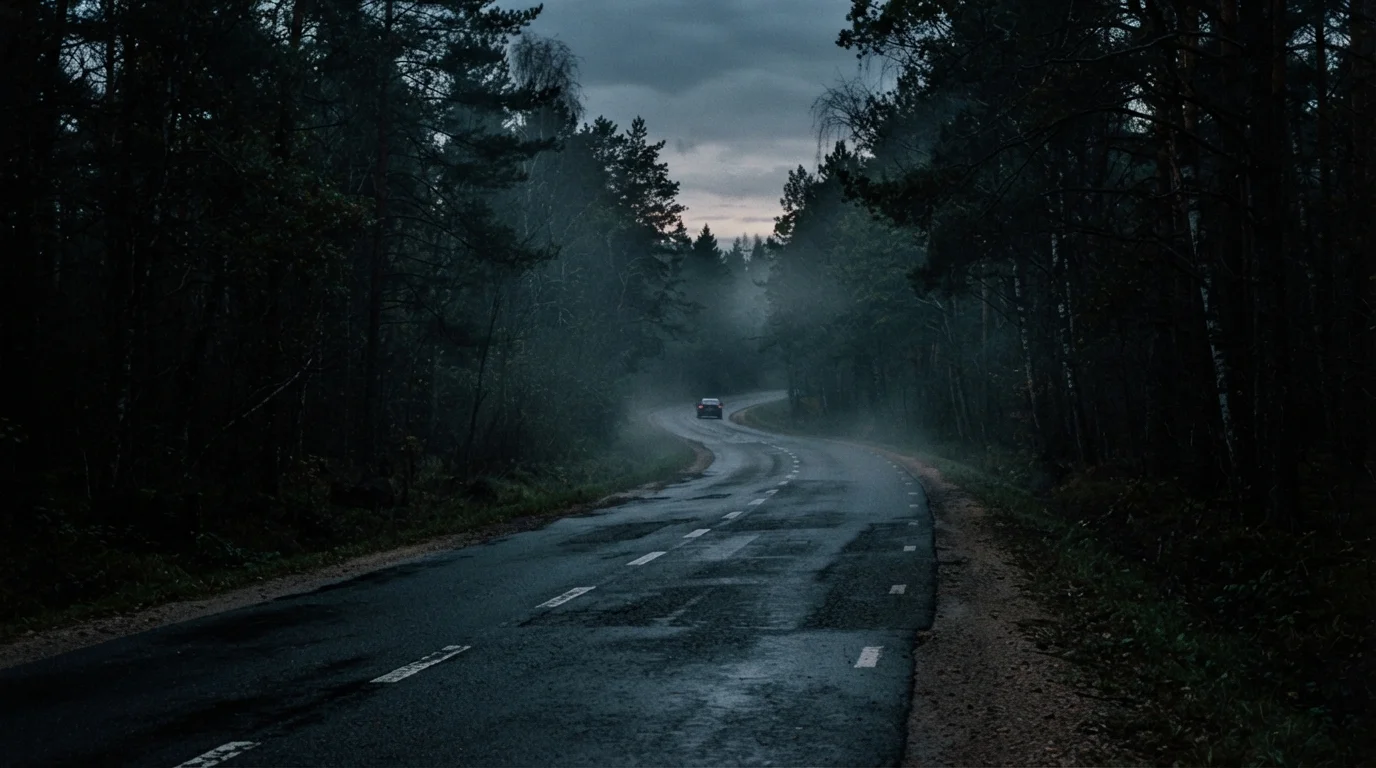
A Deadlier Environment Than the Numbers Suggest
It might seem logical to assume that highways packed with commuter traffic are the most dangerous places to drive. The data tells a different story. According to the National Highway Traffic Safety Administration (NHTSA), rural roads consistently account for around half of all U.S. traffic fatalities each year, despite carrying only about 30 percent of total vehicle miles traveled. That gap — between exposure and outcome — points to a genuinely more dangerous driving environment, not just a statistical quirk.
Understanding why rural roads are so lethal is the first step toward driving them more safely. The causes are structural, behavioral, and systemic — and most are well-documented in road safety research.
Higher travel speeds with less margin for error
Rural roads typically have higher posted speed limits than urban streets, and actual travel speeds often exceed those limits. At higher speeds, the forces involved in a crash increase exponentially — a collision at 65 mph releases roughly double the kinetic energy of one at 45 mph. Rural roads also offer far less forgiving geometry: narrow lanes, tight curves, and unpaved or gravel shoulders mean that any deviation from the travel lane escalates quickly into a serious single-vehicle crash.
Speed-related crashes are overrepresented in rural fatality data, and the combination of high velocity with limited recovery space is a core driver of that pattern.
At 65 mph, a crash releases roughly double the kinetic energy of one at 45 mph.
Limited roadside protection and infrastructure
Urban and suburban roads are typically lined with curbs, median barriers, crash-attenuating guardrails, and clear zones designed to catch errant vehicles. Rural roads frequently have none of these features. Roadside trees, utility poles, embankments, and drainage ditches sit close to the travel lane. When a driver runs off the road — whether from drowsiness, distraction, or overcorrection — there is often nothing to absorb the impact or redirect the vehicle.
Fixed-object collisions (trees, poles, ditches) are among the most common fatal crash types on rural roads precisely because the infrastructure that might prevent them is absent or underfunded.
Rural roadsides often lack the barriers and clear zones that redirect errant vehicles to safety.
Longer emergency response times
In urban areas, emergency medical services (EMS) can typically reach a crash scene within minutes. In rural counties, average response times can be three to four times longer — and in the most remote areas, delays of 30 minutes or more are not unusual. This difference in time-to-treatment is clinically significant. Serious traumatic injuries — internal bleeding, traumatic brain injury, spinal trauma — worsen with each passing minute before definitive care begins.
Research published by the Rural Health Research Gateway and others has consistently linked longer EMS response times to higher rural crash fatality rates, independent of crash severity. The road itself is one danger; the distance from help is another.
Rural EMS response times can be three to four times longer than in urban areas.
Lower seat belt use rates
Seat belt usage rates are measurably lower in rural areas than in urban ones, a gap that NHTSA has documented consistently across national observational surveys. The consequences are stark: unrestrained occupants are far more likely to be ejected from a vehicle in a crash, and ejection is one of the most dangerous outcomes in any collision. On rural roads, where crash severity is already elevated due to speed and infrastructure gaps, not wearing a seat belt substantially increases the probability of a fatal outcome.
This is one of the most straightforward behavioral levers available to rural drivers and their passengers.
Unrestrained occupants face a dramatically higher risk of ejection — one of the deadliest crash outcomes.
Poor lighting and limited sight distance
Most rural roads are unlit. Driving at night without street lighting means relying entirely on headlights, which typically illuminate 200–300 feet ahead — far less stopping distance than is available at highway speeds. Rural routes also feature terrain-driven sight restrictions: crests, curves, and vegetation that block sight lines and hide hazards like deer, farm equipment moving at low speed, or vehicles stopped on the roadway.
Nighttime driving on rural roads carries a substantially higher crash risk than daytime travel on the same routes. Reducing speed after dark and avoiding distraction are among the most evidence-supported responses to this hazard.
Headlights illuminate roughly 200–300 feet ahead — often less than the stopping distance at rural speeds.
Driver impairment and fatigue
Alcohol-impaired driving is overrepresented in rural fatal crashes relative to urban ones. Contributing factors include longer distances between destinations — making driving after drinking more likely — and fewer public transportation alternatives. Fatigue is also a heightened risk: monotonous rural routes with minimal visual stimulation and no traffic signals to interrupt the drive can accelerate drowsiness, particularly on long trips or overnight journeys.
Both impairment and fatigue degrade the hazard perception and reaction speed that rural roads demand more than most driving environments.
Monotonous rural routes can accelerate drowsiness even when a driver does not feel tired.
What Drivers Can Do Differently
No single factor explains the rural fatality gap, but the good news is that several of the most significant contributors are addressable through driver behavior. Slowing down to a speed appropriate for road geometry and visibility — not just the posted limit — is the single highest-leverage adjustment most drivers can make. Wearing a seat belt costs nothing and, according to NHTSA data, reduces the risk of death in a crash by around 45 percent for front-seat occupants.
Adjust Speed to the Road, Not Just the Sign
Posted speed limits on rural roads represent the maximum legal speed under ideal conditions — they are not a target. Reduced visibility, wet or gravel surfaces, sharp bends, and the presence of farm vehicles or wildlife all warrant speeds well below the posted limit. Treating the speed limit as a ceiling rather than a default is one of the most consistent recommendations in road safety guidance for rural driving.
Increasing following distance on rural roads also matters more than many drivers appreciate. Without urban infrastructure cues like intersections and traffic signals to regulate pace, speeds creep up and stopping distances grow. If aggressive following habits already concern you, the physics behind tailgating explain exactly why that gap shrinks your margin for error. Similarly, frustration with slow-moving farm equipment or winding routes can fuel the kind of impatience that tips into aggressive driving — a known crash risk amplifier on any road type.
This article provides general road safety information for educational purposes. Always follow applicable traffic laws and consult qualified authorities for guidance specific to your situation.