Why Depreciation Starts Before You Leave the Lot
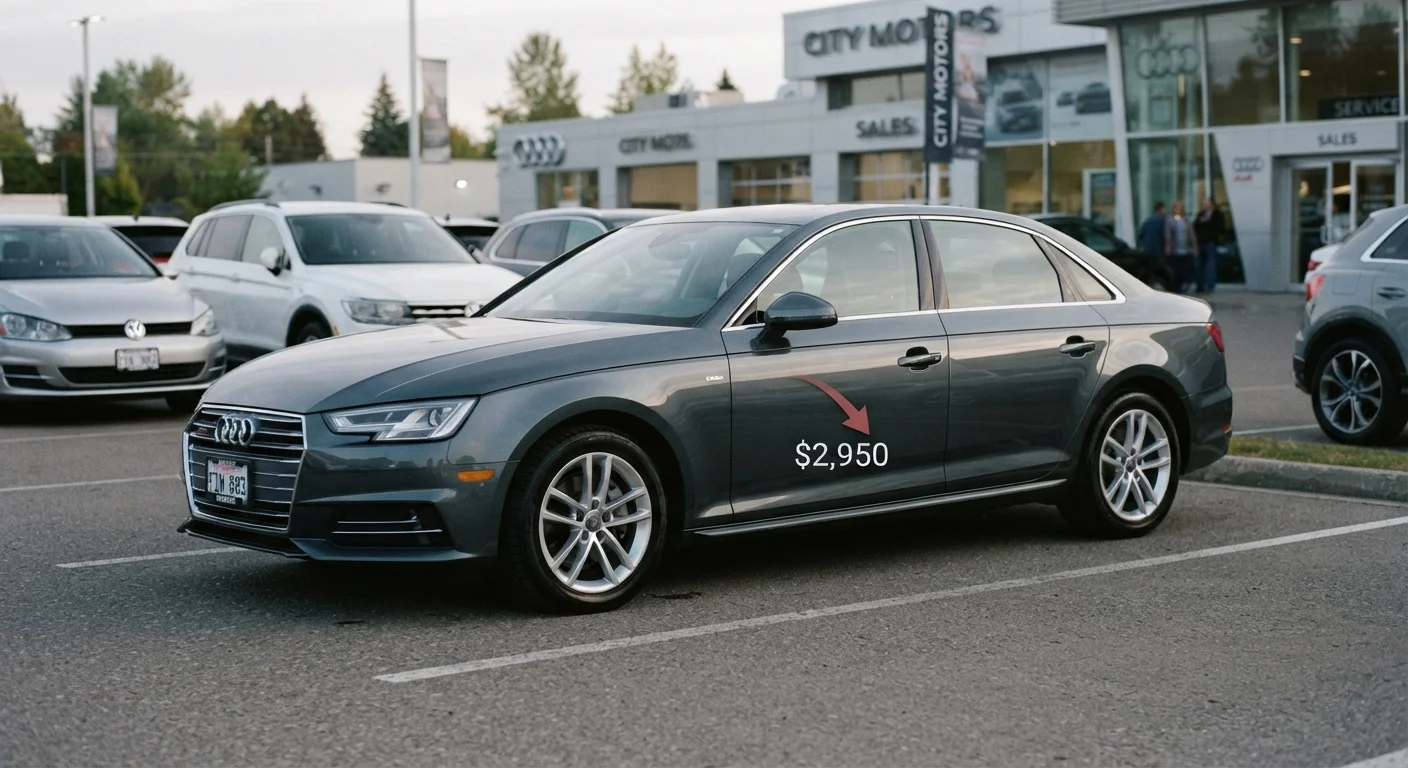
The phrase "drives off the lot" is more than a cliché — it marks a real financial threshold. Once a new vehicle is registered in your name, it transitions from inventory to a used vehicle in the eyes of the market. Any buyer willing to pay full sticker price would simply purchase from the dealer directly, so your car's effective resale value drops immediately, even if you've driven it only a mile.
This instant loss typically ranges from 9% to 11% of the purchase price on the day of sale, according to commonly cited industry estimates. Add the first year of ownership on top of that and the cumulative decline for many vehicles reaches 20% or more. For a $40,000 vehicle, that can represent $8,000 or more in lost value before your first oil change.
Depreciation doesn't appear on a monthly statement, which is one reason many drivers underestimate its impact. But when it comes time to sell or trade in, the number becomes very real. For a fuller picture of what ownership actually costs year to year, see the true cost of owning a car.
The Depreciation Curve: How Value Falls Over Time
Depreciation is not linear. The loss is steepest in the early years and gradually flattens. A typical depreciation curve looks something like this:
- Year 1: 15–25% loss from original purchase price
- Years 2–3: An additional 15–20% cumulative decline
- Years 4–5: Slower decline; many vehicles have lost 40–60% of their original value by this point
- Years 6+: Depreciation continues but at a much more gradual pace
This curve is why buying a vehicle that is two or three years old can be a financially significant decision. The previous owner has absorbed the steepest part of the drop, and the remaining depreciation is spread over more years. New vs. used vehicle trade-offs go beyond depreciation alone, but it's often the most financially consequential factor.
~20%
Typical first-year depreciation for a new vehicle
Industry estimates consistently place first-year new-car depreciation in the 15–25% range, with many popular segments averaging around 20%.
~50%
Average value lost by year five
By the end of five years, many vehicles have lost roughly half their original purchase price, according to widely cited automotive valuation data.
$3,000+
Estimated annual depreciation on a $35,000 vehicle
Assuming a five-year ownership period and approximately $15,000 in total value loss, depreciation alone can cost more per year than fuel for many average drivers.
Key Factors That Accelerate Depreciation
Not all vehicles depreciate at the same rate. Several factors push the curve steeper or keep it flatter:
- Mileage
- Higher mileage signals more wear and narrows the pool of interested buyers. Vehicles driven significantly above the average of around 12,000–15,000 miles per year tend to lose value faster.
- Condition
- Visible damage, interior wear, and deferred maintenance all reduce what a buyer will pay. A clean, well-maintained vehicle commands a meaningful premium at resale.
- Brand and model reputation
- Vehicles from manufacturers known for long-term reliability tend to hold value better. Market perception matters even when two vehicles are mechanically similar.
- Fuel type and technology shifts
- As the market evolves, vehicles running on older technology — including certain fuel types or lacking modern safety features — may depreciate more quickly due to reduced demand.
- Color and trim
- Unusual colors or trim configurations reduce the pool of interested buyers, which can suppress resale value relative to more neutral or popular choices.
- Accident history
- Even a professionally repaired vehicle with a reported accident on its vehicle history record will typically sell for less than a comparable clean-history unit.
Depreciation as an Ownership Cost You Can Plan For
Because depreciation happens gradually and silently, it's easy to treat it as an abstract concept rather than a real cost. But financial planners and auto industry analysts generally agree: for most drivers, depreciation is the single largest cost of vehicle ownership — often surpassing fuel, insurance, and maintenance combined over a five-year period.
One practical way to account for depreciation is to estimate it as part of your total annual vehicle budget. If you paid $35,000 for a car and expect it to be worth $20,000 in five years, that's $3,000 per year in depreciation — roughly $250 per month — before you consider fuel or insurance. This kind of calculation, while imprecise, grounds your budgeting in reality. The annual car ownership cost checklist covers this alongside every other major expense to track.
Factor Depreciation Into Your Monthly Budget
Treat depreciation like a recurring cost, not an abstraction. Divide your expected total value loss over your ownership period into a monthly figure and include it alongside insurance and fuel in your vehicle budget. This gives you an accurate picture of what your car actually costs per month — and can inform decisions about whether to keep, sell, or replace it.
Understanding depreciation before you purchase — not after — is one of the most effective ways to avoid financial strain. See how the math plays out over time in total cost of ownership planning.
What You Can — and Can't — Control
No driver can stop depreciation. It is baked into the nature of vehicles as physical assets with finite service lives. What you can control is the rate at which your vehicle loses value relative to comparable models, and when you choose to buy and sell relative to the depreciation curve.
- Maintaining a complete service record adds credibility and buyer confidence at resale.
- Keeping the exterior and interior in good condition preserves perceived value.
- Avoiding excessive mileage where practical — for example, considering other transport options for long commutes — slows the mileage-driven component of depreciation.
- Timing your sale before major mileage thresholds (such as 100,000 miles) can yield a better price from a wider pool of buyers.
For strategies that help reduce overall ownership costs responsibly, keeping ownership costs down without compromising safety offers grounded, practical guidance.
This article is for general informational purposes only and does not constitute financial or investment advice. Consult a qualified financial professional for guidance tailored to your personal circumstances.