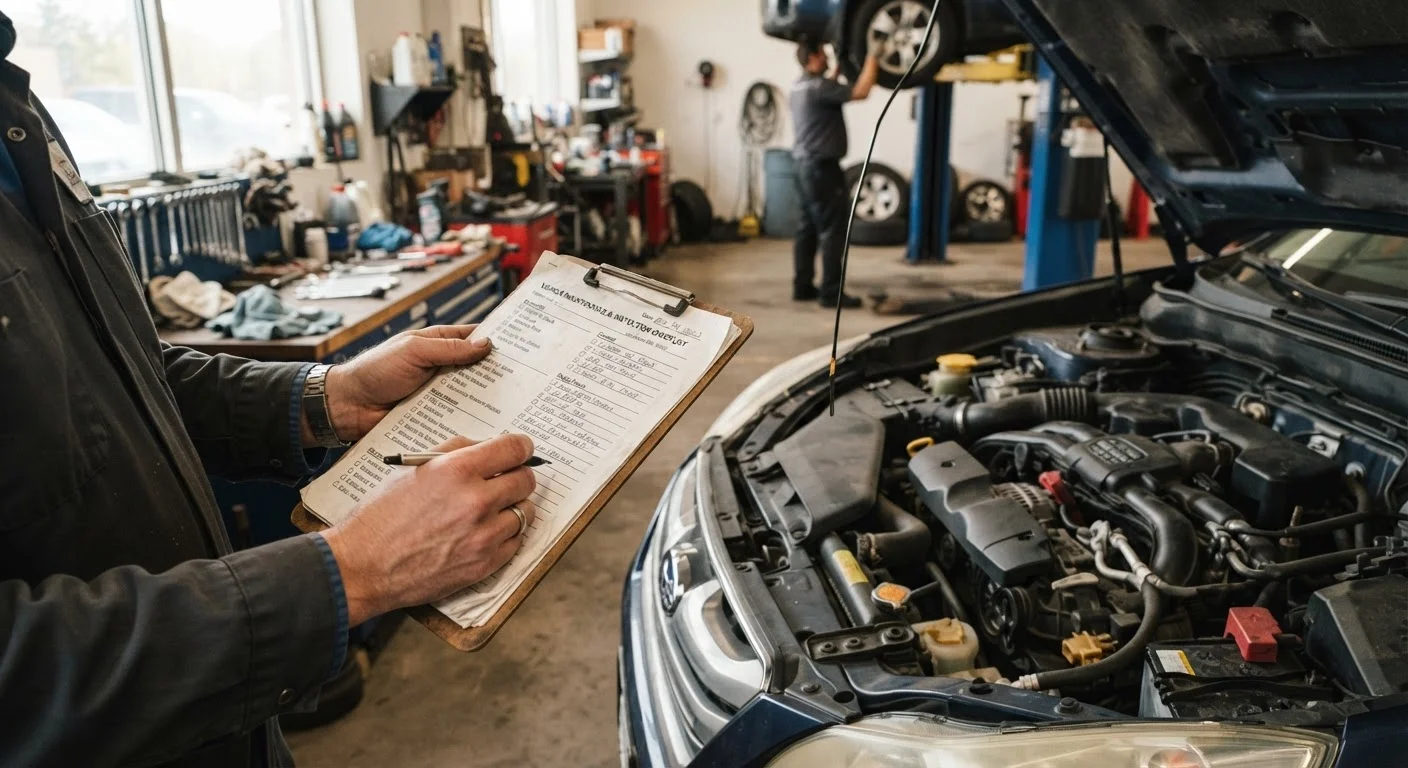
The Real Trade-Off: Cost vs. Roadworthiness
Every driver wants to spend less on their vehicle. The challenge is distinguishing between expenses that can genuinely be reduced and those where cutting back creates risks — to safety, to reliability, or to long-term cost. These are not the same category, and conflating them is where most ownership budgeting goes wrong.
Understanding what car ownership truly costs — depreciation, insurance, fuel, maintenance, and financing — is the starting point. Once you can see the full picture, it becomes much easier to identify where smart choices live versus where shortcuts become liabilities. The practices below focus on that distinction: reducing what you spend without trading away the safety or reliability of your vehicle.
Proven Practices for Reducing Ownership Costs Responsibly
The following approaches are grounded in how vehicles actually work and where money is reliably lost or saved. None involve compromising brake function, ignoring warning lights, or using substandard parts in safety-critical systems.
Follow your vehicle's manufacturer-recommended maintenance schedule, not a generic one.
Manufacturer schedules are calibrated to your specific engine, transmission, and drivetrain. Deferring oil changes, coolant flushes, or timing belt replacements based on guesswork can cause component failure that costs many times more than the service itself. As explored in our article on why skipping routine servicing creates bigger problems, small oversights reliably escalate.
Review your auto insurance coverage annually and adjust it to match your vehicle's current value.
Comprehensive and collision coverage premiums are often priced against the vehicle's replacement value. As a car depreciates, carrying the same coverage level you had at purchase may mean paying for more protection than the vehicle is worth. Reviewing deductibles and coverage tiers each year — ideally with a licensed insurance professional — can identify genuine savings without leaving you underprotected.
Develop smooth, anticipatory driving habits to reduce fuel consumption and mechanical wear.
Hard acceleration, late braking, and high-speed highway driving all increase fuel costs and accelerate wear on brakes, tires, and drivetrain components. Smooth, anticipatory driving — reading traffic ahead, coasting to stops, maintaining steady speeds — reduces both fuel spend and the frequency of component replacement. It also contributes to safer driving overall.
Check tire pressure monthly and rotate tires at the recommended interval.
Under-inflated tires increase rolling resistance, which raises fuel consumption. They also wear unevenly and compromise handling, particularly in emergency maneuvers. Proper inflation and regular rotation extend tire life substantially — a meaningful saving given that a full set of replacement tires represents a significant expense for most households.
Get written estimates from multiple independent repair shops before authorizing non-emergency work.
Labor rates and parts markups vary considerably between dealers, independent shops, and chains. For non-urgent repairs, taking time to gather two or three estimates can reveal significant price differences for identical work. This doesn't mean always choosing the lowest price — reputation, warranty on labor, and parts quality all matter — but comparison shopping is a straightforward way to avoid overpaying.
Build a dedicated vehicle maintenance fund rather than treating car costs as unpredictable emergencies.
Vehicles have predictable maintenance cycles and finite component lifespans. Treating every repair as a financial surprise often forces rushed decisions — including cutting corners on quality — when a modest monthly reserve would cover the same cost comfortably. Our guide to building a realistic annual car budget walks through how to estimate these figures accurately.
For a comprehensive view of every recurring and one-off cost worth tracking, the annual car ownership cost checklist provides a structured starting point.
When DIY Makes Sense — and When It Doesn't
Basic tasks like replacing cabin air filters, topping off windshield washer fluid, or swapping wiper blades are well within most drivers' abilities and can save labor fees. However, brake work, suspension components, and anything involving the fuel or electrical system should be handled by a qualified mechanic. Improper repairs in these areas can create hazards that far outweigh any short-term savings.
Start Saving This Week
Not every cost-reduction strategy requires a major decision or a visit to a shop. Several of the highest-impact habits are things you can act on immediately — before your next service appointment, before your insurance renewal, and before your next tank of fuel.
For a broader foundation covering the full lifecycle of vehicle upkeep, see the complete reference for car ownership and maintenance. Sound ownership habits, built early, consistently outperform reactive spending in both cost and safety outcomes.