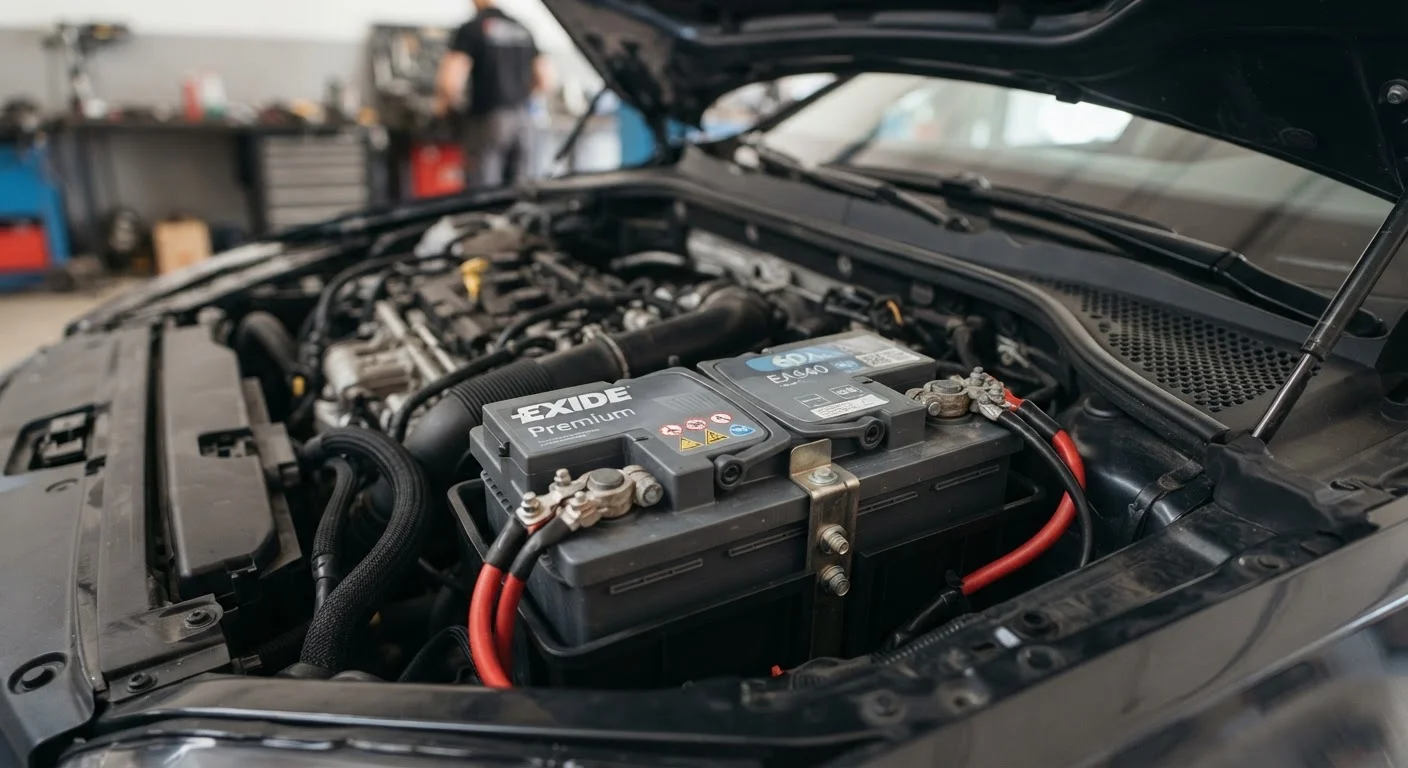
Why Your Car Battery Struggles More Than You Might Expect
A car battery does far more than start the engine. It powers the vehicle's electronics, stabilizes voltage across the electrical system, and supports the alternator in keeping everything running. Despite this load, most drivers don't think about their battery until it fails — often at the worst possible moment.
The average lead-acid battery lasts roughly three to five years under normal conditions. But several common factors can push that closer to two years or cause premature failure even in a relatively new battery. Understanding what stresses your battery is the first step toward extending its service life.
For a broader view of vehicle upkeep by season, see the seasonal car maintenance checklist — it covers battery checks alongside tires, fluids, and visibility items.
The Main Causes of Battery Drain and Degradation
Several factors consistently appear in premature battery failure. Recognizing them in your own driving habits can help you make targeted changes.
3–5 years
Typical car battery service life
Industry data consistently places average lead-acid battery lifespan at three to five years, depending on climate, driving patterns, and maintenance.
~50%
Battery capacity reduction in extreme cold
At 0°F (-18°C), a fully charged lead-acid battery may deliver only around half its rated cranking amperage compared to performance at 80°F, according to battery industry data.
20–30 min
Highway driving needed to recharge after a cold start
Automotive engineers generally estimate that sustained highway-speed driving for at least this duration is needed for the alternator to restore a battery depleted by starting.
Temperature Extremes
Heat is actually harder on batteries than cold. High ambient temperatures accelerate the chemical reactions inside the battery, causing internal corrosion and water loss from the electrolyte. Cold weather, meanwhile, reduces the battery's ability to deliver current — which is why weak batteries tend to reveal themselves on the first freezing morning of winter. Drivers in climates with very hot summers should consider testing their battery annually rather than waiting for signs of trouble.
Short-Trip Driving
Every time you start your car, the battery draws a significant charge. The alternator recharges the battery while the engine runs, but this process takes time — typically 20 to 30 minutes of driving at highway speeds. If your daily routine involves several short trips of five minutes or less, the battery may never fully recover its charge. Over weeks and months, this partial-charge cycling degrades battery capacity.
Parasitic Draw
Modern vehicles have numerous systems that draw power even when the ignition is off — the clock, alarm, keyless entry, and infotainment memory being common examples. This is normal and accounted for in battery design. Problems arise when a door light stays on, a faulty relay keeps a component active, or an aftermarket accessory isn't wired correctly. A slow parasitic drain of as little as 50 milliamps above the normal baseline can discharge a battery within days of the car sitting idle.
Leaving Accessories On
Headlights, interior lights, and phone chargers left plugged in with the engine off are a direct and immediate drain. Even a cabin light left on for several hours can be enough to prevent a cold start the next morning.
An Aging or Failing Charging System
A battery that keeps dying may not be the root cause — a failing alternator or worn serpentine belt can prevent adequate recharging. If you've replaced a battery and issues persist, have the charging system inspected by a qualified mechanic before assuming the new battery is faulty.
Best Practices for Protecting and Extending Battery Life
The practices below address the most common battery stressors. None require specialist tools or mechanical expertise, though some inspection tasks are best confirmed by a professional.
Test your battery annually, especially after three years of service.
Battery capacity degrades gradually, and a battery can test at reduced capacity long before it fails completely. Annual testing — available at many auto parts stores and service centers — gives you a baseline and enough warning to replace on your own schedule rather than roadside.
Combine short trips into longer drives whenever your schedule allows.
Sustained highway-speed driving gives the alternator adequate time to restore the battery's full charge. Consistently short trips leave the battery in a partial state of charge, which accelerates sulfation — a process where lead sulfate crystals form on the plates and reduce capacity.
Use a maintenance charger (trickle charger) when the vehicle will sit unused for more than two weeks.
A battery left in a discharged or partially discharged state for extended periods suffers permanent capacity loss. A quality maintenance charger monitors the battery and supplies just enough current to keep it at full charge without overcharging.
Inspect battery terminals for corrosion every six months and clean them as needed.
Corrosion at the terminals — the white or bluish crust that forms around the posts — increases electrical resistance, reducing charging efficiency and the power available to start the engine. Cleaning terminals is straightforward and low-risk.
Turn off all lights and accessories before leaving the vehicle.
Cabin lights, headlights left in manual mode, and USB chargers with devices connected all draw current when the engine is off. These loads are avoidable and represent some of the most common causes of a dead battery on return to a parked vehicle.
Have the charging system tested if your battery repeatedly loses charge.
A battery that keeps going flat may be a symptom rather than the cause. Alternators, voltage regulators, and drive belts all affect how effectively the battery recharges while driving. Replacing a battery without diagnosing a charging system fault wastes money and leaves the underlying problem unresolved.
For more context on which maintenance tasks are genuinely DIY-friendly and which carry real risk, the guide to DIY versus professional maintenance is a useful reference.
Quick Actions You Can Take Today
You don't need to overhaul your routine to protect your battery. A few targeted habits make a measurable difference over the life of the vehicle.
Keeping ownership costs down often comes down to small, consistent habits — something covered in more depth in the article on reducing vehicle costs without compromising safety.
This article provides general vehicle information and education. It is not a substitute for advice from a qualified mechanic familiar with your specific vehicle. Always consult a professional before carrying out any electrical or charging system work.