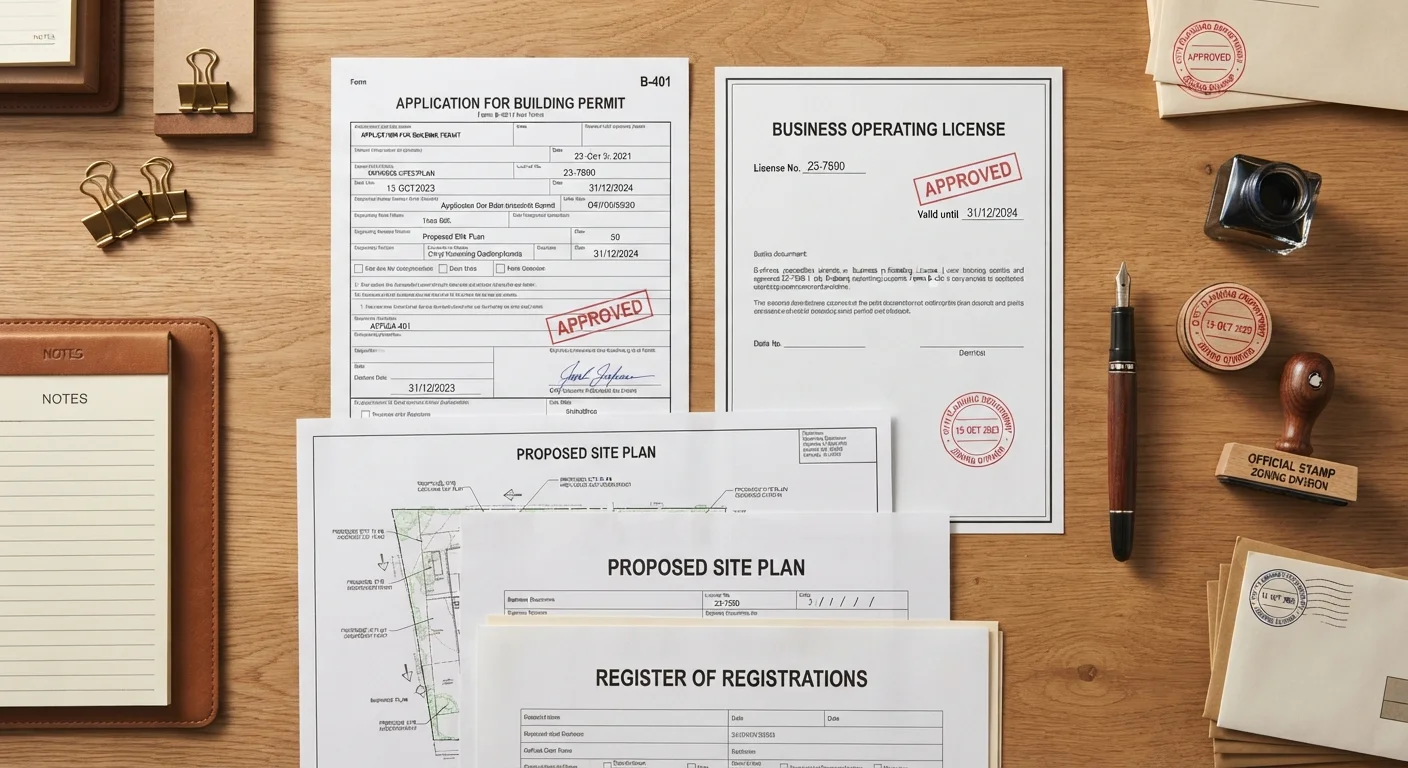
Why Licences and Permits Matter Before You Open
Operating without the required licences or permits isn't just a paperwork oversight — it can result in fines, forced closure, or personal liability. The specific requirements for your business depend on your industry, location, and business structure, which means there's no single universal checklist. What's mandatory for a food truck in Austin may be entirely different from what a freelance web designer in Chicago needs.
Before you launch, it pays to understand the three tiers where requirements can arise: federal, state, and local (city or county). Most small businesses encounter requirements at the state and local levels, but certain industries — alcohol, firearms, broadcasting, agriculture — also require federal authorisation.
This guide lays out the most common categories so you know what to look for. Always verify current requirements directly with the issuing authority, since rules change. For a broader pre-launch overview, see the Small Business Registration Checklist before you open your doors.
This article is for general informational purposes only and does not constitute legal advice. Consult a qualified attorney or your state's business licensing office for guidance specific to your situation.
Common Licence and Permit Categories
| Federal licence examples | Alcohol, firearms, broadcasting, interstate trucking (SBA.gov — Federal Licences and Permits) |
| Most common local requirement | General business licence (city or county) |
| DBA filing location | Typically county clerk's office |
| Sales tax permit issuer | State department of revenue or taxation |
| Primary federal small business resource | U.S. Small Business Administration (sba.gov) |
| Renewal frequency (general business licence) | Typically annual |
General Business Licence
Many cities and counties require all businesses operating within their jurisdiction to hold a general business licence — sometimes called a business tax certificate or operating permit. This is typically renewed annually and establishes that your business is registered with the local government. Check your city clerk's office or county government website for requirements.
Fictitious Business Name (DBA)
If you operate under any name other than your own legal name or your registered LLC/corporation name, most states require you to file a DBA (Doing Business As) — also called a fictitious business name registration. This is usually filed with the county clerk and may require a public notice publication. For more on naming considerations, see Naming Your Business.
Professional and Occupational Licences
Regulated professions — including contractors, electricians, cosmetologists, accountants, real estate agents, attorneys, and healthcare workers — require state-issued licences. These typically involve proof of education, passing an exam, and ongoing continuing education to maintain. Licensing boards vary by profession and state; the SBA's website maintains a directory of state licensing agencies by industry.
Seller's Permit / Sales Tax Permit
If your business sells tangible goods (and in many states, certain services), you'll likely need a seller's permit — also called a sales tax permit or resale certificate — issued by your state's department of revenue or taxation. This authorises you to collect sales tax from customers. Operating without one in a state that requires it can trigger back taxes and penalties.
Health and Safety Permits
Food service businesses, childcare facilities, tattoo studios, and other establishments with public health implications typically require inspections and permits from local or state health departments. Building out or renovating a commercial space may also require zoning approval, a certificate of occupancy, and fire safety inspection sign-off.
Federal Licences and Permits
Certain federally regulated industries require authorisation from a specific federal agency before operating. Examples include alcohol manufacturing (TTB), commercial trucking (FMCSA), radio broadcasting (FCC), and importing/exporting certain goods (CBP). The SBA maintains a current list of federally regulated business activities at sba.gov.
Where to Find Authoritative Requirements
Determining exactly what applies to your business requires checking multiple sources — there is no single government database that covers every federal, state, and local requirement simultaneously. Here's where to start:
- SBA.gov: The U.S. Small Business Administration provides a licence and permit lookup tool and links to state licensing agencies and federal regulatory bodies.
- Your state's Secretary of State website: Handles business entity registration, DBA filings, and often links to state-level professional licensing boards.
- State Department of Revenue or Taxation: Issues seller's permits and handles sales tax registration.
- City or county clerk's office: Source for general business licences, local zoning permits, and home occupation permits.
- Industry-specific regulatory agencies: Your trade association or professional board can identify sector-specific requirements that general resources may not surface.
Getting your legal structure right from the start makes the licensing process cleaner. If you haven't yet formalised your entity, Turning a Business Idea into a Legal Entity covers the key steps. Note that tax registrations — like obtaining an EIN or registering for state payroll taxes — are separate from licences and permits but equally essential; see Small Business Tax Obligations for that side of compliance.