Why Principles Matter More Than Tactics
There is no shortage of debt repayment tactics — balance transfer offers, income-based repayment plans, debt consolidation, and more. But tactics are only as effective as the underlying principles guiding them. Without a consistent framework, even the most promising strategy can stall after a few months.
What financial educators and researchers tend to agree on is that durable debt repayment depends less on finding the perfect method and more on applying a small set of time-tested principles with discipline. These principles work regardless of your income level, the type of debt you carry, or how long you've been in it. For those just getting started, our complete introduction to managing personal debt covers the foundational concepts you'll want to understand first.
This Is General Financial Education
The principles outlined here are drawn from widely recognized personal finance frameworks and are intended for educational purposes only. They are not personalized financial, tax, or legal advice. For guidance tailored to your specific situation, consider consulting a licensed financial adviser or credit counselor.
The Core Principles of Effective Debt Repayment
The practices below reflect broad consensus in personal finance education. They are presented as general guidance — not individualized advice — and your specific circumstances will always shape how you apply them.
Map your full debt landscape before making any payment decisions.
Without a clear inventory of what you owe — including balances, interest rates, and minimum payments — it's impossible to prioritize effectively. Many people underestimate their total debt burden, which leads to unfocused repayment efforts and slow progress.
Always pay at least the minimum on every account, every month, without exception.
Missing minimum payments triggers late fees, penalty interest rates, and credit score damage — all of which make debt harder and more expensive to repay. Protecting your payment history is a non-negotiable foundation of any repayment plan.
Choose a repayment method — and apply it consistently.
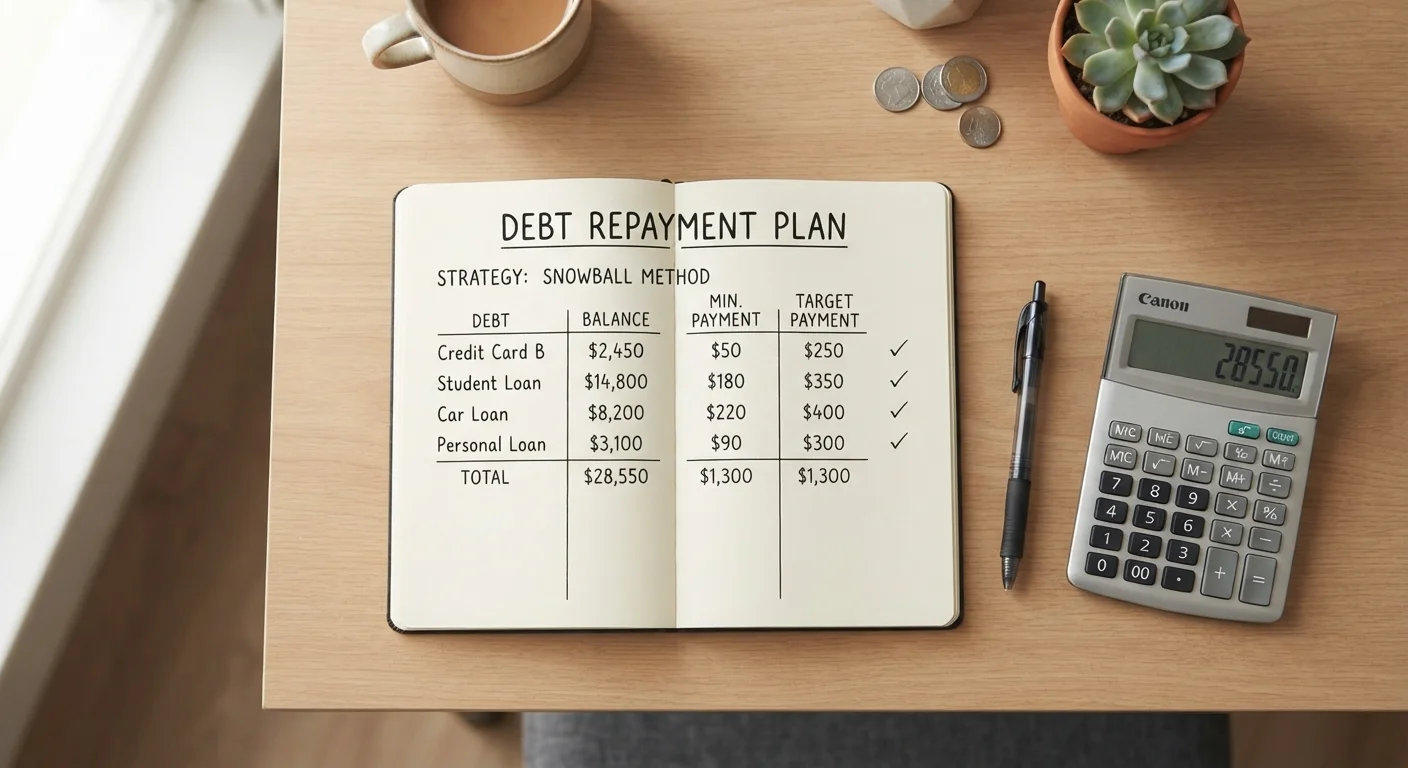
Two widely recognized approaches are the debt avalanche (targeting the highest-interest debt first) and the debt snowball (paying off the smallest balance first). Research and financial educators generally agree the avalanche minimizes total interest, but the snowball can improve motivation for some people. The method you'll actually stick with is the right one for you.
Build a small emergency fund before aggressively paying down debt.
Without any cash reserve, an unexpected car repair or medical bill can force you to take on new debt or miss payments — erasing months of progress. Even a modest buffer of $500–$1,000 provides a financial firewall that keeps your plan on track.
Increase your payment amounts as your financial situation improves.
Fixed minimum payments often barely cover interest, extending repayment timelines by years. Any increase — even $25 or $50 per month — meaningfully reduces the total interest paid and shortens the payoff period due to how compound interest works against borrowers.
Align your budget so debt repayment is a planned expense, not an afterthought.
Debt payments treated as optional get skipped when competing priorities arise. Embedding repayment into your budget — alongside rent, groceries, and utilities — ensures it receives consistent funding. The 50/30/20 framework, which allocates 20% of after-tax income toward savings and debt, is one useful starting structure.
For a closer look at when to prioritize debt payoff versus building savings in parallel, see our comparison of paying off debt versus saving at the same time.
$104,215
Average U.S. household debt (excluding mortgage)
According to Federal Reserve data analyzed in periodic consumer finance surveys, non-mortgage debt burdens remain substantial for many American households.
~43%
Americans carrying credit card balances month to month
The Consumer Financial Protection Bureau has consistently found that a large share of cardholders revolve balances, incurring interest charges each billing cycle.
20%
Recommended share of income for savings and debt
The 50/30/20 budgeting rule — a widely cited framework in personal finance education — suggests allocating 20% of after-tax income toward financial goals including debt repayment.
Putting It Into Practice: Where to Start Today
Knowing the principles is only half the equation. The gap between understanding and action is where most repayment plans break down. The following quick wins are designed to create immediate momentum — small, concrete steps that reinforce the habits these principles depend on.
Avoiding the common missteps that stall repayment efforts is equally important. Our article on where people go wrong when trying to get out of debt outlines the patterns most likely to undermine your plan — and how to course-correct. For broader support on building lasting money habits, explore the Financial Wellness hub.
This article is for general informational and educational purposes only and does not constitute personalized financial, tax, or legal advice. Consult a qualified financial professional for guidance specific to your situation.