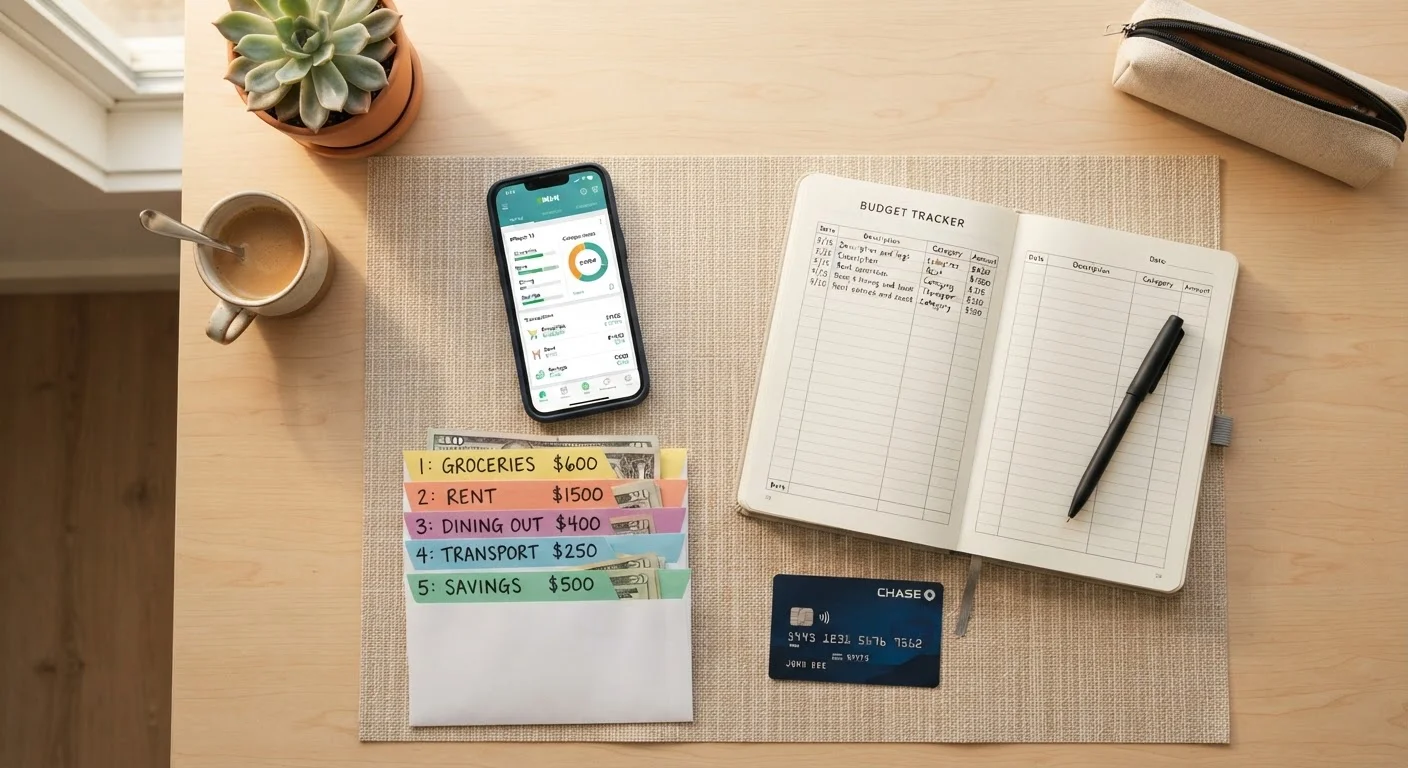
Why the Envelope Method Still Holds Up
The envelope budgeting method — originally built around literally sorting cash into labeled envelopes for groceries, gas, entertainment, and so on — works because it makes limits concrete and visible. When the grocery envelope is empty, spending stops. There is no ambiguity and no mental arithmetic required mid-month.
Today, most Americans carry little to no cash. According to Federal Reserve consumer payment surveys, card and digital payments now dominate everyday transactions. But the psychological mechanism that makes envelope budgeting effective — pre-committing money to categories before you spend it — transfers seamlessly to digital tools. The envelope is a metaphor. What matters is the constraint it imposes.
If you've tried tracking spending after the fact and found it more diagnostic than preventive, envelope budgeting offers a forward-looking alternative. Unlike simply logging expenses, it sets the ceiling first. For a deeper comparison of these approaches, see our guide on spending trackers vs. full budgets.
What you will need
How to Build Your Digital Envelope System
The steps below walk you through setting up a fully functional digital envelope budget from scratch. You'll define your income, choose your tools, assign your categories, and build a monthly rhythm that keeps the system running.
Calculate Your Monthly Take-Home Income
Start with what actually lands in your bank account each month after taxes and deductions — not your gross salary. If your income varies (freelance, hourly, commission), use a conservative estimate based on your three lowest recent months. This is the total you have to allocate across all envelopes.
List Every Spending Category You Actually Use
Review two to three months of bank and card statements to identify every category where money goes. Common categories include housing, utilities, groceries, transportation, dining out, subscriptions, personal care, clothing, entertainment, and savings. Be specific enough to be useful — "food" is too broad if you spend very differently at grocery stores versus restaurants.
Choose Your Digital Envelope Tool
Three main approaches exist:
- Multiple bank sub-accounts: Many online banks allow you to open several savings or checking buckets within one account, each labeled with a category name. Money sits in that bucket until you spend it.
- Budgeting apps: Apps built around the envelope or zero-based method let you assign digital dollars to categories and track spending against each allocation in real time.
- Spreadsheet: A simple table with category names, monthly allocations, spending logged as it happens, and a running balance works well for anyone comfortable with basic spreadsheets.
Choose the tool you will actually use consistently — simplicity beats sophistication here.
[tool_cards]Assign Every Dollar to a Category
Divide your total monthly take-home income across your categories until the sum of all allocations equals your income — zero dollars left unassigned. This zero-based approach (every dollar has a job) is the digital equivalent of stuffing all your cash into envelopes at the start of the month. Fixed expenses (rent, loan payments) get their exact amounts first; variable categories get realistic targets based on your statement review.
Log Spending Against Each Envelope as It Happens
Every time you spend, deduct the amount from the appropriate envelope balance — whether in your app, your spreadsheet, or your sub-account. The goal is knowing each envelope's remaining balance at any moment. This real-time awareness is what separates envelope budgeting from end-of-month regret.
Conduct a Monthly Reset and Adjustment
At the end of each month, review every envelope: Which categories ran out early? Which consistently had money left over? Use this data to adjust next month's allocations. A category that runs out by the 20th every month needs a higher allocation or a conscious spending reduction — not willpower alone. After two to three months, your allocations should closely reflect your real life.
Keeping the System Running Month to Month
The most common reason envelope budgets fail isn't overspending — it's abandonment after the first rough month. A few maintenance habits prevent that.
Roll Over or Reset?
At month's end, decide what happens to unspent balances. Rolling leftover grocery money into next month rewards discipline and builds a small cushion. Resetting to zero keeps the structure tighter. Either approach works; consistency matters more than which one you pick.
Build a Sinking Fund Envelope
One category that trips up most budgeters is irregular, predictable expenses — car registration, holiday gifts, annual subscriptions. These aren't emergencies; they're expenses you can see coming. Creating a dedicated sinking fund envelope (a sub-account where you deposit a fixed amount monthly) smooths out these lumps. For a full breakdown, see our guide on seasonal and irregular expenses. Also be aware that hidden recurring costs like forgotten subscriptions deserve their own envelope line.
Automate Funding, Not Spending
Automatic transfers on payday — moving set amounts into sub-accounts that represent your envelopes — reduce friction and the temptation to spend before allocating. That said, automation has trade-offs worth understanding before you set it and forget it. See our overview of automating your finances for a balanced look. Finally, envelope budgeting pairs well with savings goals: once your spending categories are capped, redirecting leftovers becomes straightforward. If building savings on a tight income feels difficult, making room for savings when money feels tight offers practical strategies.
Give New Categories Time to Calibrate
Your first month's allocations are educated guesses, not commitments set in stone. Expect to move money between categories as you learn where your spending actually lands. After two to three full months, your envelope amounts will reflect your real habits rather than your idealized ones — and the system will feel far less restrictive.
This article is for general informational and educational purposes only and does not constitute personalized financial advice. Consider consulting a qualified financial professional for guidance specific to your situation.