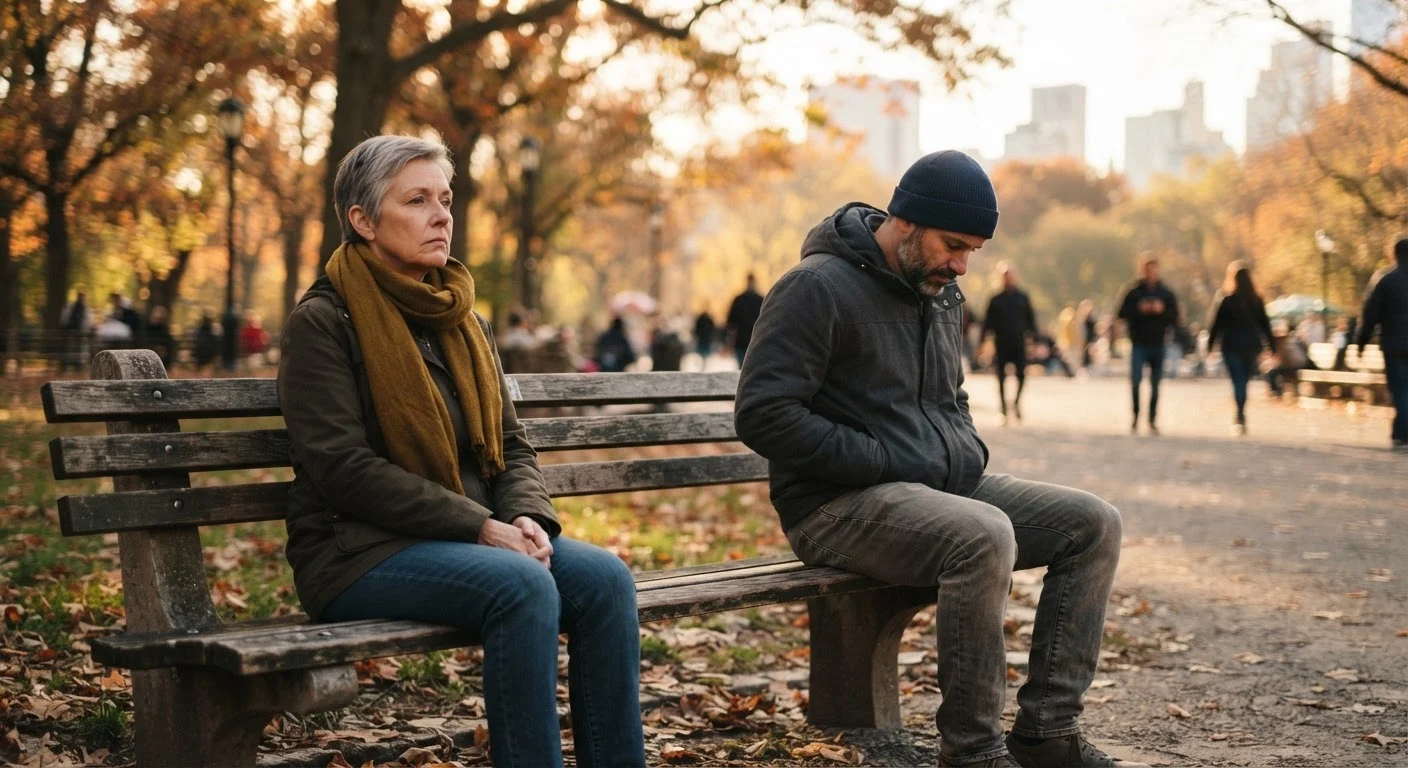
The Conditions That Made Friendship Easy — And Why They're Gone
Think back to how your closest childhood or college friendships formed. Chances are, you didn't decide to become friends with someone — it just happened, slowly, through being in the same place over and over. That's not an accident. Researchers who study friendship formation have identified three conditions that consistently produce close relationships: proximity, repeated unplanned interaction, and a setting where people feel safe enough to be themselves.
School and college are almost perfectly engineered to deliver all three. You live near classmates, you run into them constantly without planning it, and the shared experience of navigating something new together lowers social defenses. Friendships emerge almost as a byproduct of the environment itself.
Adulthood quietly removes those scaffolds. Most people shift into structured work schedules, separate households, and social lives that require active coordination to maintain. The same serendipitous contact that used to generate friendships now has to be engineered deliberately — which takes energy most adults feel they don't have. This structural shift is the root cause of most adult friendship difficulty, and understanding it matters because it reframes the experience: it's not you, it's the architecture of the life you're living. See how shifting adult milestones are reshaping the social contexts that used to support connection.
Life Events That Fracture Friend Groups
Even friendships that survived the transition out of school face ongoing structural threats. The major life events adults navigate — new jobs, relocation, marriage, children, divorce, caregiving — each have the potential to quietly reorganize a person's social world.
Geographic moves are particularly disruptive. A cross-country job change doesn't just create distance; it removes the low-effort proximity that kept friendships alive. The friends you used to see casually at the gym or neighborhood coffee shop become people you have to calendar. Some relationships survive that transition; many don't. It's worth noting that where you live shapes your social life in ways that aren't always obvious when you're choosing a place to settle.
Having children is another well-documented inflection point. Parent friendships often restructure around other parents — people who share the same time constraints and life rhythms. Non-parent friendships, even deep ones, can quietly drift when the logistical overlap shrinks to near zero. Neither party has necessarily done anything wrong; the social math has just changed.
When Friendship Loss Goes Unacknowledged
Divorce, major illness, and other life upheavals can scatter friend groups in ways that feel socially invisible — there's no recognized ritual for grieving the loss of a friendship the way there is for other kinds of loss. Naming this as a real loss, rather than minimizing it, is often the first step toward rebuilding. If grief over lost connections feels overwhelming or persistent, speaking with a mental health professional can help.
Divorce and major health events can fracture friend groups in similar ways — and the loss of those social bonds often goes unacknowledged, making the grief harder to process. Recognizing that friendship loss is a real loss is an important first step.
The Vulnerability Problem Nobody Talks About
Beyond logistics, there's a psychological dimension to adult friendship difficulty that's worth naming directly: forming new friendships as an adult requires a kind of vulnerability that feels much higher-stakes than it did at 12 or 20.
Suggesting to a new acquaintance that you'd like to hang out again, or admitting to a colleague that you're feeling isolated, carries the risk of rejection that most adults find uncomfortable to sit with. Children and college students experience rejection too, but they're embedded in environments where the next opportunity to reconnect is usually just a day away. Adults often have no such safety net.
This leads to a quiet standoff: many adults feel lonely and want more connection but don't initiate for fear of seeming needy, desperate, or socially awkward. The result is two people who might have become good friends both waiting for the other person to move first — and neither ever does. Being aware of this dynamic doesn't make it disappear, but it can make it easier to be the one who reaches out first anyway. The research on habits of people with strong social connections consistently points to proactive initiation as one of the key differentiators.
What Actually Helps: Rebuilding the Conditions
Because the problem is largely structural, the most effective responses tend to be structural too. Rather than trying to manufacture closeness quickly, the goal is to recreate the conditions — repeated, low-pressure contact over time — that friendship needs to develop naturally.
Recurring commitments do this reliably. A weekly running group, a monthly book club, a regular volunteer shift — any context where you encounter the same people in an unforced way, over weeks and months, rebuilds the proximity and repetition that adult life otherwise removes. The content almost doesn't matter; the consistency does.
It also helps to understand that finding a third place — a regular social space that's neither home nor work — plays a historic role in sustaining community life. Coffee shops, community centers, places of worship, and hobby spaces have all served this function. For many adults, the erosion of accessible third places is a significant part of why social life feels harder than it used to.
Finally, it's worth holding realistic expectations about what adult friendship looks like. It tends to be less spontaneous, more scheduled, and slower to deepen than earlier friendships were. That's not a sign it's lesser — it just operates under different conditions. Understanding both what friendships offer that romantic relationships don't and what they require helps adults invest in them more intentionally.
This article is for general informational and educational purposes only. Social and emotional well-being is individual, and readers experiencing significant loneliness or mental health concerns are encouraged to speak with a qualified mental health professional.