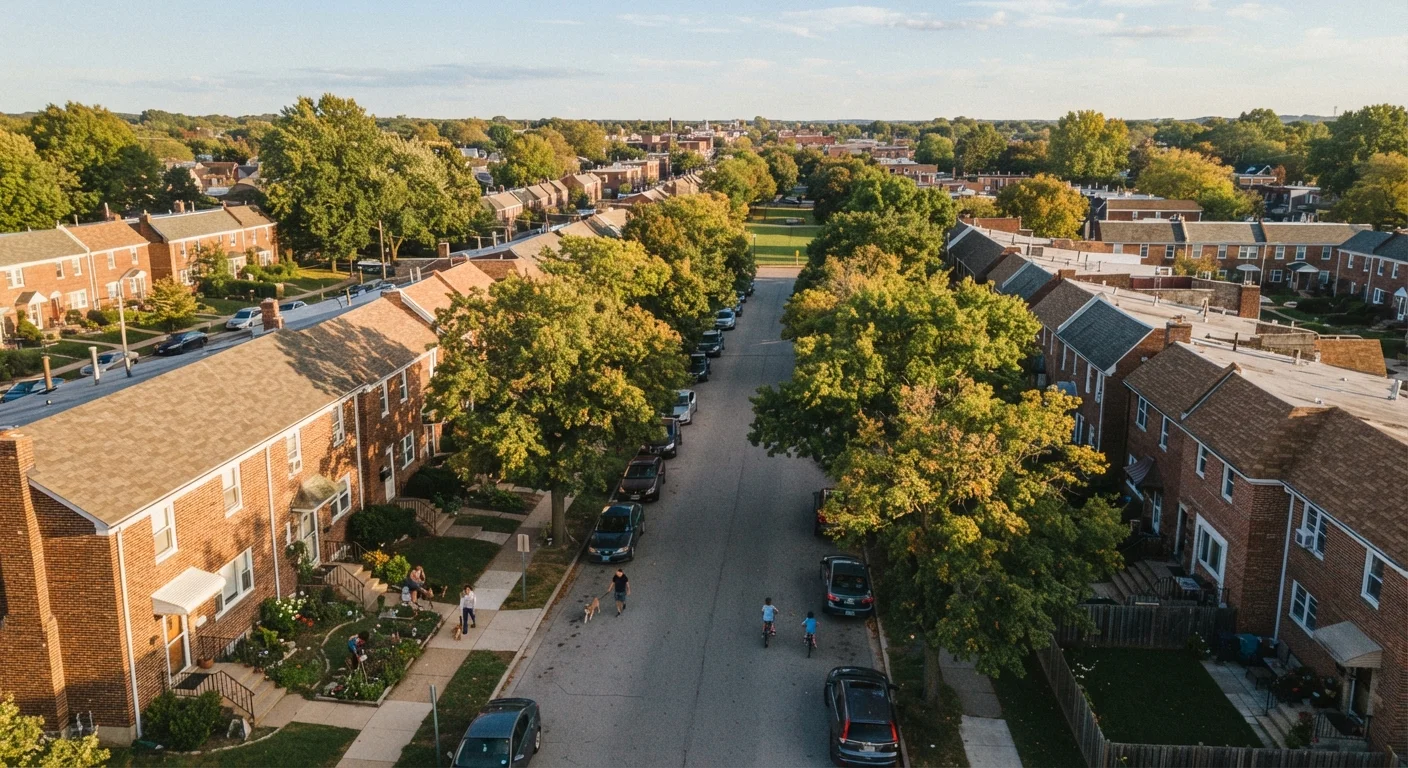
Two Concepts, One Common Goal
Walk down almost any American residential street and you'll find some version of organized neighbor life — a posted flyer about a block party, a sign noting HOA community rules, or a committee meeting notice on a bulletin board. But the groups behind these touchpoints are often very different in nature, power, and purpose.
Block associations and homeowners associations (HOAs) both aim to foster a sense of place and shared investment in a neighborhood. The similarities largely end there. One is an informal gathering of engaged residents; the other is a legally structured organization with real authority over your home and property. Understanding the distinction matters whether you're a long-time resident, a newcomer, or someone considering a move.
As community dynamics across America continue to evolve — from urban row-house blocks to sprawling suburban developments — the role these organizations play is increasingly relevant. For a broader look at how geography shapes community involvement, see our article on how rural, suburban, and urban neighborhoods differ.
What Is a Block Association?
A block association is a voluntary, informal organization formed by residents of a specific street, block, or small neighborhood area. There's no legal framework that creates or governs it — it exists because neighbors decide it should. Anyone can form one, and participation is entirely optional.
Block associations typically focus on quality-of-life issues: organizing neighborhood cleanups, hosting social events, coordinating with local sanitation or police precincts, and advocating for improvements like better street lighting or traffic calming measures. In many cities, block associations serve as a meaningful bridge between residents and local government agencies.
Because they have no legal standing, block associations cannot levy fines, place liens on properties, or compel residents to follow rules. Their influence is entirely moral and social — which can be a strength in communities that prioritize autonomy, but a limitation when collective action requires real accountability.
| Criterion | Block Association | Homeowners Association (HOA) |
|---|---|---|
| Legal standing | None — informal group | Legally incorporated entity |
| Membership | Voluntary | Mandatory upon home purchase |
| Dues or fees | Optional / suggested | Mandatory, legally enforceable |
| Rule enforcement | Social pressure only | Fines, liens, legal action possible |
| Governing documents | None required | CC&Rs, bylaws, rules |
| Common in | Urban, established neighborhoods | Planned suburban developments |
| Elected leadership | Informal, if any | Formal elected board of directors |
| Impact on home sale | None | HOA documents required at closing |
What Is a Homeowners Association?
A homeowners association is a legally established entity, typically created by a real estate developer when a planned community is built. It operates under a set of governing documents — usually called CC&Rs (Covenants, Conditions, and Restrictions), along with bylaws and rules — that are legally binding on every homeowner in the community.
When you purchase a home in an HOA-governed development, membership is not a choice. It is automatic, ongoing, and contractual. Homeowners pay mandatory dues (often monthly or annually), and the association uses those funds to maintain shared amenities — pools, parks, landscaping, entranceways — and to enforce community standards around everything from exterior paint colors to lawn maintenance and parking.
HOAs have genuine legal power. They can issue fines for rule violations, place liens on properties for unpaid dues, and in some states pursue foreclosure in extreme cases of non-payment. They are governed by an elected board of directors drawn from among homeowners, and their decisions are subject to state law — though the specifics vary significantly by state.
74 million
Americans living in HOA communities
According to the Community Associations Institute, approximately 74 million Americans lived in HOA-governed communities as of recent estimates.
365,000+
HOA communities across the U.S.
The Community Associations Institute tracks more than 365,000 community associations operating nationwide, a number that has grown substantially since the 1970s.
$250–$500
Typical monthly HOA dues range
Monthly HOA dues vary widely by community type and location; figures commonly cited in real estate reporting suggest a broad range, with luxury or amenity-rich communities running higher.
Key Differences at a Glance
The clearest way to understand the gap between these two structures is to look at authority, membership, and financial obligation side by side. While both organizations can build community and improve neighborhood life, their mechanisms for doing so are fundamentally different.
Block associations depend almost entirely on goodwill, social pressure, and the energy of their most committed members. HOAs depend on legal covenants, dues collection, and structured governance. Neither model is inherently better — what matters is which one fits the character of your neighborhood and the expectations you bring to homeownership or renting.
If you're navigating the vocabulary of neighborhood and housing structures more broadly, our practical reference on home and organization terms may offer useful context.
What This Means for You as a Resident
For renters or homeowners in a block association area, the relationship is simple: you can join and contribute, or you can opt out entirely. There are no financial penalties and no formal obligations. The community benefits only if neighbors choose to show up.
For homeowners in an HOA community, the stakes are considerably higher. Before purchasing, it's essential to request and review all governing documents — the CC&Rs, bylaws, budget, reserve fund status, and any pending special assessments. Understanding what rules apply to your property, how much you'll owe in dues, and how the board operates can prevent costly surprises down the road.
It's also worth knowing that HOAs vary enormously in how they function. Some are well-run, financially sound, and genuinely community-oriented. Others may carry large deferred maintenance obligations or have a history of contentious governance. Consulting with a real estate attorney before purchasing in an HOA community is a prudent step — this article offers general information only and is not a substitute for professional legal or financial advice.
Block associations, by contrast, are often underappreciated tools for civic engagement in cities and older neighborhoods where HOAs don't exist. Starting or joining one can meaningfully improve your block — even without any formal authority behind it.
This article is for general informational purposes only and does not constitute legal, financial, or real estate advice. Readers should consult qualified professionals for guidance specific to their circumstances.