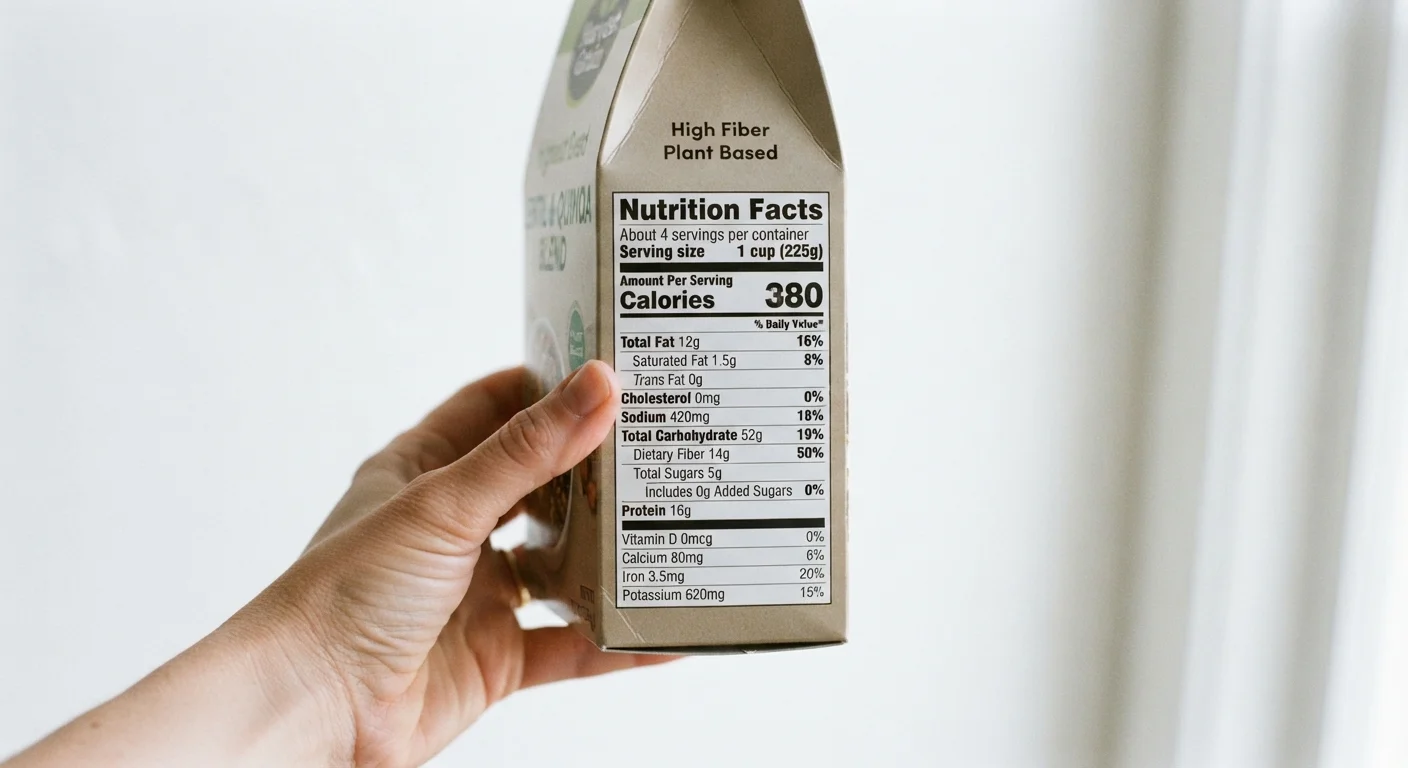
Why Nutrition Labels Deserve a Second Look
For most people, a glance at a nutrition label triggers immediate confusion — dozens of numbers, unfamiliar units, and percentages that seem disconnected from real eating. That confusion is understandable. The Nutrition Facts panel packs a lot of regulatory and scientific information into a small space, and food marketing on the front of packages often contradicts what's printed on the back.
Knowing how to read these labels accurately gives you a meaningful tool for making more informed choices at the grocery store. It's worth emphasizing that this is general nutrition information, not medical advice — if you have specific dietary requirements or health conditions, consult a registered dietitian or your healthcare provider for personalized guidance.
The steps below walk through each section of the standard U.S. Nutrition Facts label in the order that matters most, so you can build a reliable reading habit without feeling overwhelmed.
What you will need
How to Read a Nutrition Label Step by Step
Follow these steps each time you pick up a new packaged food. With practice, this process takes under a minute and becomes second nature.
Start with the serving size
The serving size is printed at the very top of the label and is the single most important number on it. Every calorie count, gram, and percentage below it is calculated for one serving — not the entire package. If a bag of chips lists a serving size of 1 oz (about 28g) but you eat 3 oz, you need to multiply every value by three.
Also note the servings per container. A small bottle labeled "2.5 servings" means the calorie count displayed is not the full-bottle total.
Check the calories
Calories measure the total energy a single serving provides. This number is displayed prominently and reflects contributions from all three macronutrients: fat (9 calories per gram), carbohydrates (4 calories per gram), and protein (4 calories per gram). Calorie needs vary widely by age, sex, activity level, and health status — a single number on a label can't tell you how it fits your individual needs.
Understand % Daily Value (%DV)
The %DV column tells you what percentage of the recommended daily intake for each nutrient one serving provides, based on a reference diet of 2,000 calories per day. As a general guide: 5% DV or less is considered low for a nutrient, and 20% DV or more is considered high.
Use this scale directionally: a high %DV for sodium signals a significant contribution to your daily sodium intake, while a high %DV for fiber or potassium is typically a positive sign.
Scan nutrients to limit
Look specifically at saturated fat, sodium, and added sugars. These are the three nutrients most commonly consumed in excess in the American diet, according to federal dietary guidance. A product with a high %DV for any of these — particularly if it's a food you eat often — can meaningfully add up across your day.
Trans fat is also listed; the goal is to keep it as close to zero as possible. Note that labels may show 0g trans fat even when partially hydrogenated oils appear in the ingredient list, because values below 0.5g per serving can be rounded down — which makes ingredient-list reading (Step 6) important.
Look for nutrients to get enough of
The lower section of the label lists nutrients that many Americans under-consume: dietary fiber, vitamin D, calcium, iron, and potassium. A higher %DV for these nutrients is generally favorable. Dietary fiber, in particular, supports digestive health and contributes to feelings of fullness — a consistent shortfall in most adults' diets.
Read the ingredient list
Ingredients are listed in descending order by weight — the first ingredient is the most abundant. A product whose first few ingredients are whole, recognizable foods (such as oats, whole wheat flour, or tomatoes) differs meaningfully from one whose first ingredients are refined starches or sugars.
Look out for multiple sugar aliases grouped across the list — corn syrup, dextrose, maltose, and fruit juice concentrate are all forms of added sugar. If several appear, they may collectively represent a larger proportion of the product than any single listing suggests. To understand how whole and minimally processed ingredients compare across the broader food supply, see our article on whole foods vs. processed foods.
What to Prioritize and What to Watch
Once you're comfortable with the label's structure, it helps to know which nutrients deserve the most attention for general health. Nutrients the FDA identifies as ones most Americans get too much of — saturated fat, sodium, and added sugars — are worth limiting. Nutrients many Americans fall short on — dietary fiber, vitamin D, calcium, iron, and potassium — are worth seeking out.
Added sugars in particular deserve close attention. The label now lists them separately from total sugars, making it easier to distinguish naturally occurring sugars (in fruit or dairy, for example) from sugars manufacturers added during processing. For a deeper look at how sugars and carbohydrates interact with your body's energy systems, see our plain-language guide to blood sugar and food.
Dietary fiber is one of the most underconsumed nutrients in the American diet. If a label shows a meaningful amount of fiber per serving, that's generally a positive signal. Our article on dietary fibre and why most adults underestimate it explores this nutrient's broader role in gut health and satiety.
Use Labels to Compare, Not Judge
Nutrition labels are most useful when you use them to compare similar products side by side — for example, two brands of canned beans or two breakfast cereals. Evaluating a food in isolation can be misleading; context across your full diet matters far more than any single item. No food is inherently "good" or "bad" based on one label number.
For a broader look at how different types of fats appear on labels and what they mean for cardiovascular health, see our breakdown of saturated, unsaturated, and trans fats. And if you want to put label-reading skills to work across a full week of eating, our balanced plate weekly checklist is a practical next step.