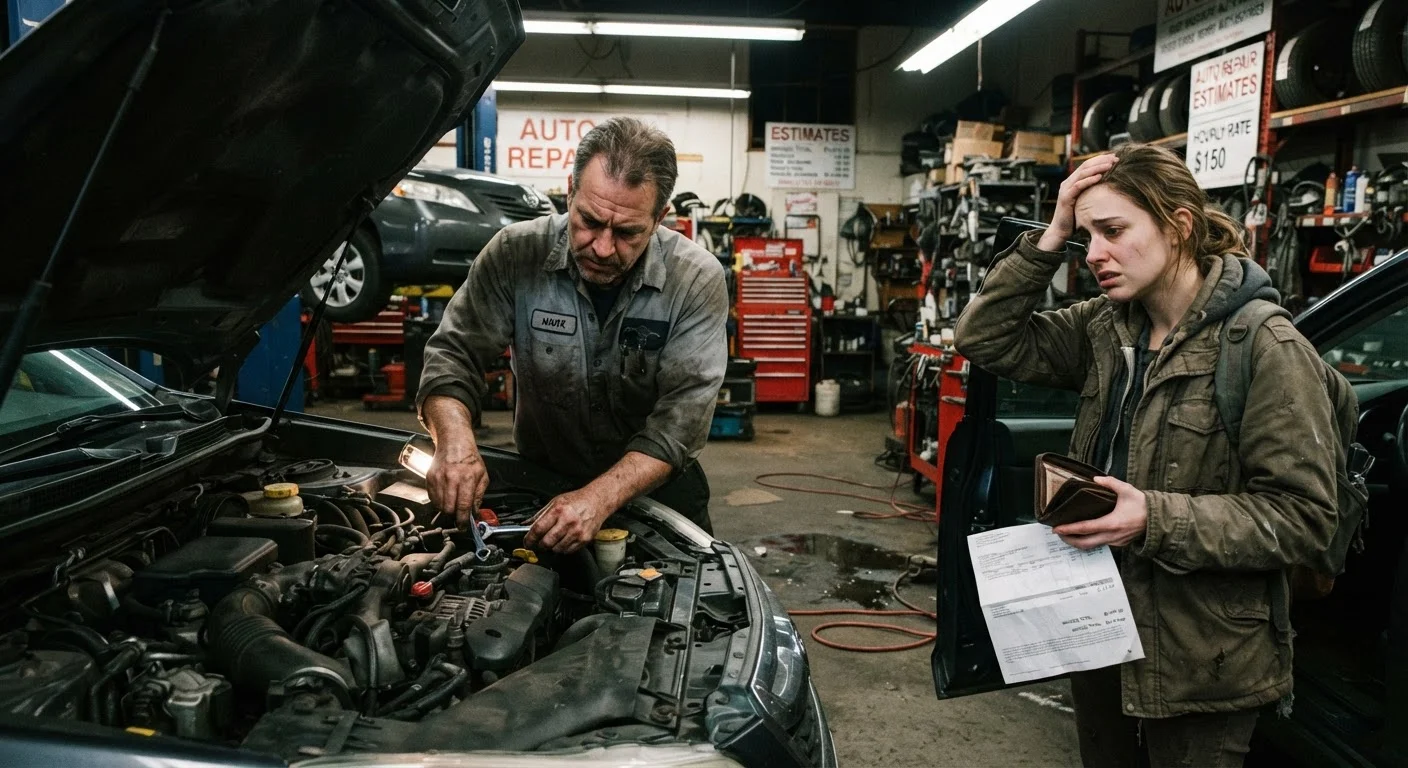
The Compounding Cost of Doing Nothing
Routine servicing feels like an expense. In reality, it's cost control. Every time a maintenance interval passes without action, the mechanical tolerance that keeps repair bills predictable starts to erode. Oil that has broken down stops lubricating effectively; coolant that has turned acidic begins corroding the cooling system from within; brake pads worn past their service limit start destroying the rotors beneath them.
The financial pattern is consistent: a small, scheduled cost — skipped — becomes a larger, unscheduled one. That unscheduled repair then arrives alongside whatever else life demands, making it far more disruptive than the original service would have been. How small oversights compound into expensive repairs follows a predictable path that disciplined servicing simply interrupts.
~$1,200
Average annual vehicle maintenance cost for US drivers
AAA's annual Your Driving Costs study consistently estimates maintenance and repair expenses for average US drivers in this range, underlining the importance of budgeting for scheduled service.
3–4x
Cost multiplier when maintenance is deferred
Industry mechanic estimates commonly indicate that neglected services — such as coolant or transmission fluid exchanges — result in repair costs several times higher than the original service would have cost.
Understanding which skipped services carry the highest financial risk is the first step toward smarter ownership budgeting.
Common Servicing Mistakes and How to Avoid Them
The mistakes below represent the most financially damaging patterns seen across the ownership lifecycle. Each one is avoidable — not through expensive intervention, but through timely, inexpensive action.
Postponing oil changes beyond the manufacturer's recommended interval to save money short-term.
Why it happens: Oil changes feel like a routine expense with no immediate payoff, so drivers delay them when budgets are tight.
Ignoring coolant and transmission fluid service because the fluids aren't visibly low or dirty.
Why it happens: These fluids degrade chemically before they show visible signs, so drivers assume they're fine until a failure occurs.
Delaying brake pad replacement until metal-on-metal grinding begins.
Why it happens: Brake wear is gradual and quiet until it isn't, and many drivers only act on audible warning signs rather than proactive inspection.
Skipping tire rotations, leading to uneven wear patterns that shorten tire lifespan significantly.
Why it happens: Rotations seem optional when tires appear fine, and drivers often skip them to avoid the service appointment.
Failing to maintain a service record, which undermines resale value even when maintenance was actually performed.
Why it happens: Drivers assume buyers will take their word for it, or they simply don't keep paperwork organized.
For a broader look at how responsible maintenance fits into overall vehicle spending, strategies for reducing ownership costs without compromising safety provides practical context.
Resale Value: The Hidden Penalty of Deferred Maintenance
The financial damage from skipped servicing doesn't end with repair bills. It accumulates silently in a vehicle's resale or trade-in value. Private buyers and dealerships alike factor maintenance history into their offers — and the absence of documentation is treated the same as the absence of maintenance itself.
Service Records Are a Financial Asset
A documented maintenance history is not just paperwork — it is evidence of value preservation. At resale, a complete service log can meaningfully offset depreciation by demonstrating that the vehicle was cared for according to manufacturer specifications. Losing or discarding service records is, in practical terms, discarding part of your vehicle's market value.
Vehicles with complete, verifiable service records consistently command higher private-sale prices and stronger trade-in offers than comparable vehicles without them. The margin varies by vehicle age, mileage, and market, but the directional effect is reliable: neglected records signal risk to buyers, and risk is discounted.
If you're planning a purchase and want to understand how maintenance costs factor into total vehicle expense before you commit, calculating total cost of ownership before buying lays out the full financial picture. And for guidance on what routine servicing actually covers, the Car Maintenance hub is a useful starting point.