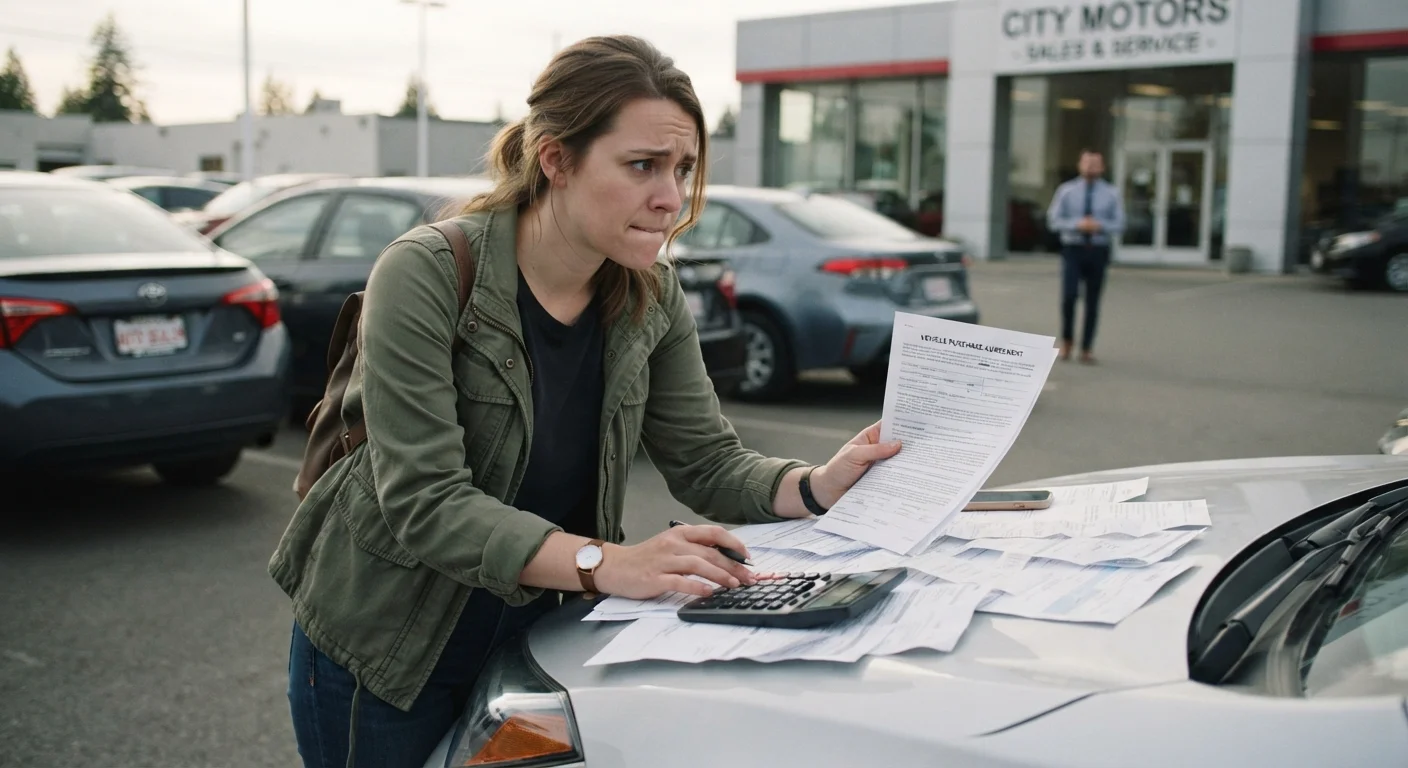
Why First-Time Buyers Get Surprised
Buying your first car is exciting — and expensive in ways that aren't always obvious at the dealership. Most buyers focus on the monthly payment or the sticker price, but the true financial picture only emerges once the keys are in hand. For a deeper look at total annual costs, see what car ownership really costs per year.
The expenses below are the ones that most consistently catch new owners flat-footed. Understanding them before you buy — not after — puts you in a far stronger financial position.
Sales Tax, Registration, and Dealer Fees
Before you drive off the lot, you'll face a stack of upfront costs that don't appear in the advertised price. Sales tax on a vehicle purchase varies by state but commonly runs between 4% and 10% of the purchase price — on a $25,000 car, that's up to $2,500 before you've put a mile on it. Title and registration fees add more, typically ranging from $50 to several hundred dollars depending on your state and vehicle weight. Dealer documentation fees — often called "doc fees" — are charged for processing paperwork and can run anywhere from $100 to $500 or more. These are legitimate but negotiable at some dealerships. Know what your state charges before you sit down to sign.
Sales tax alone can add thousands to a vehicle's real upfront cost before you leave the lot.
Depreciation — The Cost No One Invoices You For
Depreciation doesn't show up on a bill, which is exactly why new owners overlook it. It's the loss in a vehicle's market value over time, and it's typically the single largest ownership cost — often outpacing fuel and insurance combined. New vehicles commonly lose 15% to 25% of their value in the first year alone, with the steepest drop occurring in the first few years. If you finance a vehicle and it depreciates faster than you pay down the loan, you can end up "underwater" — owing more than the car is worth. This is where gap insurance (which covers the difference between your loan balance and the car's actual cash value in a total loss) becomes relevant. Understanding the depreciation curve of any vehicle you're considering is a key part of informed buying.
New vehicles can lose 15–25% of their value in year one — depreciation is the cost no one sends you a bill for.
Comprehensive Insurance and Add-On Coverage
State minimum liability coverage is legally required, but it doesn't protect your vehicle — it only covers damage you cause to others. Comprehensive and collision coverage, which protect your own car, add meaningfully to your premium. Exact costs depend on your age, driving history, location, and the vehicle itself, but first-time buyers are often surprised by how much full coverage costs relative to their minimum-only quote. Beyond the base policy, gap insurance, roadside assistance riders, and rental reimbursement coverage are all separate line items worth evaluating. Shopping multiple insurers and understanding exactly what each policy covers — before committing — is time well spent.
State minimum liability coverage protects other drivers, not your vehicle — full coverage costs significantly more.
Scheduled Maintenance and Fluid Services
Every vehicle has a manufacturer-specified maintenance schedule covering oil changes, filter replacements, spark plugs, transmission fluid, coolant flushes, and brake fluid. These intervals exist to protect the engine and drivetrain — skipping them typically leads to larger, more expensive repairs down the line. While basic oil changes might cost $50–$100 depending on oil type and where you go, more involved services — a 30,000-mile or 60,000-mile service — can run several hundred dollars. Consult your owner's manual for the actual schedule; dealer service advisors will sometimes recommend services earlier than the manufacturer requires. See the car maintenance hub for practical guidance on keeping your vehicle running reliably.
Skipping scheduled maintenance to save money now routinely leads to far more expensive repairs later.
Tyre Replacement and Wheel-Related Costs
Tyres are a consumable that many first-time buyers don't think about until they're standing in a shop getting an unexpected quote. A full set of replacement tyres can range from around $400 to well over $1,000 installed, depending on tyre size, type, and brand — performance vehicles and trucks with large wheel diameters sit at the higher end. Tread life varies significantly by tyre type and driving conditions, but many tyres need replacement every 40,000 to 60,000 miles under normal use. Add wheel alignment (recommended with new tyres and after pothole impacts), tyre rotation every 5,000–7,500 miles, and potential repair or replacement after road hazard damage, and tyres represent a meaningful recurring expense. Low-profile tyres common on sportier vehicles are more vulnerable to pothole damage and tend to cost more to replace.
A full tyre replacement set can cost $400 to over $1,000 — a bill that catches many first-time owners unprepared.
State Inspections, Emissions Testing, and Renewal Fees
Many US states require annual or biennial vehicle safety inspections, emissions tests, or both. Inspection fees are typically modest — often $10 to $50 — but a failed inspection can trigger mandatory repairs before your vehicle can legally be driven. Emissions test failures on older vehicles can be expensive to resolve, particularly if the catalytic converter or oxygen sensors are at fault. Annual vehicle registration renewal fees are another recurring cost that varies by state, vehicle age, and sometimes the vehicle's value or weight. These aren't enormous line items individually, but they add up and are easy to forget when sketching out a monthly budget.
A failed emissions test can force costly repairs before your car is legal to drive — budget for the possibility.
Parking, Tolls, and Incidental Transport Costs
For drivers in or near urban areas, parking can be a substantial ongoing cost — monthly garage fees in major cities can rival a car payment. Even suburban and rural drivers face parking fees at airports, event venues, and downtown areas. Electronic toll systems (E-ZPass, SunPass, FasTrak, and similar programs by state) make toll spending nearly invisible, which means it's easy to underestimate how much you're paying until you review a statement. Car washes, air fresheners, and interior cleaning products are small but real expenses. Drivers who use their vehicle for work may also face costs around mileage tracking or specific insurance requirements — an area where self-employment vehicle costs deserve separate consideration.
Electronic tolls make road charges nearly invisible — many drivers significantly underestimate what they spend annually.
Plan Ahead to Stay in Control
None of these costs need to be a crisis if you see them coming. Building a dedicated vehicle budget that accounts for both fixed recurring costs and a reserve for variable ones is the most effective approach. A realistic monthly figure should include insurance, fuel, a depreciation allowance, and a maintenance buffer — not just the loan payment.
Build a Vehicle Reserve Fund
Set aside a fixed amount each month into a dedicated savings buffer for vehicle expenses — a common guideline is $100 to $150 per month for a newer vehicle, more for older ones. This covers the irregular but predictable costs like tyres, brake jobs, and annual registration without derailing your regular budget. Treat it as a non-negotiable line item, not optional savings.
For a structured way to track every expense category, the annual car ownership cost checklist is a practical starting point. And if you're still deciding between a new and used vehicle, understanding the financial trade-offs between new and used cars can sharpen that decision considerably.
This article provides general financial information for educational purposes only. It is not personalized financial advice. Consult a qualified financial professional for guidance specific to your situation.