What a Balance Sheet Actually Does
A balance sheet answers one core question: what does this business own, what does it owe, and what is left over? That leftover amount — owner's equity — is the closest thing a business has to a net worth figure.
Unlike a profit and loss statement, which tells you how much money moved through your business during a given period, the balance sheet is a still photograph of your financial position at one point in time. The two documents complement each other: the P&L tells you whether you're making money; the balance sheet tells you what you've built (or borrowed) as a result. If you haven't explored how P&L statements work yet, our plain-language P&L guide is a good starting point.
For small business owners without accounting training, the balance sheet can look intimidating. In practice, it has three sections and one rule. Once you understand those, the rest is reading carefully.
A Balance Sheet Is Not a Cash Flow Statement
A strong balance sheet doesn't guarantee you have cash available today. A business can be asset-rich (owning equipment, holding inventory) but unable to pay next week's bills if those assets aren't liquid. Always read your balance sheet alongside your cash flow statement for a complete picture. If you need support building a full financial foundation, see our complete small business finance guide.
What You Need Before You Start
What you will need
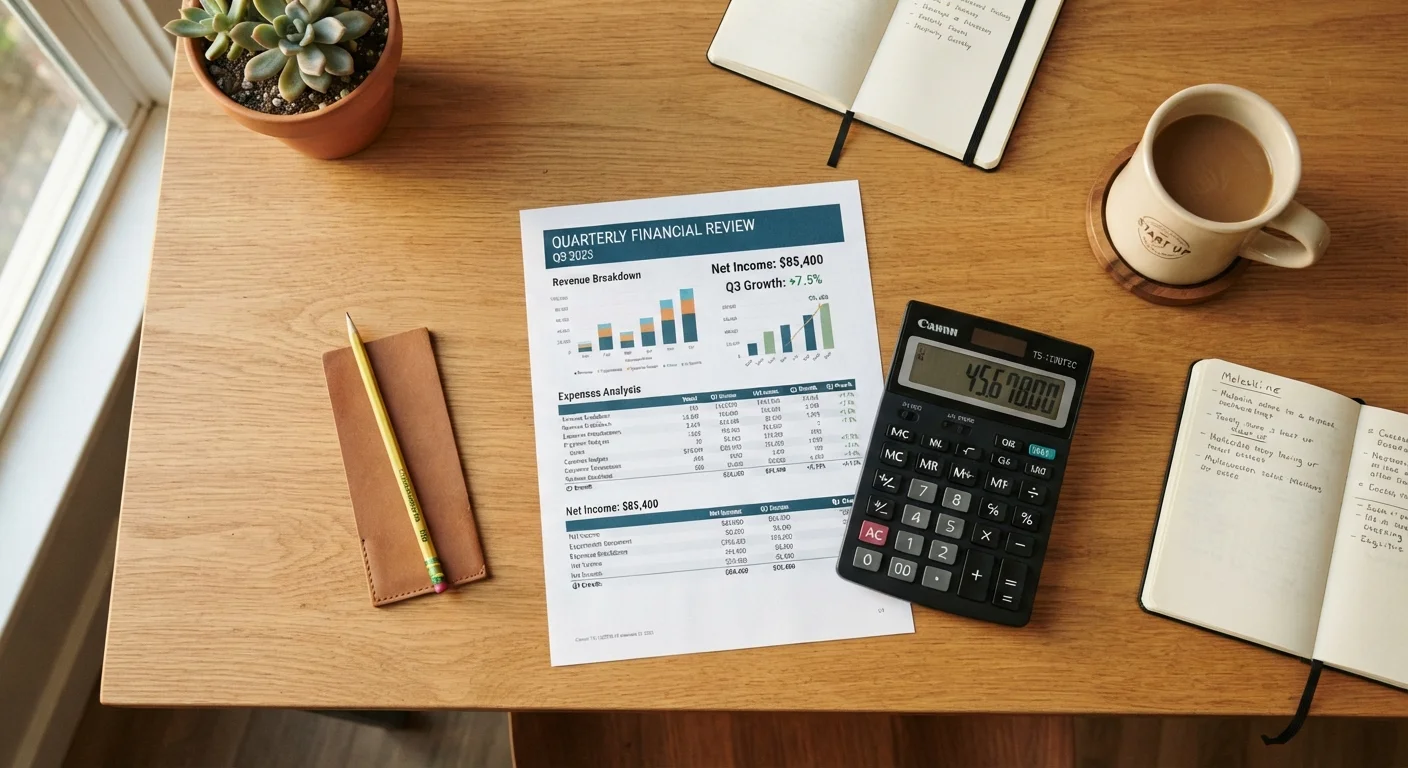
Balance Sheet Document
The financial statement you are reading — generated by your accounting software or bookkeeper.
Accounting Software (e.g., any double-entry platform)
Produces accurate, formatted balance sheets automatically from your transaction records.
Calculator or Spreadsheet
Used to compute quick ratios and verify that assets equal liabilities plus equity.
Step-by-Step: How to Read Your Balance Sheet
Confirm the reporting date
Unlike a profit and loss statement — which covers a period of time — a balance sheet is a snapshot taken on a single date (e.g., December 31). Before reading any figures, note this date. Comparing two balance sheets from different dates shows you how your financial position has moved. See how the balance sheet fits alongside other statements in our guide to profit and loss statements.
Read the Assets section
Assets are everything your business owns or is owed. They are split into two groups:
- Current assets — cash, accounts receivable (money customers owe you), and inventory. These are expected to be converted to cash within 12 months.
- Long-term assets — equipment, vehicles, property, or intangible assets like patents. These provide value over multiple years.
Add both groups together to get Total Assets.
Read the Liabilities section
Liabilities are everything your business owes to others. Again, two groups:
- Current liabilities — accounts payable (bills you owe suppliers), short-term loans, payroll due, and taxes payable. Due within 12 months.
- Long-term liabilities — business loans, mortgages, or equipment financing due beyond 12 months.
Add both to get Total Liabilities.
Read the Owner's Equity section
Owner's equity (also called shareholders' equity or net worth for a business) is the residual value: what would remain if you paid off every liability from your assets. It typically includes:
- Paid-in capital — money the owner(s) invested in the business
- Retained earnings — cumulative profits left in the business rather than withdrawn
Growing retained earnings over successive balance sheets is a strong sign of a profitable, self-sustaining operation. For context on how this concept mirrors personal finances, our guide to net worth explains the parallel clearly.
Verify the fundamental equation
Every correctly prepared balance sheet must satisfy this equation:
Assets = Liabilities + Owner's Equity
If your totals don't balance, there is likely a data entry error or a missing transaction. Most accounting software catches this automatically, but if you're working from a manually prepared sheet, check for omissions or double-counted entries.
Calculate two quick ratios
Two simple calculations give you practical insight without advanced training:
- Current Ratio
- Current Assets ÷ Current Liabilities. A result above 1.0 means you have more short-term assets than short-term debts — generally a positive sign.
- Debt-to-Equity Ratio
- Total Liabilities ÷ Owner's Equity. A lower number indicates less reliance on borrowed money. What's considered acceptable varies by industry, so compare against industry benchmarks rather than a universal target.
For a fuller glossary of terms you'll encounter on financial statements, see Key Financial Terms Every Small Business Owner Should Know.
What to Look For After You've Read It
Reading the numbers is only half the task. Here's what to ask once you've worked through the document:
- Is equity growing? Rising retained earnings indicate accumulated profit staying in the business — a healthy trend.
- Is debt increasing faster than assets? If liabilities are growing but assets aren't keeping pace, your leverage is increasing. This isn't automatically bad — growth often requires debt — but it warrants monitoring.
- Are current assets comfortably above current liabilities? A current ratio below 1.0 is a near-term cash risk.
- Has anything changed significantly since last quarter? Large unexplained swings in any line item deserve a closer look.
Building the habit of reviewing your balance sheet regularly is part of a broader discipline of financial literacy. Our complete small business finance foundation covers how these statements fit into your overall financial management practice.
Compare Balance Sheets Side by Side
Print or open two consecutive balance sheets — say, end of last quarter and end of this quarter. Look at whether total assets grew, whether debt increased or decreased, and whether retained earnings moved up. This comparative view reveals momentum that a single snapshot cannot.
This article is intended for general educational purposes and does not constitute personalised financial, accounting, or tax advice. Consult a licensed accountant or financial professional for guidance specific to your business situation.