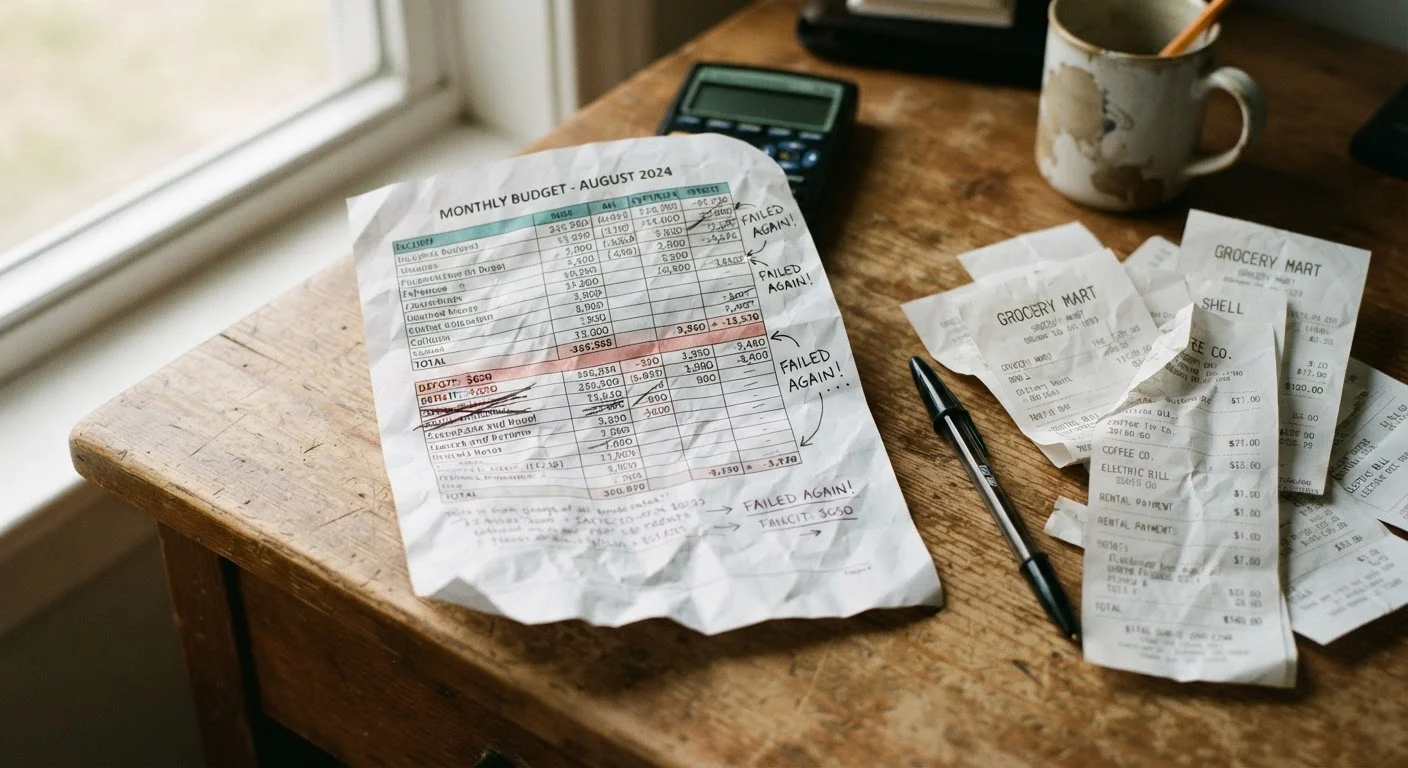
The Real Reason Most Budgets Fall Apart
A budget looks straightforward on paper: track income, assign spending limits, stick to them. Yet most people abandon their budget within the first few weeks. The problem is rarely arithmetic — it's the gap between what people plan to spend and how they actually live.
Budgets tend to be built during a moment of motivation, when optimism about future behavior runs high. But motivation is unreliable. Once the initial energy fades — much like why exercise habits dissolve after two weeks — the plan unravels. Understanding why this happens is the first step to building something that actually holds.
If you've tried budgeting before and found it frustrating, it's worth examining which specific missteps caused the breakdown. The misconceptions people carry into budgeting often make the process harder before it even begins.
Building a budget based on idealized spending rather than actual habits.
Why it happens: People create budgets during high-motivation moments and assign amounts they wish they spent, not amounts they genuinely do. The resulting plan is unrealistic from day one.
Failing to account for irregular and seasonal expenses.
Why it happens: Monthly budgets naturally focus on recurring monthly bills, so one-time or annual costs — car registration, holiday spending, home repairs — get overlooked until they arrive and blow the plan.
Treating the first draft of a budget as permanent.
Why it happens: Most people build a budget once and then expect it to work indefinitely, even as income, expenses, and priorities change throughout the year.
Leaving no room for discretionary or unplanned spending.
Why it happens: In an effort to maximize savings, people eliminate all "non-essential" categories. This creates a plan that feels punishing, making any small deviation feel like total failure.
Relying entirely on willpower to follow through each month.
Why it happens: People assume that knowing the budget is enough to follow it, underestimating how fatigue, stress, and decision overload erode financial discipline over time.
Not distinguishing between fixed and variable expenses.
Why it happens: Lumping all expenses into a single "spending" category makes it impossible to know where flexibility actually exists and where costs are locked in.
Practical Adjustments That Make Budgets Stick
Fixing a broken budget isn't about trying harder — it's about designing a better system. The following shifts address the structural reasons budgets fail.
~33%
Adults with a written household budget
Survey data from Gallup has consistently found that fewer than one in three U.S. adults maintains a detailed household budget, suggesting most people manage money without a formal plan.
3–4 weeks
Typical time before a new budget breaks down
Financial counselors and behavioral economists commonly observe that most self-directed budgets collapse within the first month, often after a single unexpected expense derails the plan.
$1,400+
Average annual cost of forgotten subscriptions
Consumer research has estimated that U.S. households spend over $1,000 annually on subscriptions, with a significant portion going unnoticed or unused — a common source of budget leakage.
Start With Actual Spending, Not Ideal Spending
Pull three months of bank and credit card statements before building any budget. Calculate what you genuinely spend on groceries, dining, subscriptions, and miscellaneous purchases. Use those numbers as your starting baseline, not aspirational targets. A budget grounded in reality is one you can actually follow.
Plan for the Unpredictable
Irregular expenses — car maintenance, medical co-pays, holiday gifts, annual insurance premiums — don't appear every month, but they will appear. The budget category most people forget is a dedicated line for these lumpy costs. Divide predictable annual expenses by 12 and set aside that amount monthly into a separate savings bucket. When the bill arrives, the money is already there.
Automate Before You Can Spend
Willpower is a finite resource. Instead of relying on restraint at the end of the month, automate savings and bill payments immediately after each paycheck. Treat savings as a non-negotiable expense — transfer it first, then manage what remains. This approach removes the decision entirely and makes consistency the default.
Build In Flexibility
A budget with zero slack punishes normal life. Allocate a small, defined "personal spending" or "fun" category with no strings attached. When people feel controlled rather than guided, they rebel against the plan entirely. Frameworks like the 50/30/20 rule explicitly reserve 30% for wants — a recognition that sustainable budgeting includes enjoyment, not just restriction.
Review Monthly, Adjust Quarterly
A budget written in January may not reflect a March rent increase, a new car payment, or a change in household income. Schedule a 20-minute monthly check-in to compare planned versus actual spending. Every quarter, revisit the broader structure. A living budget adapts; a static one becomes irrelevant. Couples managing shared finances may benefit from additional structure — see approaches that reduce budgeting friction for couples.
This article is for general informational and educational purposes only and does not constitute personalized financial advice. Consider consulting a licensed financial professional for guidance tailored to your specific situation.