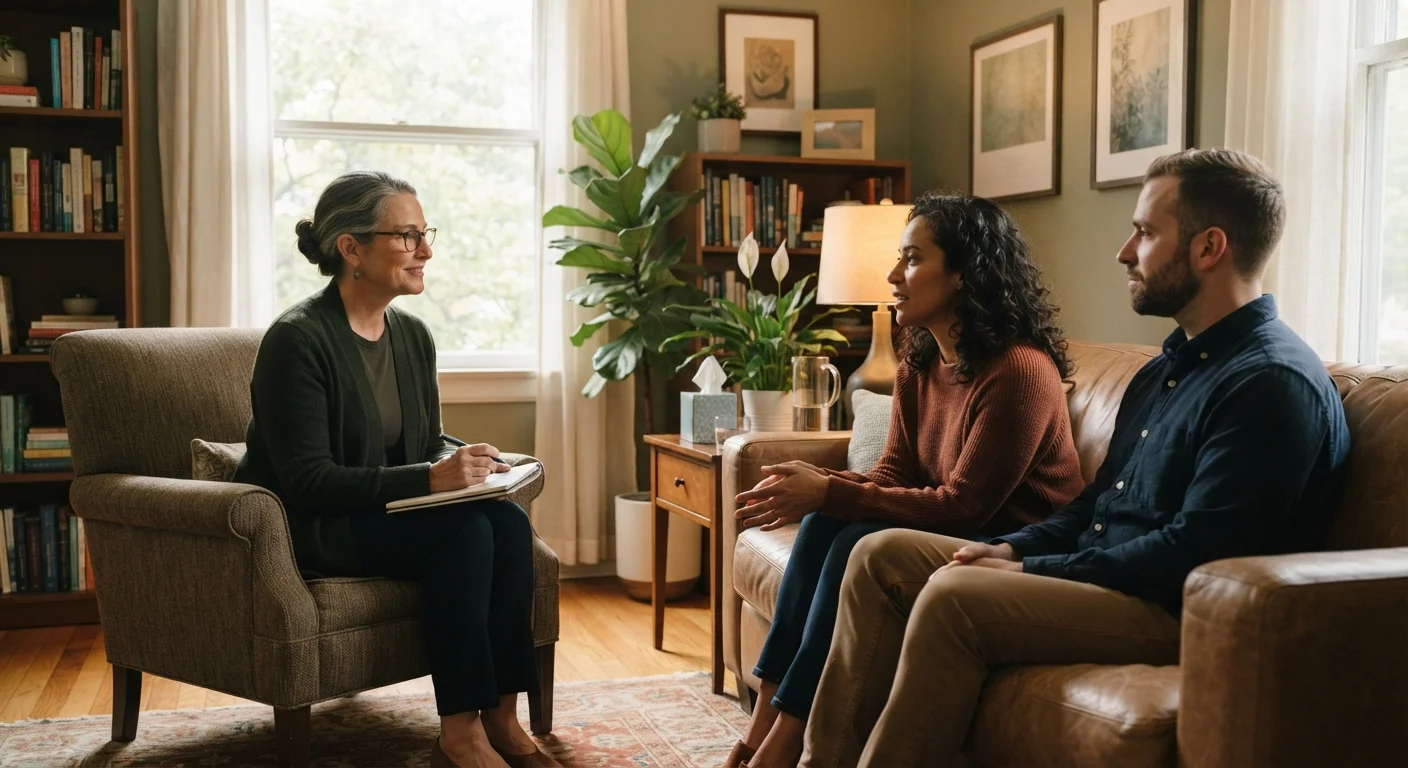
The Case for Going Before Things Break Down
There's a common cultural script around couples therapy: you go when things have gotten bad. When the arguments are louder, the distance is wider, or someone has already threatened to leave. But many therapists and researchers suggest that waiting for a crisis is actually one of the least effective strategies for getting help.
The Gottman Institute, whose work draws on decades of relationship research, has noted that couples often wait an average of six years after serious problems begin before seeking therapy. By that point, negative patterns — criticism, contempt, defensiveness, stonewalling — can be deeply entrenched. Going earlier means those habits haven't fully calcified yet.
Think of it less like calling a plumber after the flood, and more like getting a routine check-up. The relationship doesn't have to be in danger for a skilled outside perspective to be valuable.
Build communication skills before bad habits form
Learning to express needs and listen effectively is far easier before defensiveness and resentment have taken root. Early therapy creates space to practice these skills when both partners are still engaged and open.
Neutral space for hard-to-start conversations
Topics like finances, parenting, and intimacy can be difficult to raise without a facilitator. A therapist provides structure and safety that makes those conversations more productive and less likely to spiral.
Helps couples navigate major life transitions
Milestones like becoming parents, relocating, or managing career changes add stress that can quietly erode connection. Therapy during or before these periods can help partners stay aligned.
Strengthens the relationship's foundation proactively
Research on relationship satisfaction suggests that couples who actively invest in their connection — rather than waiting for problems — tend to report greater long-term resilience.
Reduces stigma and normalizes asking for support
Going when things are relatively stable reframes therapy as a healthy relationship tool rather than a last resort, making it easier to return if more serious challenges emerge later.
Honest Limitations Worth Knowing
Therapy isn't a guaranteed solution, and going early doesn't automatically make it more effective. There are real practical and emotional obstacles that couples should weigh before committing.
First, cost is a genuine barrier. Without insurance coverage — which varies significantly by plan and provider — sessions can run $100 to $300 per hour. Even with coverage, finding an in-network couples therapist can take weeks of searching.
Second, the quality of the therapist matters enormously. Couples therapy is a specialized skill set, and not every licensed therapist has deep training in it. A poor fit or an underqualified practitioner can, in some cases, leave couples feeling worse. It often takes more than one attempt to find the right match.
Third — and perhaps most importantly — both partners have to be genuinely willing. If one person is dragging the other in reluctantly, the dynamic in the room tends to reflect that tension rather than resolve it.
Cost can be a meaningful financial barrier
Couples therapy sessions often aren't fully covered by insurance, and out-of-pocket costs can add up quickly. For many households, regular sessions represent a real budgetary commitment.
Finding the right therapist takes time and effort
Couples therapy is a specialized discipline, and the quality of practitioners varies widely. It may take multiple attempts to find someone both partners feel comfortable with and who is genuinely skilled in this area.
Both partners must be genuinely willing
Therapy tends to be significantly less effective when one partner is reluctant or participates only to appease the other. Mutual buy-in is a prerequisite, not a given.
Some couples may not yet need it
For relationships without any notable friction, therapy can feel forced or unproductive. Resources and energy might be better directed toward other forms of connection and enrichment.
Progress is not linear or guaranteed
Even with willing partners and a skilled therapist, therapy can surface difficult emotions or temporarily increase conflict before things improve. That process requires patience and emotional readiness.
What Couples Actually Work On in Early Sessions
When couples arrive before major conflict, sessions often focus on communication patterns rather than specific wounds. That distinction matters. The work tends to be more proactive and skills-based — learning to express needs clearly, listening without defensiveness, or understanding each partner's emotional triggers before they become landmines.
Life transitions are another common early entry point. A new baby, a job change, a move, or caring for aging parents all place stress on a relationship that may have previously felt easy. A few sessions during — or ideally just before — a big transition can help partners stay aligned rather than silently drift.
Some couples also use therapy to clarify long-term values: money, parenting philosophies, extended family dynamics. These conversations can be surprisingly hard to have alone, and a trained facilitator creates a structured, lower-stakes space for them.
Not All Couples Therapists Are the Same
Couples therapy is a specialty that requires specific training beyond a general therapy license. When searching for a therapist, it's worth looking for credentials in evidence-based approaches such as Emotionally Focused Therapy (EFT) or the Gottman Method, both of which have a meaningful research base. Many therapists offer brief consultations that let you assess fit before committing. Your primary care provider or insurance plan can often help with referrals.
How to Know If It Might Be Right for You
There's no checklist that definitively tells you when to go. But a few honest questions can help clarify whether early therapy might be a worthwhile step for your relationship.
- Are the same arguments cycling without resolution? Recurring friction around the same issues — even low-intensity friction — often signals an underlying pattern worth examining.
- Do you feel more like roommates than partners? Emotional distance that develops gradually can be harder to notice and easier to ignore until it's significant.
- Are you about to enter a major life change? Transitions stress even strong relationships; a few preparatory sessions can set a useful foundation.
- Are you both willing to go? Willingness, more than the severity of the problem, is often the best predictor of productive therapy.
If you're unsure, a single exploratory session with a qualified therapist can help you assess whether the investment makes sense for your situation. There's no obligation to commit to an ongoing process before you've had a chance to evaluate it firsthand.
This article is for general informational purposes only and is not a substitute for professional mental health advice. Please consult a licensed therapist or counselor for guidance tailored to your specific circumstances.