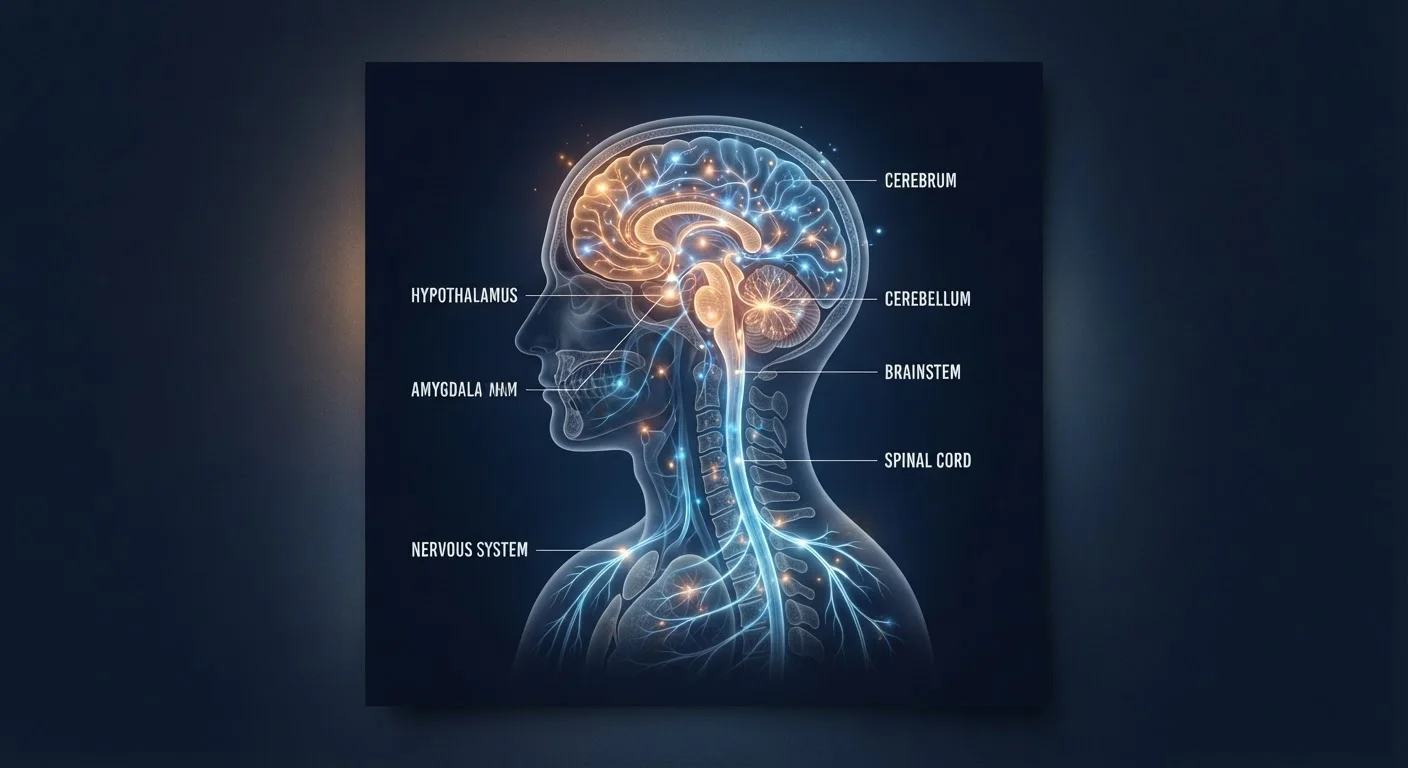
Fight, Flight, or Freeze: The Alarm System Explained
When your brain detects a potential threat — whether it's a car cutting you off on the highway or a high-stakes presentation at work — it doesn't pause to deliberate. A small almond-shaped brain region called the amygdala fires an almost instantaneous alarm signal to the hypothalamus, which functions as the body's command center.
The hypothalamus immediately activates the sympathetic nervous system, triggering the adrenal glands to flood the bloodstream with adrenaline (also called epinephrine). Within seconds, your heart beats faster, your breathing quickens, your pupils dilate, and blood is redirected away from your digestive system toward your muscles. This is the classic fight-or-flight response — an evolutionary adaptation that helped our ancestors survive predators.
A less-discussed third response is the freeze response, where the nervous system temporarily shuts down movement and reduces pain sensitivity. This tends to occur when neither fighting nor fleeing seems viable. All three responses are automatic and involuntary — your conscious mind doesn't get a vote in the initial activation.
“It is not stress that kills us — it is our reaction to it. Understanding the biology of stress gives us the tools to change that reaction.”
— Hans Selye, Endocrinologist and pioneering stress researcher, known for foundational work on the physiological stress response
Cortisol: The Stress Hormone That Lingers
While adrenaline handles the initial alarm, a second wave of the stress response unfolds more slowly through the hypothalamic-pituitary-adrenal (HPA) axis. The hypothalamus signals the pituitary gland, which in turn signals the adrenal glands to release cortisol.
Cortisol serves several important functions during stress: it raises blood glucose levels to fuel muscles and the brain, temporarily suppresses non-essential systems like digestion and reproduction, and modulates immune activity. In short bursts, this is adaptive and useful.
The complication arises with chronic stress. When cortisol remains elevated over weeks or months — as is common with financial pressure, relationship strain, or occupational overload — research has associated this with disrupted sleep architecture, shifts in appetite regulation, reduced immune efficiency, and changes in memory and concentration. This is explored further in our comprehensive mental wellness guide.
The Brain Under Pressure: What Chronic Stress Does to Neural Pathways
Stress doesn't only affect the body's peripheral systems — it actively reshapes the brain over time. The hippocampus, a region central to memory formation and emotional regulation, appears particularly sensitive to prolonged cortisol exposure. Neuroimaging research has suggested that chronic stress is associated with reduced hippocampal volume in some populations, though individual variation is significant.
Meanwhile, the amygdala — that same alarm-triggering region — tends to become more reactive under sustained stress, lowering the threshold for future threat detection. This partly explains why chronically stressed individuals may feel on edge even in objectively neutral situations.
It's worth noting that psychological perception is a powerful variable. Research by psychologist Richard Lazarus established that stress is substantially shaped by how individuals appraise a situation — whether they view it as threatening or manageable. Two people facing the same deadline can have measurably different physiological stress responses based on their subjective interpretation. This understanding underpins many modern cognitive behavioral approaches to stress management.
For a closer look at how financial pressure specifically affects mental and physical health, see our article on the hidden cost of financial stress.
The Recovery Side: How the Parasympathetic System Restores Balance
The stress response has a built-in counterpart: the parasympathetic nervous system, sometimes called the rest-and-digest system. Once the brain determines that a threat has passed, this system works to lower heart rate, restore normal digestion, and bring cortisol levels back toward baseline.
This recovery process is not passive. It can be actively supported through specific practices. Slow, diaphragmatic breathing — particularly techniques involving an extended exhale — stimulates the vagus nerve, which plays a central role in parasympathetic activation. Our related explainer on breathing techniques that calm the nervous system details the research behind these methods.
Regular physical movement, adequate sleep, social connection, and mindfulness practices have all demonstrated measurable effects on physiological stress markers in peer-reviewed research. None of these are quick fixes, but their cumulative impact on the body's stress regulation systems is well-documented.
Support Your Recovery Window
Building deliberate recovery periods into your day — even brief ones — helps the parasympathetic system do its job. A short walk, a few minutes of slow breathing, or a moment of genuine social connection can all contribute to measurable reductions in physiological stress markers over time. Consistency matters more than duration.
This article provides general health information for educational purposes only and is not a substitute for professional medical advice, diagnosis, or treatment. If you are experiencing persistent or severe stress symptoms, please consult a qualified healthcare provider.