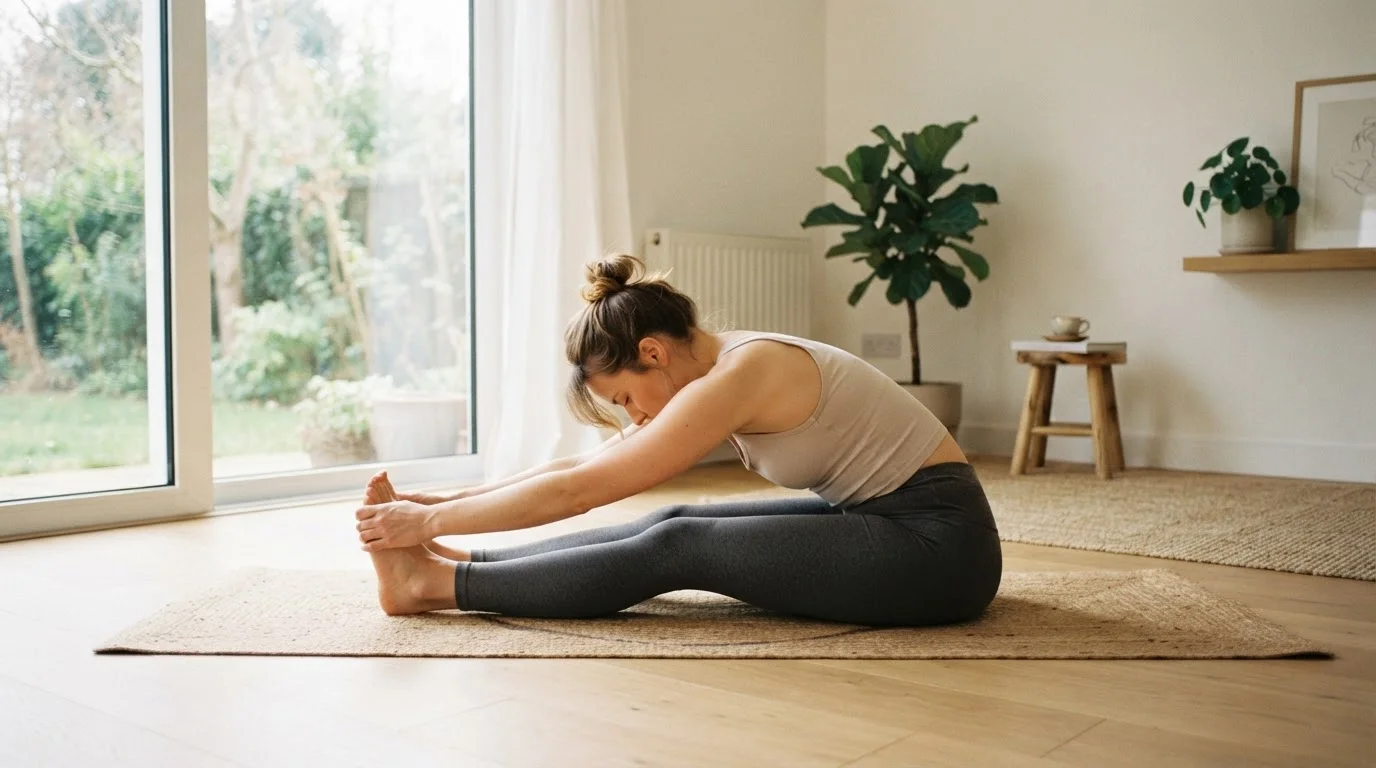
Why These Terms Get Confused
Walk into most gyms or browse any wellness article, and you'll find flexibility and mobility used as synonyms. They're not. The confusion is understandable — both relate to how the body moves through space — but conflating them can lead to training gaps that show up as stiffness, awkward movement patterns, or recurring minor injuries.
Similarly, stretching gets treated as the universal solution to both. It helps — but in specific, limited ways. Understanding what each term actually means gives you a clearer picture of what your body needs and why. This matters especially for busy adults who have limited time to train and want each minute to count. For context on how small daily movement choices add up, see what desk-based movement actually accomplishes.
Flexibility: What It Is and What It Isn't
Flexibility is a property of muscle tissue. Specifically, it describes how much a muscle — or a group of muscles — can lengthen when a force is applied to it. When someone can touch their toes with ease, that's flexibility at work: the hamstrings and calves have sufficient length to allow that range.
The key word in flexibility is passive. You're not necessarily doing anything — gravity, a partner, or a prop is creating the stretch. A gymnast who can do a full split while relaxed is demonstrating exceptional flexibility in the hip flexors and adductors.
But here's where people get tripped up: flexible muscles don't automatically mean a joint moves well. A person can have long hamstrings and still struggle to perform a controlled hip hinge during a deadlift. The tissue is extensible; the movement system isn't necessarily trained.
80%
Adults who sit for most of their workday
Research consistently shows the majority of American adults hold predominantly sedentary jobs, contributing to hip flexor shortening and reduced spinal mobility over time.
30 sec
Minimum effective static stretch hold
Exercise science literature generally supports holding a static stretch for at least 30 seconds to promote tissue lengthening, with longer durations providing additional benefit in some populations.
3–5x
Weekly frequency associated with flexibility gains
Studies on stretching frequency suggest practicing three to five times per week produces meaningful improvements in muscle extensibility compared to once-weekly sessions.
Mobility: The Active Side of the Equation
Mobility is about what you can do — actively — with your joints. It encompasses range of motion, but also the neuromuscular control, joint capsule health, and stability required to use that range purposefully. Think of it as flexibility with a job to do.
A useful comparison: imagine two people who can both lift their arms overhead. One does it easily, with a smooth, stable shoulder joint. The other can reach the same height but with visible compensation — their lower back arches, their shoulder blade wings out, and they can't hold the position under any load. The first person has good shoulder mobility. The second has a range-of-motion workaround, not real mobility.
Mobility limitations often show up in activities most adults do without thinking: squatting to pick something off the floor, reaching behind a seat in a car, or maintaining posture through a long workday. This is why mobility work, not just stretching, is increasingly prioritized in physical therapy and performance training alike.
Start With the Joints You Use Most
For most desk-based adults, the hips, thoracic spine, and shoulders are the areas most affected by prolonged sitting and repetitive posture. Prioritizing mobility drills in these three regions tends to produce the most noticeable improvement in everyday movement quality. Even short, consistent sessions matter more than occasional longer ones.
Where Stretching Actually Fits
Stretching is a method — a tool — not a quality in itself. It can improve flexibility by elongating muscle fibers and connective tissue over time. It can also reduce muscle tension and support recovery after activity. What it doesn't do on its own is build the strength and control that define true mobility.
There are several common stretching approaches worth understanding:
- Static stretching involves holding a lengthened position for a period of time. It's well-supported for improving passive flexibility, especially when practiced consistently after a workout or on rest days.
- Dynamic stretching uses controlled movement through a range of motion — leg swings, arm circles, hip rotations. This type warms up the joints and is generally recommended before physical activity rather than after.
- Mobility drills go beyond stretching by requiring active muscle engagement through a range — think deep squat holds with active glute engagement or controlled shoulder circles under light resistance. These bridge flexibility and functional strength.
The distinction that matters most for everyday adults: if you only ever stretch passively, you may become more flexible without becoming more mobile. Building mobility requires also practicing movement with intention and control.
This kind of nuance — where two related concepts have meaningfully different implications — echoes other areas of wellness. If you've found yourself similarly curious about overlapping terms, the distinction between mindfulness and meditation follows similar logic.
Putting It Together for Real Life
For most adults, the practical takeaway is straightforward: don't skip either quality, and don't assume one substitutes for the other. A well-rounded approach to physical movement includes regular stretching for flexibility maintenance alongside mobility drills that reinforce active, controlled range of motion.
Even five to ten minutes of intentional mobility work several times a week — targeting hips, thoracic spine, and shoulders, the joints most affected by desk-based lifestyles — can meaningfully improve how the body moves and feels over time. Stretching in the evening can support recovery and tissue health. Neither requires a gym or specialized equipment.
If you're returning to movement after a period of inactivity, dealing with chronic tightness, or experiencing discomfort during basic activities, a qualified physical therapist or certified movement specialist is the right starting point. General information is useful context — but individual bodies have individual needs, and professional assessment outperforms self-diagnosis every time.
This article is for general informational and educational purposes only and does not constitute medical or professional health advice. Consult a qualified healthcare professional before beginning any new exercise program or if you have concerns about pain, injury, or movement limitations.