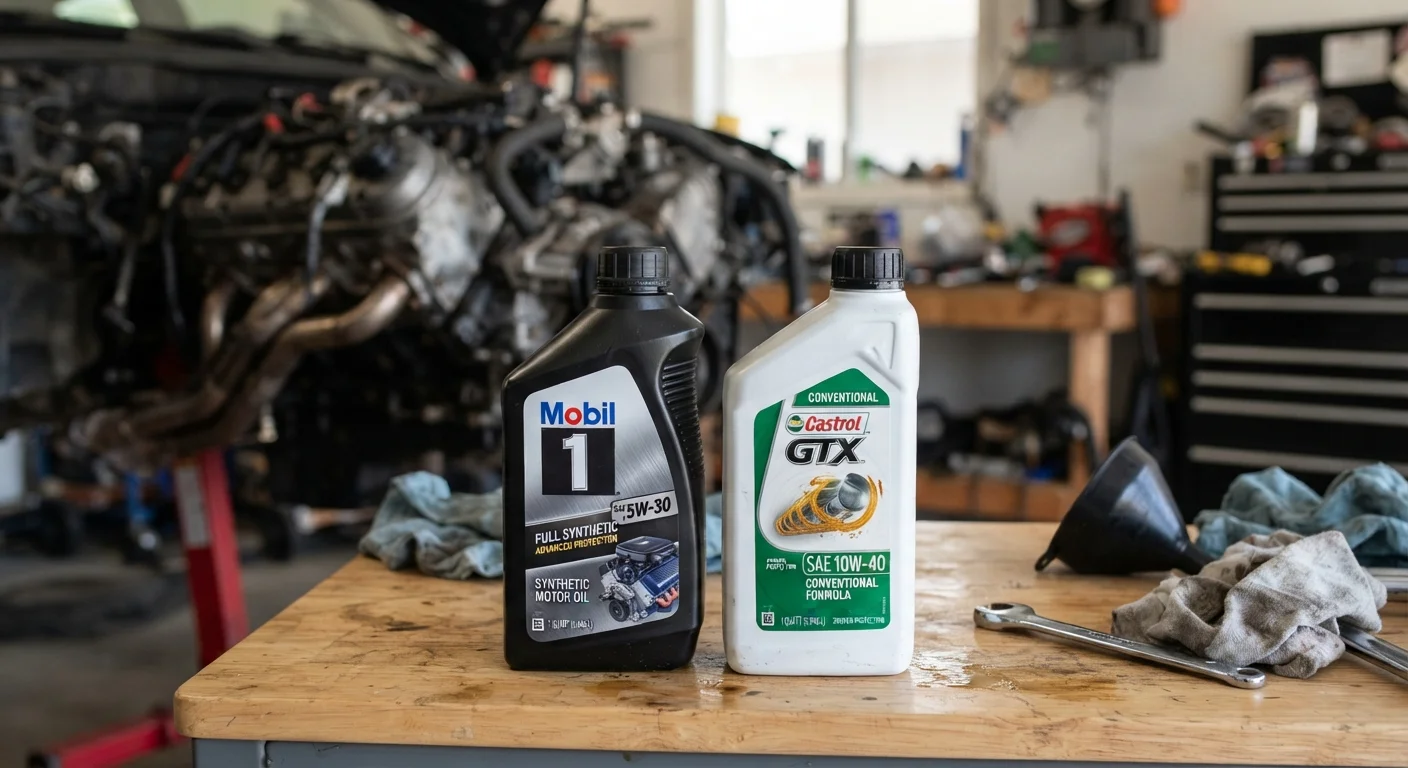
What Actually Separates These Two Oils?
Both synthetic and conventional engine oil perform the same fundamental job: lubricating moving metal parts, reducing friction, dissipating heat, and carrying contaminants to the filter. The difference lies in how each is made and how well it holds up under stress.
Conventional oil — also called mineral oil — is refined from crude petroleum. The refining process removes many impurities, but the resulting molecules are still irregular in size and shape. This inconsistency affects how the oil behaves across temperature extremes and how quickly it breaks down.
Synthetic oil is either fully synthesized from chemical compounds or derived from a highly refined base stock engineered at a molecular level. The result is a lubricant with uniform molecules, fewer impurities, and more predictable performance. It flows better when cold, resists oxidation longer, and holds its viscosity (resistance to flow) more reliably in high heat.
A third option — semi-synthetic or synthetic blend — mixes both types, landing somewhere between the two in performance and cost. For a deeper explanation of oil grades and specifications, see Engine Oil Explained: Grades, Types, and Why the Right One Matters.
Head-to-Head: Key Differences at a Glance
The practical differences between these oil types span cost, longevity, engine compatibility, and performance under stress. The table below summarizes the most important factors everyday drivers should weigh.
| Criterion | Synthetic Oil | Conventional Oil |
|---|---|---|
| Base material | Chemically engineered compounds | Refined crude petroleum |
| Typical change interval | 7,500–15,000 miles | 3,000–5,000 miles |
| Cold-weather flow | Flows quickly at startup | Thicker in cold temperatures |
| High-heat stability | Resists breakdown well | Degrades faster under high heat |
| Cost per quart | Higher | Lower |
| Turbocharged engines | Recommended or required | Generally not suitable |
| Older engines | Usable; switch cautiously | Commonly specified and adequate |
| Environmental impact | Fewer changes, less waste oil | More frequent disposal required |
One point worth clarifying: a higher price per quart for synthetic doesn't automatically mean higher annual cost. Because synthetic oil lasts longer between changes, the total number of changes per year is often lower — which can offset the per-quart premium.
When Your Vehicle Type Makes the Decision for You
For many drivers, the choice between synthetic and conventional oil has already been made by the automaker. Check your owner's manual — if it specifies a full synthetic grade such as 0W-20 or 5W-30 Full Synthetic, using conventional oil isn't just suboptimal, it may void your powertrain warranty.
Turbocharged engines are particularly demanding. The turbocharger spins at extremely high speeds and generates intense heat. Synthetic oil's thermal stability protects the bearings and seals that conventional oil may struggle to safeguard at sustained high temperatures.
Older naturally aspirated engines — especially those designed before synthetic was common — were engineered with tolerances suited to conventional oil. Running synthetic in these engines generally causes no harm, but the performance advantage narrows. Some older engines with worn seals may experience minor leaks when switching to synthetic due to its lower viscosity and different chemical properties; this risk is higher the more miles an engine has accumulated.
It's a common misconception that oil type determines your change interval more than anything else. In reality, your driving pattern matters too. Short trips, stop-and-go traffic, and towing all degrade oil faster — regardless of type. Car Maintenance Myths That Could Be Costing You Money covers several related misunderstandings, including the outdated blanket rule of changing oil every 3,000 miles.
Mixing Synthetic and Conventional Oil
If you're topping off between changes and only have a different oil type available, mixing synthetic and conventional in the same engine is generally safe in the short term — they use compatible base chemistry. However, mixing dilutes the performance advantages of the higher-grade oil. It's not a long-term substitute for a proper oil change with the correct specification. Always prioritize getting the right oil at the next full change.
Making the Right Call for Your Situation
The bottom line is straightforward: follow your owner's manual first. If it specifies synthetic, use synthetic. If it permits conventional and your engine is older and simple, conventional oil changed on schedule is perfectly adequate.
If you're unsure, consider the following factors:
- Climate: Drivers in very cold winters or hot summers get more from synthetic's stable viscosity profile.
- Engine age and mileage: High-mileage engines (generally above 75,000 miles) may benefit from a high-mileage formulation of synthetic or semi-synthetic, which includes seal conditioners.
- Driving habits: Frequent towing, spirited driving, or extended highway trips push thermal load higher — conditions where synthetic holds an edge.
- Budget and convenience: Conventional oil is less expensive per quart, but requires more frequent changes. Run the numbers for your specific change interval and annual mileage before assuming one is cheaper.
Whatever oil type you choose, pairing it with a quality filter and staying within the recommended change interval matters more than debating synthetic versus conventional in isolation. The engine's long-term health depends on consistent maintenance above all else. Vehicle operating costs — including oil type choices — are one piece of a larger picture; Fuel Costs Over a Car's Lifetime offers perspective on how powertrain choices affect running costs more broadly.